Christmas cactus
Why is my Christmas cactus not blooming?
The short answer
Look at the stem tips for buds before trying to force flowers. If there are none, check evening lighting, night temperatures and plant health. Long uninterrupted nights and suitable cooler conditions help initiate buds over several weeks. If buds already fell, use the bud-drop pathway instead. A different holiday-cactus type may flower later; fertilizer cannot replace the missing environmental cue.
First find out whether flower buds never formed or formed and disappeared. A plant sold as Christmas cactus may be S. truncata, S. × buckleyi or a hybrid, so the shop label does not set a flowering deadline.
Diagnostic snapshot
What to check before you act
What you are seeing
- No previous buds; evening lamps or consistently warm nights
- Small closed buds were present before the tips became bare
Check first
Examine several stem tips in daylight without squeezing them. Photograph small developing buds and compare with earlier photos; distinguish a flat new stem segment from a flower bud.
Compare first
- No buds on firm growing stems
- Buds formed and were lost
- Different plant or flowering cycle
Hold off for now
Do not add bloom booster or Epsom salts simply because flowers are absent; first establish the plant's stage and conditions.
Investigate further if
Investigate persistent loss of firmness, a soft base, pests or prolonged failure to grow. If a healthy plant repeatedly fails to set buds despite a documented seasonal routine, ask a local horticultural adviser to review identification and conditions; no guide can guarantee flowers this season.
Photograph this before you act
- Photograph the whole plant and its growing area so the overall pattern is visible.
- Photograph affected flowers or buds together with nearby leaves and stems.
Next best check
Check two visible clues before you act.
This mini-check narrows the match using the same canonical diagnostic clues as this answer. It does not confirm a diagnosis from one or two clicks, and it does not make a photo-only diagnosis.
Two quick observations can tell you whether to keep reading this diagnosis closely or compare other possibilities first.
No buds, lost buds or a different flowering cycle?
No buds on firm growing stems
- No previous buds; evening lamps or consistently warm nights
Less likely if
- Earlier photos show buds that have since disappeared.
Review light and temperature during bud initiation.
Buds formed and were lost
- Small closed buds were present before the tips became bare
Less likely if
- Only new flat stem segments were present; no flower buds were documented.
Stabilize conditions and follow the bud-drop answer.
Different plant or flowering cycle
- A spring-flowering history or uncertain identity; segment shape alone is inconclusive.
Less likely if
- Identification and repeated flowering history already match a winter-flowering Schlumbergera.
Compare identification and previous flowering records before intervening.
Safe confirmation checks
- Examine several stem tips in daylight without squeezing them. Photograph small developing buds and compare with earlier photos; distinguish a flat new stem segment from a flower bud.
- Record the actual overnight conditions beside the plant, including lamps, streetlight, radiator use and drafts. Check moisture below the surface and whether stems remain firm; do not choose a dark cupboard that becomes hot or lacks daytime light.
Help a healthy plant set buds
- For a healthy plant without buds, give bright indirect daylight and reliably uninterrupted nights in a stable, suitably cool room. Keep it protected from frost and cold glass.
- For bud initiation, Iowa State gives 14–16 hours of uninterrupted darkness for many cultivars; RHS describes a cooler 12–15°C rest until buds appear. These are guide-specific approaches, not combined hard thresholds. Check the room at night, retain bright daytime light and allow several weeks; do not expect flowers by a fixed date.
- If stems are limp or the mix remains wet, address root-zone health before flower forcing. Normal watering means supplying water when the mix needs it, with complete drainage, rather than severe drought.
- Once buds are developing, keep light, moisture and temperature steady. Photograph progress weekly without repeatedly moving the plant to test different rooms.
GardenSolved checkpoint
Do not do this yet
- Do not add bloom booster or Epsom salts simply because flowers are absent; first establish the plant's stage and conditions.
- Do not keep the plant in darkness all day, expose it to frost or deliberately shrivel the stems to force buds.
Confirm the likely cause first, then choose the treatment.
What progress looks like before flowers open
- Use photos of the same stem tips to check for developing flower buds. Firm stems without buds mean the flowering question is still open; they do not justify stronger fertilizer or repeated changes of room.
- When buds appear, switch from trying to initiate buds to keeping conditions steady. If stems instead lose firmness or the base softens, pause flower forcing and assess the root zone.
Context and follow-up
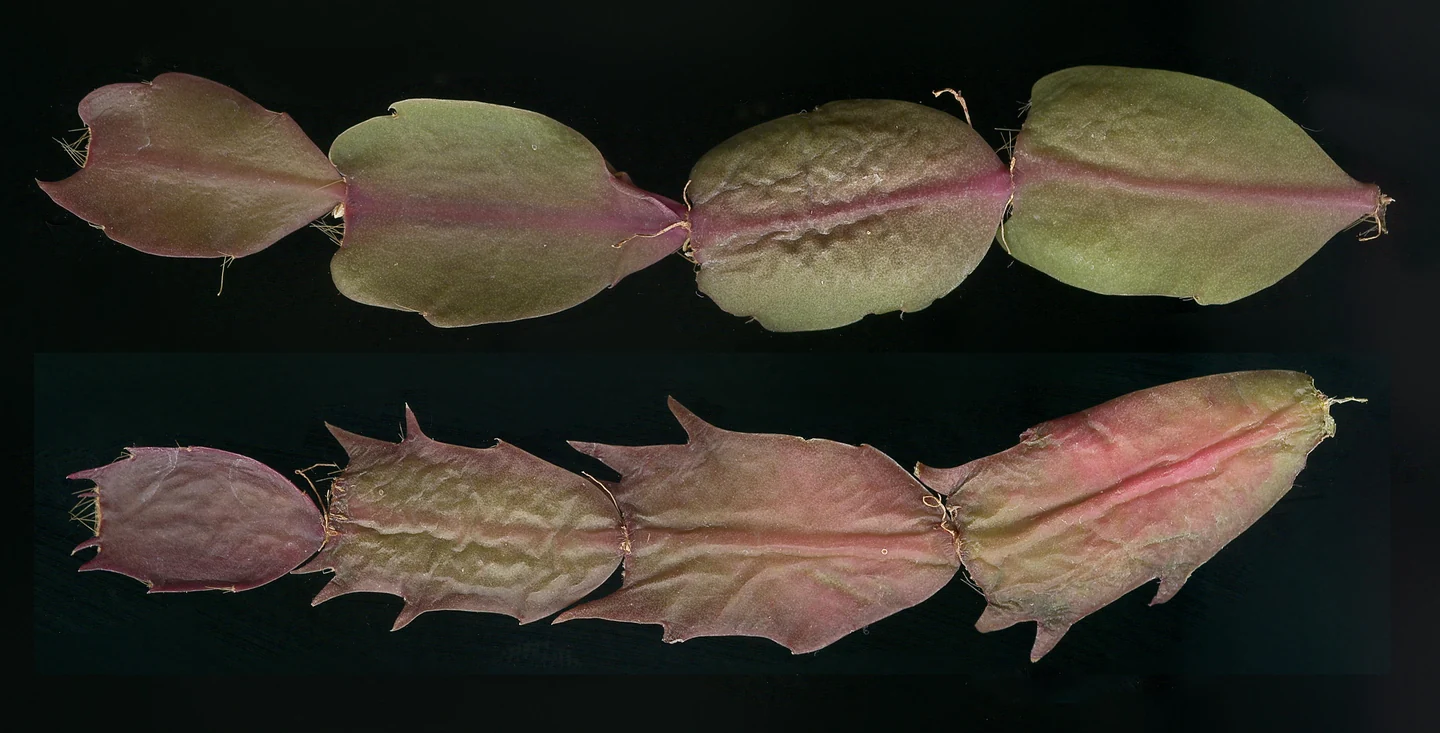
S. truncata usually has pointed segment teeth; buckleyi-type plants have rounder scallops. Hybrids can be intermediate. Easter cactus has a different flowering cycle and should not be forced to match a winter calendar.
November–January is a useful northern-hemisphere context, not a rule inferred from language. Follow the plant's stage and local season. Improvement means visible new buds, not a seven-day promise.
When to seek more help
Investigate persistent loss of firmness, a soft base, pests or prolonged failure to grow. If a healthy plant repeatedly fails to set buds despite a documented seasonal routine, ask a local horticultural adviser to review identification and conditions; no guide can guarantee flowers this season.
Follow the next useful clue
- Buds formed, then fell: Investigate bud loss rather than restarting flower induction.Why is my Christmas cactus dropping buds?
- Stems are limp or wrinkled: Check the root zone before forcing flowers.Why is my Christmas cactus limp and wrinkled?
Consulted horticultural sources
Save & recheck
Compare what changes before changing course.
Save this diagnosis only in this browser, then come back and compare the same clues. No account, reminder subscription, or server-stored diagnostic record is created.
Your baseline
- No previous buds; evening lamps or consistently warm nights
- Small closed buds were present before the tips became bare
Check again when you return
- Examine several stem tips in daylight without squeezing them. Photograph small developing buds and compare with earlier photos; distinguish a flat new stem segment from a flower bud.
- Record the actual overnight conditions beside the plant, including lamps, streetlight, radiator use and drafts. Check moisture below the surface and whether stems remain firm; do not choose a dark cupboard that becomes hot or lacks daytime light.
Tip: photograph the same area from a similar angle so the visible pattern is easier to compare.
Related questions
Diagnostic Finder
Still not sure this answer fits?
Open the Diagnostic Finder with the relevant growing subject or care context preselected and compare other published GardenSolved diagnoses.
Compare other possibilities