Phalaenopsis
Phalaenopsis Care After Flowering: Should You Cut the Spike?
The short answer
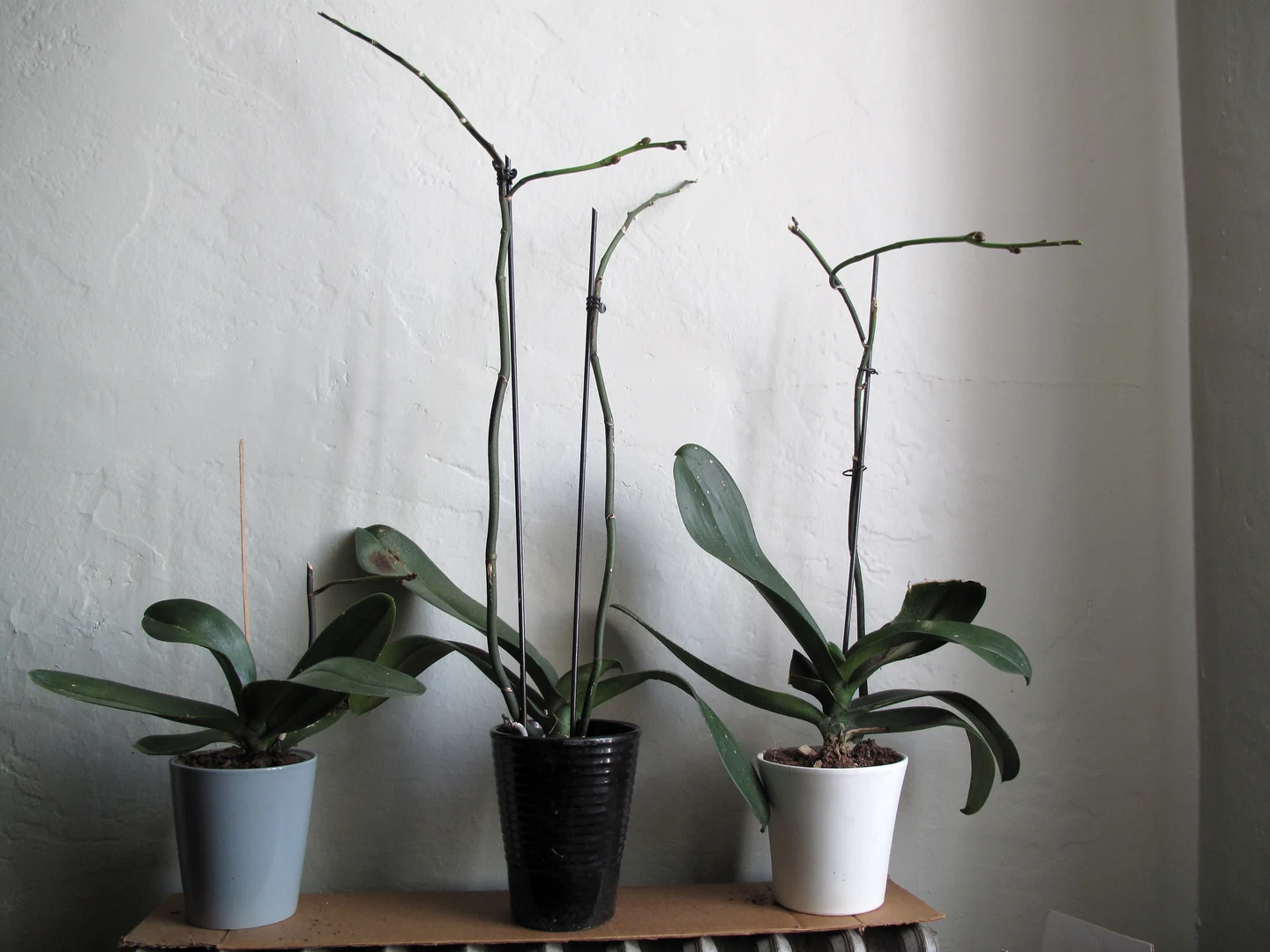
Check whether the flower spike is green, fully dry or still capable of continued flowering. There is no mandatory cut for every Phalaenopsis. A healthy common hybrid may branch from an unused node; other plants benefit from recovering before another display.
When the final flower falls, the plant may still have living leaves, roots and a usable flower spike. Identify those parts and the flowering habit before choosing where, or whether, to cut.
Diagnostic snapshot
What to check before you act
What you are seeing
- Fully brown, dry flower spike
- Green spike on a strong common hybrid
Check first
Identify the flower spike separately from roots and check for unopened buds or active tips.
Hold off for now
Do not cut every green spike to the same numbered node.
Investigate further if
Softness or spreading dark tissue around the crown is not routine post-flowering care.
Photograph this before you act
- Photograph the whole plant and its growing area so the overall pattern is visible.
- Take one close-up of the clearest symptom and one wider view that shows the surrounding area for comparison.
Next best check
Check two visible clues before you act.
This mini-check narrows the match using the same canonical diagnostic clues as this answer. It does not confirm a diagnosis from one or two clicks, and it does not make a photo-only diagnosis.
Two quick observations can tell you whether to keep reading this diagnosis closely or compare other possibilities first.
Choose the situation that fits
| What you see | What it may mean | Next useful step |
|---|---|---|
| Fully brown, dry flower spike | The spike is dead | Remove carefully without injuring the plant |
| Green spike on a strong common hybrid | A branch may develop from an unused node | Retain it or choose a suitable node |
| Sequential-flowering type with a living tip | The same spike may continue flowering | Keep its living spike |
Check before changing care
- Identify the flower spike separately from roots and check for unopened buds or active tips.
- Assess the plant's vigour and whether its label identifies a sequential-flowering type.
What to do now
- Choose a cut only after those checks.
- Use clean tools and keep away from the crown.
- Continue care for living roots and leaves after the flowers finish.
GardenSolved checkpoint
Do not do this yet
- Do not cut every green spike to the same numbered node.
- Do not discard a healthy plant or remove green leaves because the flowers have ended.
Confirm the likely cause first, then choose the treatment.
Why the distinction matters
A fully dead spike can be removed carefully. A green spike on a strong plant may be retained or shortened above a suitable unused node. Some sequential-flowering types should keep their living spike.
When to ask for help
Softness or spreading dark tissue around the crown is not routine post-flowering care.
Choose your next step
Sources and linked claims
Save & recheck
Compare what changes before changing course.
Save this diagnosis only in this browser, then come back and compare the same clues. No account, reminder subscription, or server-stored diagnostic record is created.
Your baseline
- Fully brown, dry flower spike
- Green spike on a strong common hybrid
Check again when you return
- Identify the flower spike separately from roots and check for unopened buds or active tips.
- Assess the plant's vigour and whether its label identifies a sequential-flowering type.
Tip: photograph the same area from a similar angle so the visible pattern is easier to compare.