English
Moth orchid care
Moth orchid care starts with the right check.
Start with what changed: unopened buds, wrinkled or yellow leaves, roots that look different, or a plant that has finished flowering. These guides cover Phalaenopsis moth orchids. Check the growing medium and roots before choosing water, pruning or treatment.
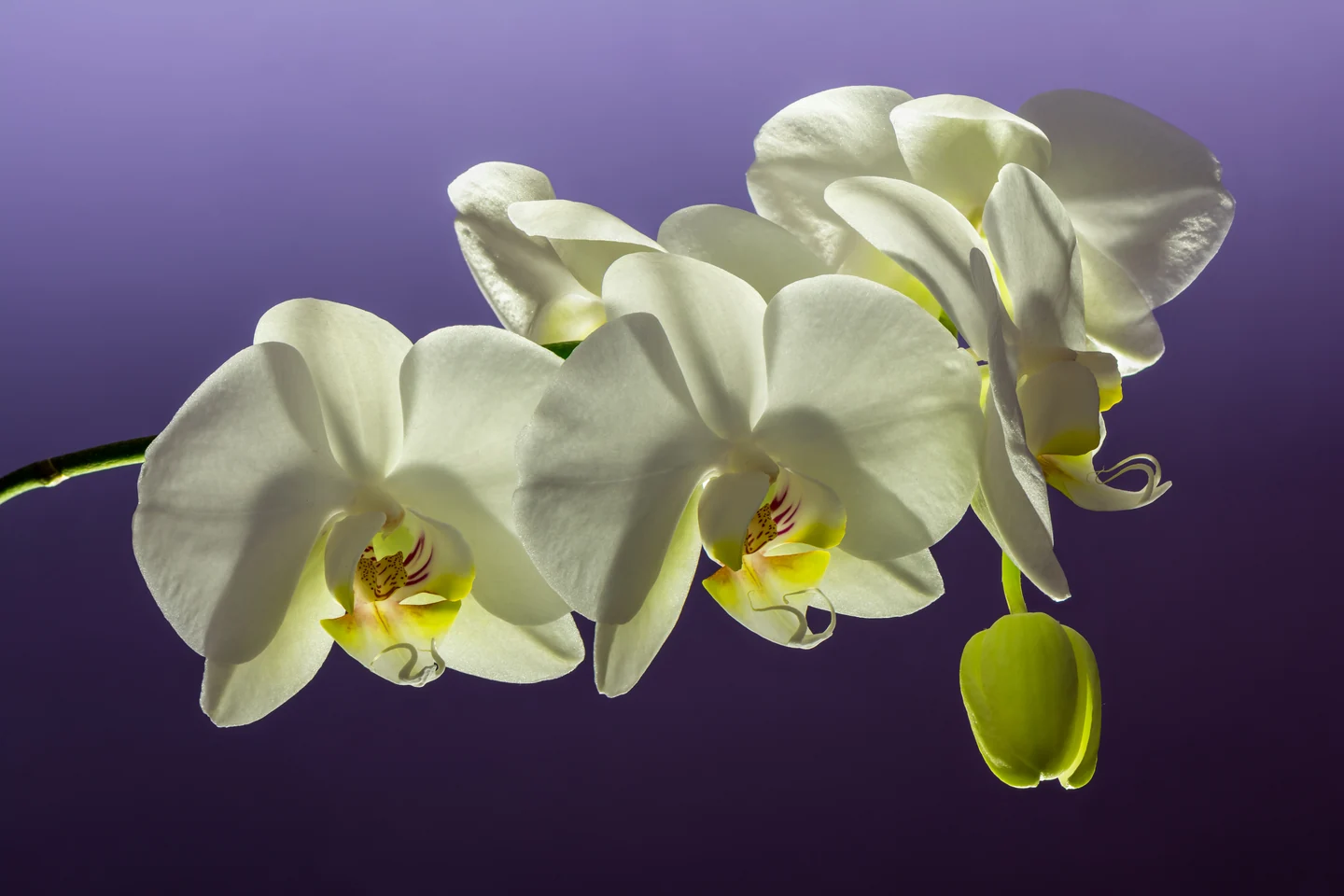
Find my orchid questionPhoto: Uoaei1 / Wikimedia Commons, CC BY-SA 4.0; full frame resized and converted to WebP. https://commons.wikimedia.org/wiki/File:Phalaenopsis_Cultivar_White_01.jpg Context illustration/photo, not confirmation of a plant problem.
Before you act
Check the plant part, roots and recent changes
1. Closed buds or old open flowers?
Buds failing before opening and old flowers finishing their display need different care decisions.
Check unopened-bud loss2. Dry mix or roots that cannot supply water?
Wrinkled leaves can occur in a dry pot or after root loss in wet medium. Check the roots before adding water.
Compare the causes of wrinkling3. A living spike or a fully dry one?
Keep living leaves and roots. Identify the spike and flowering habit before deciding whether to cut.
Choose after-flowering careBrowse problems by symptom
Start with what you can see.
Questions & answers
Browse phalaenopsis
8 published answers
Leaves and roots
Separate water-supply problems, natural leaf ageing and deteriorating roots before choosing an action.
Why Are My Phalaenopsis Orchid Leaves Wrinkled?
Wrinkling means the leaves are not receiving enough water, but adding more is not always the answer. First separate a dry pot with functioning roots from a moist pot whose roots have deteriorated.
Open answerWhy Are My Phalaenopsis Orchid Leaves Turning Yellow?
Start with which leaf is changing and how quickly. Gradual yellowing of an oldest lower leaf can accompany ageing; several leaves changing or new growth declining requires investigation.
Open answerPhalaenopsis Root Rot: What to Check Before Cutting
Assess texture and integrity as well as colour. Keep roots that are firm and intact; investigate roots that are soft, collapsing or losing their outer covering. A brown stain alone does not establish rot or identify its cause.
Open answerFlowers and buds
Unopened buds, an absent new spike and a finished display are different starting points.
Why Are My Phalaenopsis Orchid Buds Falling Off?
Bud blast concerns buds that fail before opening. First confirm that unopened buds are affected, then check recent changes in temperature, location and water supply. Old open flowers finishing their display are a separate situation.
Open answerWhy Is My Phalaenopsis Orchid Not Flowering?
Check that the orchid is healthy enough to flower and receives suitable light before trying to force a spike. A plant recovering roots or building new growth has a different priority from a vigorous established plant.
Open answerPhalaenopsis Care After Flowering: Should You Cut the Spike?
Check whether the flower spike is green, fully dry or still capable of continued flowering. There is no mandatory cut for every Phalaenopsis. A healthy common hybrid may branch from an unused node; other plants benefit from recovering before another display.
Open answerEveryday care
Use the actual growing medium and root system to choose watering and repotting.
How to Water a Phalaenopsis Orchid
Water when the mix is approaching dryness, using the pot's weight and moisture below the surface together. Run room-temperature water through a draining inner pot, then let it drain before returning it to its cover pot. Check the plant rather than following a fixed weekday.
Open answerWhen and How to Repot a Phalaenopsis Orchid
Repot when the medium has broken down or the root system needs an appropriate new container. Aerial roots alone do not establish that the plant needs a larger pot. Plan routine work around suitable growth; urgent deterioration requires a health decision first.
Open answer