Phalaenopsis
How to Water a Phalaenopsis Orchid
The short answer
Water when the mix is approaching dryness, using the pot's weight and moisture below the surface together. Run room-temperature water through a draining inner pot, then let it drain before returning it to its cover pot. Check the plant rather than following a fixed weekday.
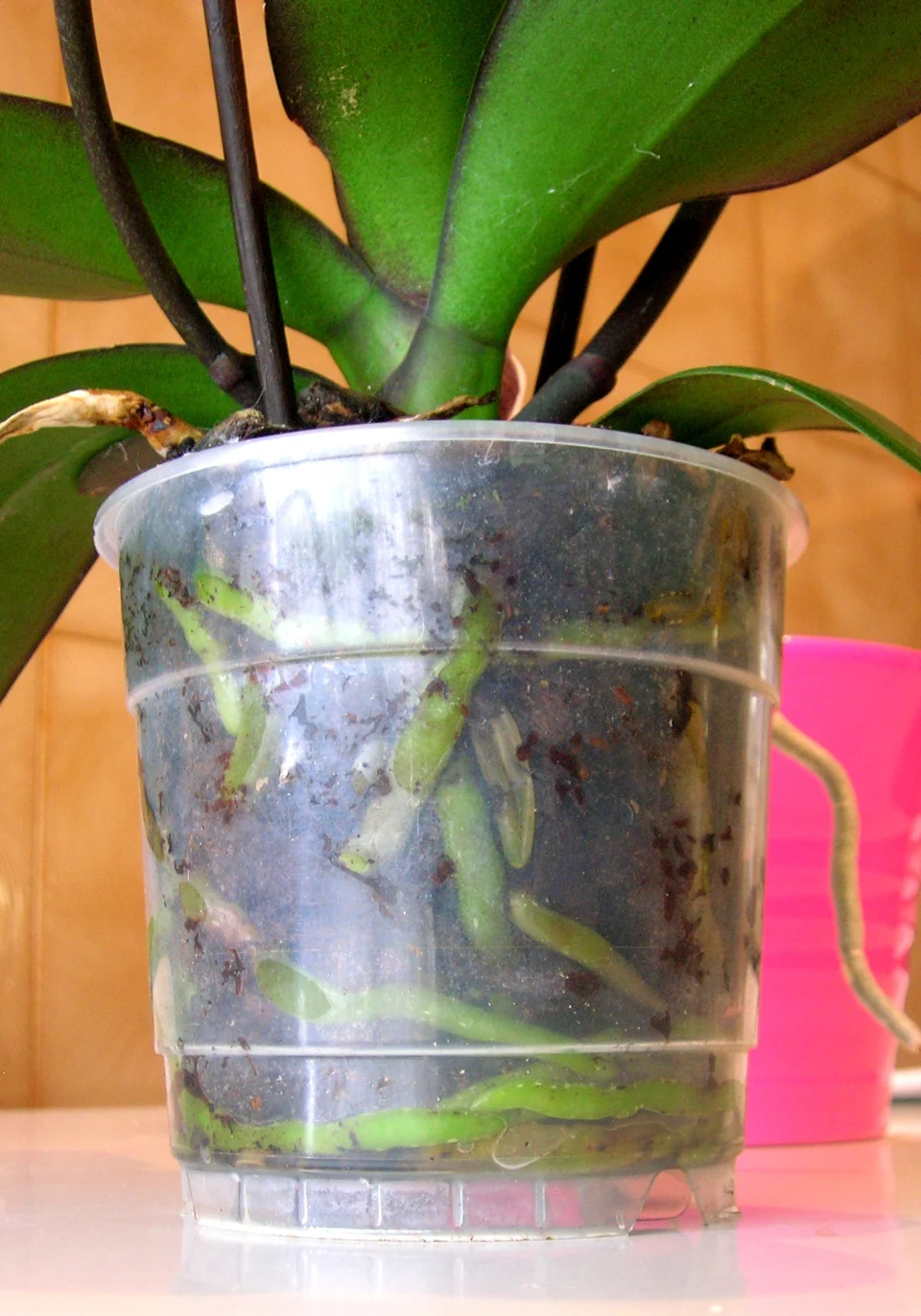
A clear inner pot, bark and sphagnum moss can dry at different rates. Use the condition of your Phalaenopsis and its growing medium to decide when the next watering is actually needed.
Diagnostic snapshot
What to check before you act
What you are seeing
- Light pot; mix approaching dryness
- Moist centre beneath a dry surface
Check first
Lift the inner pot and inspect its drainage and any water trapped in the outer pot.
Hold off for now
Do not add water because a single exposed root looks silver.
Investigate further if
Persistent wetness, a sour smell or loss of leaf firmness despite moisture needs the root-health guide.
Photograph this before you act
- Photograph the soil surface and root-zone or container context; do not disturb roots just to take a photo.
- Take one close-up of the clearest symptom and one wider view that shows the surrounding area for comparison.
Next best check
Check two visible clues before you act.
This mini-check narrows the match using the same canonical diagnostic clues as this answer. It does not confirm a diagnosis from one or two clicks, and it does not make a photo-only diagnosis.
Two quick observations can tell you whether to keep reading this diagnosis closely or compare other possibilities first.
Choose the situation that fits
| What you see | What it may mean | Next useful step |
|---|---|---|
| Light pot; mix approaching dryness | Water may be due | Water the mix evenly, then drain |
| Moist centre beneath a dry surface | The root zone is still moist | Wait and recheck the same pot |
| Limp leaves despite a wet pot | Root function may be impaired | Check roots before another watering |
Check before changing care
- Lift the inner pot and inspect its drainage and any water trapped in the outer pot.
- Compare the moisture deeper in the mix with its surface, without stabbing roots.
What to do now
- Water the growing medium evenly and let runoff escape.
- Empty the cover pot and blot accidental water from the crown.
- Record how long this particular pot takes to approach dryness.
GardenSolved checkpoint
Do not do this yet
- Do not add water because a single exposed root looks silver.
- Do not keep the pot in standing runoff or add fertiliser as a response to unexplained wilting.
Confirm the likely cause first, then choose the treatment.
Why the distinction matters
A light pot with nearly dry mix suggests watering is due. A wet centre with a dry-looking surface suggests waiting. Limp leaves with a wet pot need a root check instead of another drink.
When to ask for help
Persistent wetness, a sour smell or loss of leaf firmness despite moisture needs the root-health guide.
Choose your next step
Sources and linked claims
Save & recheck
Compare what changes before changing course.
Save this diagnosis only in this browser, then come back and compare the same clues. No account, reminder subscription, or server-stored diagnostic record is created.
Your baseline
- Light pot; mix approaching dryness
- Moist centre beneath a dry surface
Check again when you return
- Lift the inner pot and inspect its drainage and any water trapped in the outer pot.
- Compare the moisture deeper in the mix with its surface, without stabbing roots.
Tip: photograph the same area from a similar angle so the visible pattern is easier to compare.