Phalaenopsis
When and How to Repot a Phalaenopsis Orchid
The short answer
Repot when the medium has broken down or the root system needs an appropriate new container. Aerial roots alone do not establish that the plant needs a larger pot. Plan routine work around suitable growth; urgent deterioration requires a health decision first.
Replacing deteriorating medium and giving living roots a suitable container are the aims of repotting. Roots above the pot do not, by themselves, mean the plant needs a larger one.
Diagnostic snapshot
What to check before you act
What you are seeing
- Bark has become compact and stays wet
- Firm aerial roots but sound medium
Check first
Examine the medium's structure and drainage, not just its age.
Hold off for now
Do not replace the mix with garden soil or force roots into a small space.
Investigate further if
Major root loss or a soft crown needs the root-health route and, where necessary, specialist help.
Photograph this before you act
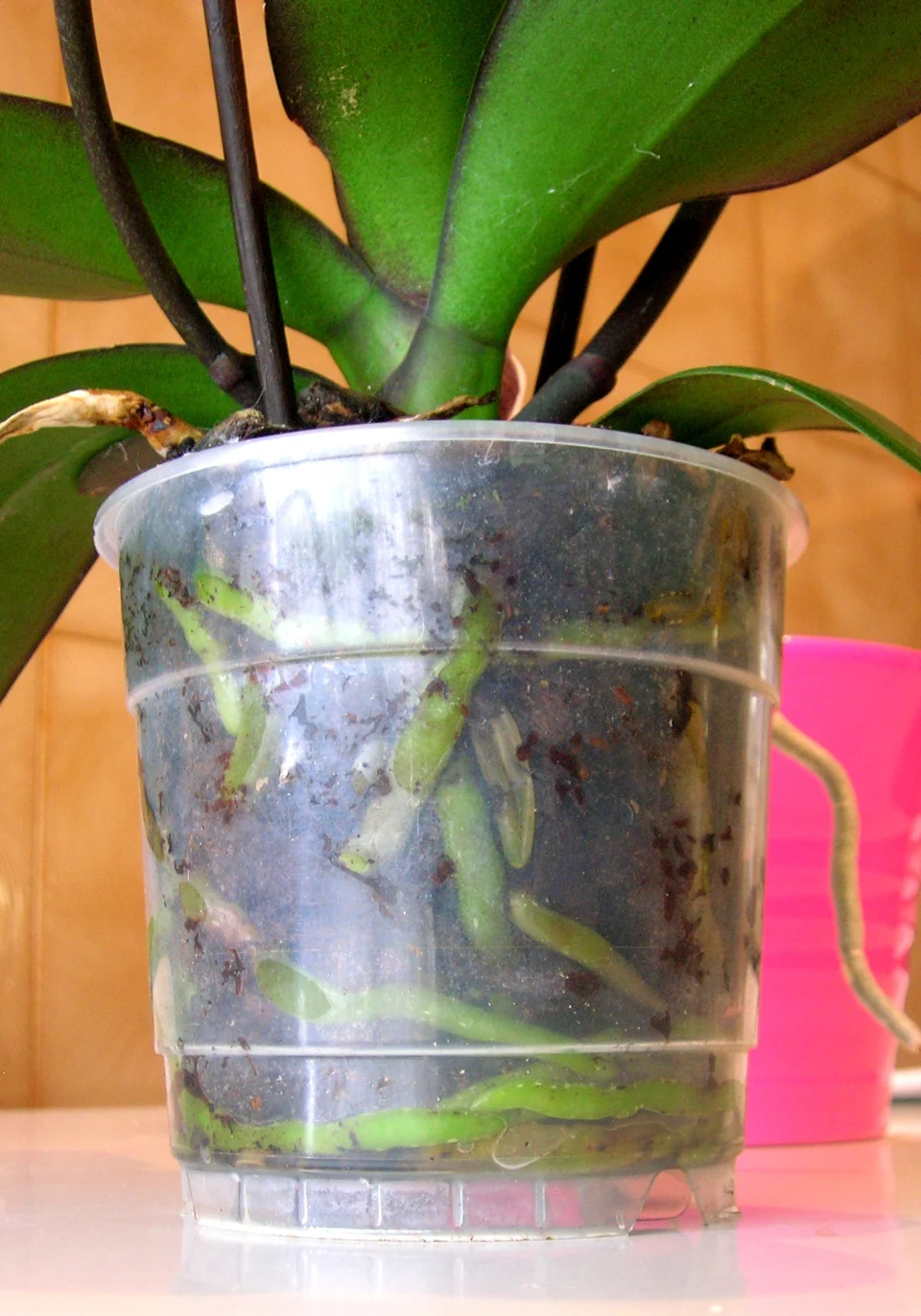
- Photograph the soil surface and root-zone or container context; do not disturb roots just to take a photo.
- Take one close-up of the clearest symptom and one wider view that shows the surrounding area for comparison.
Next best check
Check two visible clues before you act.
This mini-check narrows the match using the same canonical diagnostic clues as this answer. It does not confirm a diagnosis from one or two clicks, and it does not make a photo-only diagnosis.
Two quick observations can tell you whether to keep reading this diagnosis closely or compare other possibilities first.
Choose the situation that fits
| What you see | What it may mean | Next useful step |
|---|---|---|
| Bark has become compact and stays wet | The medium may need renewal | Plan repotting and inspect roots |
| Firm aerial roots but sound medium | Aerial growth alone is not a repotting trigger | Keep living roots |
| Severe root loss or a soft crown | This is a health problem first | Use root assessment before routine repotting |
Check before changing care
- Examine the medium's structure and drainage, not just its age.
- Estimate the space needed by living roots; do not choose a pot from leaf size alone.
What to do now
- Prepare fresh Phalaenopsis medium and a draining pot.
- Release attached roots gently, remove loose old medium and preserve sound roots.
- Position the plant without burying its crown and settle the medium around it.
GardenSolved checkpoint
Do not do this yet
- Do not replace the mix with garden soil or force roots into a small space.
- Do not repeatedly repot to chase an immediate leaf improvement.
Confirm the likely cause first, then choose the treatment.
Why the distinction matters
Firm bark with sound roots differs from compact material that stays wet. Roots outside the pot may be normal. A plant with suspected active rot needs root assessment before routine repotting instructions.
When to ask for help
Major root loss or a soft crown needs the root-health route and, where necessary, specialist help.
Choose your next step
Sources and linked claims
Save & recheck
Compare what changes before changing course.
Save this diagnosis only in this browser, then come back and compare the same clues. No account, reminder subscription, or server-stored diagnostic record is created.
Your baseline
- Bark has become compact and stays wet
- Firm aerial roots but sound medium
Check again when you return
- Examine the medium's structure and drainage, not just its age.
- Estimate the space needed by living roots; do not choose a pot from leaf size alone.
Tip: photograph the same area from a similar angle so the visible pattern is easier to compare.