Phalaenopsis
Phalaenopsis Root Rot: What to Check Before Cutting
The short answer
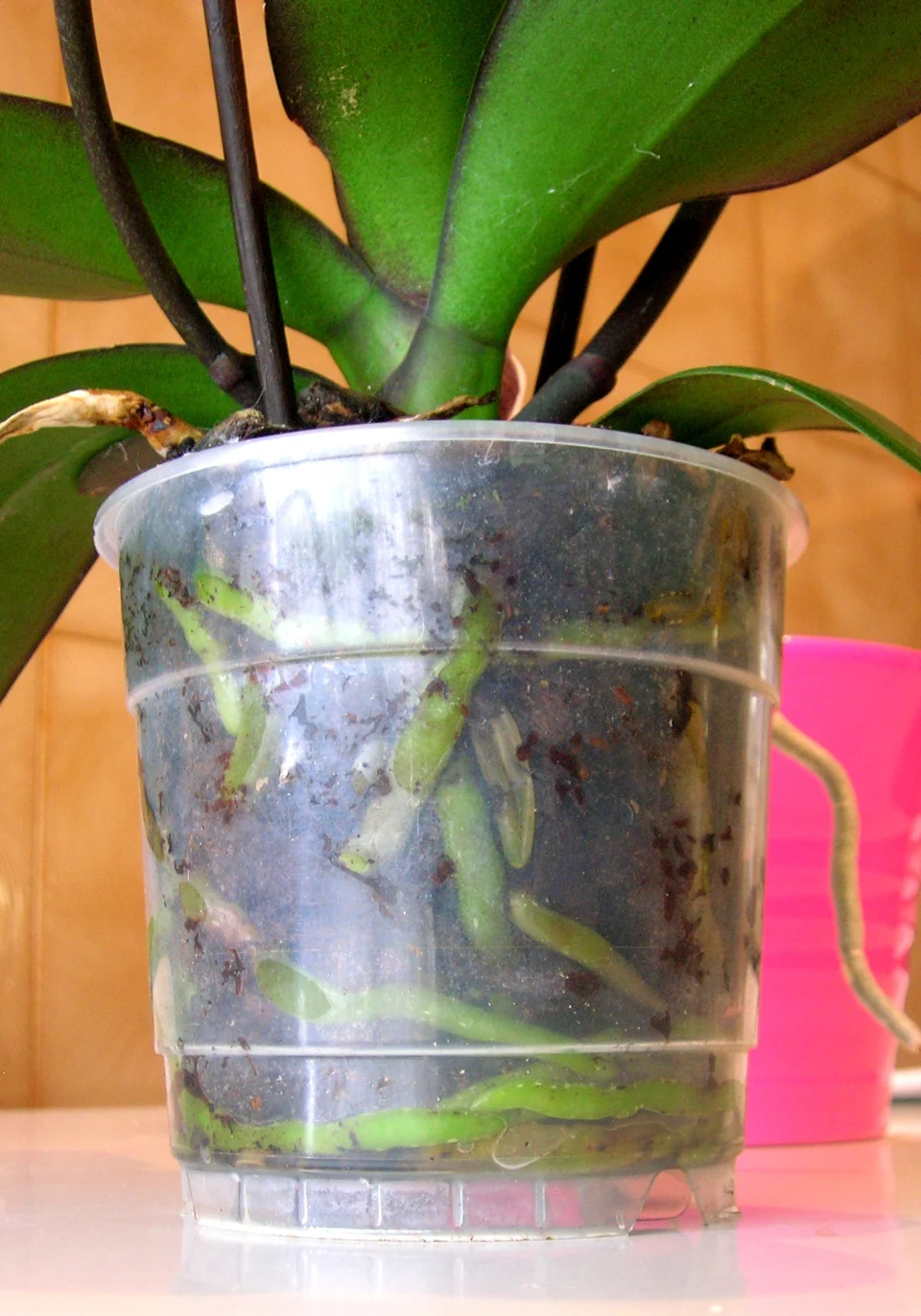
Assess texture and integrity as well as colour. Keep roots that are firm and intact; investigate roots that are soft, collapsing or losing their outer covering. A brown stain alone does not establish rot or identify its cause.
Roots that look different through a clear pot are not automatically rotten. This guide separates normal root appearance from deteriorating tissue before you remove anything.
Diagnostic snapshot
What to check before you act
What you are seeing
- Firm pale, green or stained roots
- Soft roots losing their outer covering
Check first
Check whether the pot drains and whether the mix has become compact and slow to dry.
Compare first
- Firm pale, green or stained roots
- Soft roots losing their outer covering
- Firm roots above the medium
Hold off for now
Do not cut every brown root or prescribe fungicide from appearance alone.
Investigate further if
Softness spreading into the stem or crown, a foul smell or rapid collapse needs prompt assessment and separation from other plants.
Photograph this before you act
- Photograph the soil surface and root-zone or container context; do not disturb roots just to take a photo.
- Take one close-up of the clearest symptom and one wider view that shows the surrounding area for comparison.
Recommended diagnostic check
Drainage / Root-Zone Checker
What does the root zone actually show?
Separate drainage, moisture, root crowding, and actual root damage before changing care or treatment. This checker is generated from this answer’s canonical diagnostic comparison.
First check
Check whether the pot drains and whether the mix has become compact and slow to dry.
Do not diagnose root rot, overwatering, or poor drainage from one surface symptom alone. Inspect the actual root-zone evidence first.
Choose the situation that fits
Firm pale, green or stained roots
- Colour alone does not establish rot
Preserve intact roots
Soft roots losing their outer covering
- Tissue may be deteriorating
Inspect gently and remove only clearly dead tissue
Firm roots above the medium
- Aerial roots are normal in Phalaenopsis
Do not trim them to make the plant look tidy
Check before changing care
- Check whether the pot drains and whether the mix has become compact and slow to dry.
- If an inspection is justified, ease the plant out and gently check accessible roots; do not crush healthy roots as a test.
What to do now
- Remove broken-down medium.
- Use clean cutting tools for clearly dead tissue, preserving sound roots.
- Re-establish the plant in suitable fresh orchid medium and a draining pot sized to its remaining roots.
GardenSolved checkpoint
Do not do this yet
- Do not cut every brown root or prescribe fungicide from appearance alone.
- Avoid unnecessary further disturbance during recovery.
Confirm the likely cause first, then choose the treatment.
Why the distinction matters
Firm pale or green roots can function normally. Soft brown roots in deteriorating wet mix need a different response. Firm aerial roots above the pot are not a reason to trim the plant.
When to ask for help
Softness spreading into the stem or crown, a foul smell or rapid collapse needs prompt assessment and separation from other plants.
Choose your next step
Sources and linked claims
Save & recheck
Compare what changes before changing course.
Save this diagnosis only in this browser, then come back and compare the same clues. No account, reminder subscription, or server-stored diagnostic record is created.
Your baseline
- Firm pale, green or stained roots
- Soft roots losing their outer covering
Check again when you return
- Check whether the pot drains and whether the mix has become compact and slow to dry.
- If an inspection is justified, ease the plant out and gently check accessible roots; do not crush healthy roots as a test.
Tip: photograph the same area from a similar angle so the visible pattern is easier to compare.