Phalaenopsis
Why Are My Phalaenopsis Orchid Leaves Wrinkled?
The short answer
Wrinkling means the leaves are not receiving enough water, but adding more is not always the answer. First separate a dry pot with functioning roots from a moist pot whose roots have deteriorated.
Wrinkled leaves are a water-supply clue, not a reliable instruction to add water. Start below the leaves: the growing medium and the roots determine which response is safe.
Diagnostic snapshot
What to check before you act
What you are seeing
- Dry mix with firm roots
- Wet mix with soft or collapsing roots
Check first
Compare pot weight and moisture within the growing medium with the recent watering history.
Hold off for now
Do not repeatedly soak a plant with damaged roots.
Investigate further if
A failing growing point, spreading wet lesions or continued collapse needs prompt specialist assessment.
Photograph this before you act
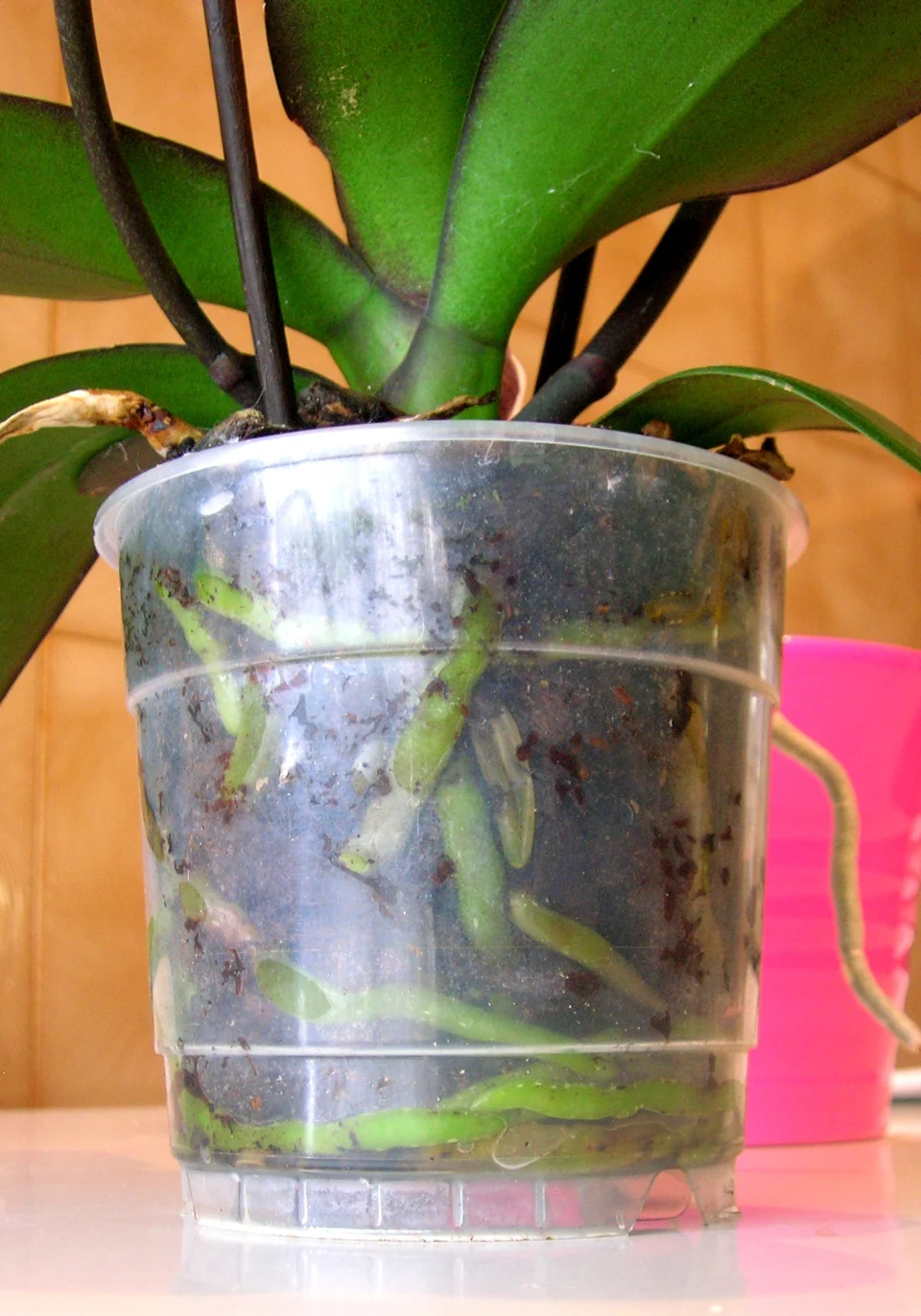
- Photograph the soil surface and root-zone or container context; do not disturb roots just to take a photo.
- Take one close-up of the clearest symptom and one wider view that shows the surrounding area for comparison.
Next best check
Check two visible clues before you act.
This mini-check narrows the match using the same canonical diagnostic clues as this answer. It does not confirm a diagnosis from one or two clicks, and it does not make a photo-only diagnosis.
Two quick observations can tell you whether to keep reading this diagnosis closely or compare other possibilities first.
Choose the situation that fits
| What you see | What it may mean | Next useful step |
|---|---|---|
| Dry mix with firm roots | Water supply may be too low | Restore moisture-based watering |
| Wet mix with soft or collapsing roots | Root loss can limit uptake | Assess drainage and root health |
| Recently repotted, still firm roots | Establishment may be involved | Keep conditions steady and monitor new growth |
Check before changing care
- Compare pot weight and moisture within the growing medium with the recent watering history.
- Look through a clear pot for firm roots; if decline and root loss are suspected, remove the plant gently for inspection.
What to do now
- Restore appropriate watering if the mix is dry and roots are sound.
- If roots are deteriorating, correct drainage and follow the root-health and repotting decisions.
- Keep conditions steady while recovery is assessed.
GardenSolved checkpoint
Do not do this yet
- Do not repeatedly soak a plant with damaged roots.
- Do not force-feed it or remove living leaves simply because they are wrinkled.
Confirm the likely cause first, then choose the treatment.
Why the distinction matters
Dry mix and firm roots favour insufficient water supply. Persistently wet mix with soft, collapsing roots points towards root loss. A recently disturbed root system may also be slow to supply the leaves.
When to ask for help
A failing growing point, spreading wet lesions or continued collapse needs prompt specialist assessment.
Choose your next step
Sources and linked claims
Save & recheck
Compare what changes before changing course.
Save this diagnosis only in this browser, then come back and compare the same clues. No account, reminder subscription, or server-stored diagnostic record is created.
Your baseline
- Dry mix with firm roots
- Wet mix with soft or collapsing roots
Check again when you return
- Compare pot weight and moisture within the growing medium with the recent watering history.
- Look through a clear pot for firm roots; if decline and root loss are suspected, remove the plant gently for inspection.
Tip: photograph the same area from a similar angle so the visible pattern is easier to compare.
Related questions
Diagnostic Finder
Still not sure this answer fits?
Open the Diagnostic Finder with the relevant growing subject or care context preselected and compare other published GardenSolved diagnoses.
Compare other possibilities