Broad Beans
Can I grow broad beans in pots?
The short answer
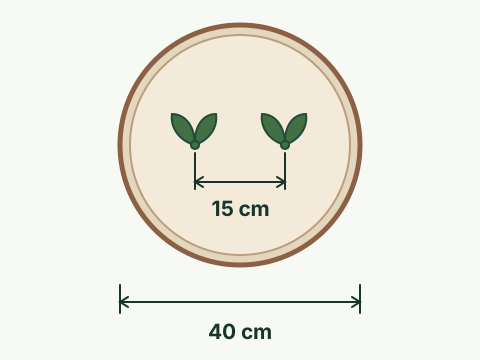
Yes. Choose a dwarf variety, a sunny sheltered spot and a large pot with drainage holes. The RHS suggests a container at least 40 cm (about 16 in) wide and around 15 cm (6 in) between plants. Leave enough space for the variety you are growing.
Compact broad beans can crop in a large container if the roots have room and the pot drains freely.
Diagnostic snapshot
What to check before you act
What you are seeing
- Dwarf variety in a wide pot that drains
- Dry surface, moist mix below
Check first
Check that water leaves the pot and that it does not sit in a saucer full of runoff.
Hold off for now
Hold off on adding extra plants or using a fixed daily watering schedule.
Investigate further if
If plants keep wilting despite suitable moisture, check for damaged stems, pests and root problems. Ask for local help if several plants decline or the stem bases soften.
Photograph this before you act
- Photograph the soil surface and root-zone or container context; do not disturb roots just to take a photo.
- Take one close-up of the clearest symptom and one wider view that shows the surrounding area for comparison.
Next best check
Check two visible clues before you act.
This mini-check narrows the match using the same canonical diagnostic clues as this answer. It does not confirm a diagnosis from one or two clicks, and it does not make a photo-only diagnosis.
Two quick observations can tell you whether to keep reading this diagnosis closely or compare other possibilities first.
Check whether the pot suits the crop
| Situation | Next step |
|---|---|
| Dwarf variety in a wide pot that drains | Leave space between plants and stake any stems that lean. |
| Dry surface, moist mix below | Wait and check again before watering. |
| Windy balcony or pot standing in runoff | Find a sheltered position and let water drain freely. |
What to check first
- Check that water leaves the pot and that it does not sit in a saucer full of runoff.
- Check moisture below the surface at the edge of the root ball. Note how quickly the pot dries on windy days and how much direct sun it gets.
What to do now
- Use potting mix and keep drainage holes clear.
- Sow to packet depth or plant acclimatised seedlings at their original depth.
- Give stems a small stake or twig support if they lean.
- Water when the root zone is drying, paying particular attention at flowering.
- For autumn plants in exposed pots, assess the local winter before relying on an outdoor position.
GardenSolved checkpoint
Do not do this yet
- Hold off on adding extra plants or using a fixed daily watering schedule.
- Check spacing and moisture first.
Confirm the likely cause first, then choose the treatment.
When to get help
If plants keep wilting despite suitable moisture, check for damaged stems, pests and root problems. Ask for local help if several plants decline or the stem bases soften.
Follow the next useful clue
- The pot will be outdoors in winter: Check the regional sowing window.When should I sow broad beans?
- Healthy-looking plants flower without setting pods: Check flower clusters and root-zone moisture.Why are my broad beans flowering but not producing pods?
Consulted sources
Save & recheck
Compare what changes before changing course.
Save this diagnosis only in this browser, then come back and compare the same clues. No account, reminder subscription, or server-stored diagnostic record is created.
Your baseline
- Dwarf variety in a wide pot that drains
- Dry surface, moist mix below
Check again when you return
- Check that water leaves the pot and that it does not sit in a saucer full of runoff.
- Check moisture below the surface at the edge of the root ball. Note how quickly the pot dries on windy days and how much direct sun it gets.
Tip: photograph the same area from a similar angle so the visible pattern is easier to compare.