Broad Beans
What are the brown spots on my broad bean leaves?
The short answer
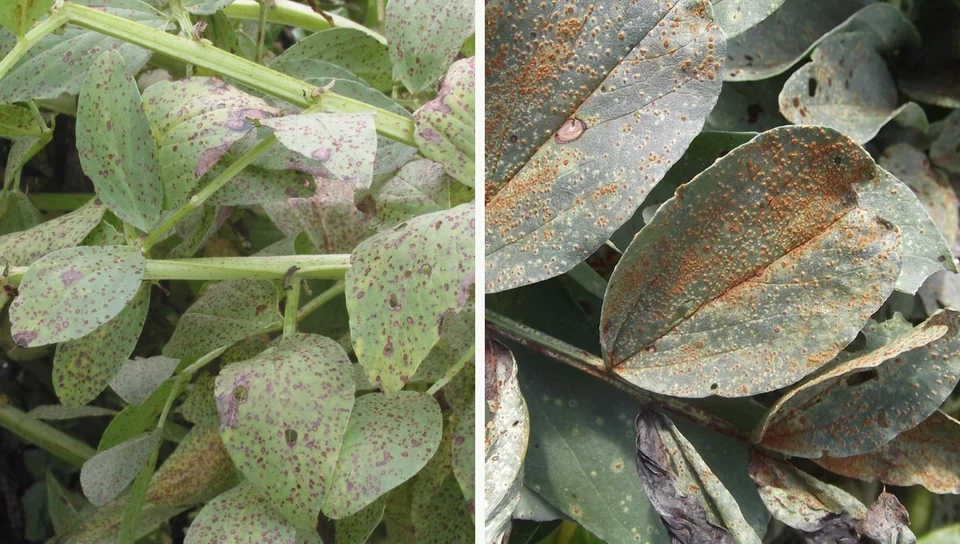
Flat reddish-brown spots that expand during damp weather are consistent with chocolate spot. Small, raised, dusty brown pustules support rust. Check both sides of several leaves and inspect stems and pods. Colour alone cannot confirm either disease.
Compare the surface and spread of the marks. Chocolate spot, rust and injury after a cold night can all look brown at first glance.
Diagnostic snapshot
What to check before you act
What you are seeing
- Flat, rounded red-brown spots, some expanding into dark patches
- Small, dusty brown pustules, sometimes with pale halos
Check first
Use a hand lens and side lighting to compare several affected and healthy leaves. Look at both surfaces and distinguish flat lesions from raised, dusty pustules.
Compare first
- Possible chocolate spot
- Possible rust
- Other leaf-spot diseases
Hold off for now
Hold off on spraying or saving seed from badly affected plants while the cause remains uncertain.
Investigate further if
Contact a local plant diagnostic service if lesions spread quickly, stems collapse or pods develop marks. Ask what photos or samples they want before moving affected material.
Photograph this before you act
- Photograph the whole plant and its growing area so the overall pattern is visible.
- Take a sharp close-up of the affected leaf and a second photo of the underside.
Recommended diagnostic check
Disease Evidence Checker
Which disease pattern can you actually support?
Compare lesion shape, visible growth, affected tissue, progression, and lookalikes before choosing a treatment. This checker is generated from this answer’s canonical diagnostic comparison.
First evidence check
Use a hand lens and side lighting to compare several affected and healthy leaves. Look at both surfaces and distinguish flat lesions from raised, dusty pustules.
Do not choose a fungicide or make a major removal decision from one spot, one color, or one photograph alone. Match the full physical pattern first.
Second diagnostic checkEnvironmental Stress CheckerOpen this only if the first checker does not explain the pattern well.
Environmental Stress Checker
Does the timing or exposure fit environmental stress?
Compare the symptom pattern with recent growing conditions before treating a lookalike as disease, pests, nutrient deficiency, or a watering problem.
First check
Use a hand lens and side lighting to compare several affected and healthy leaves. Look at both surfaces and distinguish flat lesions from raised, dusty pustules.
Timing / exposure boundary
Dark, limp patches appeared together after a cold night
Timing and exposure can support an environmental branch, but they do not rule out other causes. Use the factor labels and boundary above as clues, not as a diagnosis.
Choose the situation that fits
Possible chocolate spot
- Flat, rounded red-brown spots, some expanding into dark patches
Compare newer spots with older ones and look for similar damage on stems or flowers. Damp, crowded growth favours chocolate spot.
Possible rust
- Small, dusty brown pustules, sometimes with pale halos
Use side lighting to check for raised, powdery spots on leaves and stems.
Other leaf-spot diseases
- Pale-centred lesions with tiny dark dots, or marks on pods and stems
Other leaf-spot diseases, including Ascochyta, can overlap. Seek local confirmation before deciding what to do with seed or plants.
Possible frost injury
- Dark, limp patches appeared together after a cold night
Compare exposed and sheltered plants and track whether damage continues without another freeze.
What to check first
- Use a hand lens and side lighting to compare several affected and healthy leaves. Look at both surfaces and distinguish flat lesions from raised, dusty pustules.
- Photograph the whole bed and a representative leaf. Record recent weather and whether new marks are appearing on stems, flowers or pods.
What to do now
- Improve airflow where practical and water at soil level when needed.
- Keep suspected diseased material away from healthy seed stock.
- If disease is confirmed, follow local guidance on removing affected material and managing crop residues.
GardenSolved checkpoint
Do not do this yet
- Hold off on spraying or saving seed from badly affected plants while the cause remains uncertain.
- Flat spots, dusty pustules and frost injury call for different responses.
Confirm the likely cause first, then choose the treatment.
When to get help
Contact a local plant diagnostic service if lesions spread quickly, stems collapse or pods develop marks. Ask what photos or samples they want before moving affected material.
Follow the next useful clue
- Damage appeared abruptly after a cold night: Check for frost damage and recovery.Will broad beans recover after frost?
- Individual insects cluster at growing tips: Check for black bean aphids.What are the black bugs on my broad beans?
- Plants are also losing flowers: Compare reasons for poor pod set.Why are my broad beans flowering but not producing pods?
Consulted sources
Save & recheck
Compare what changes before changing course.
Save this diagnosis only in this browser, then come back and compare the same clues. No account, reminder subscription, or server-stored diagnostic record is created.
Your baseline
- Flat, rounded red-brown spots, some expanding into dark patches
- Small, dusty brown pustules, sometimes with pale halos
Check again when you return
- Use a hand lens and side lighting to compare several affected and healthy leaves. Look at both surfaces and distinguish flat lesions from raised, dusty pustules.
- Photograph the whole bed and a representative leaf. Record recent weather and whether new marks are appearing on stems, flowers or pods.
Tip: photograph the same area from a similar angle so the visible pattern is easier to compare.
Related questions
Diagnostic Finder
Still not sure this answer fits?
Open the Diagnostic Finder with the relevant growing subject or care context preselected and compare other published GardenSolved diagnoses.
Compare other possibilities