English
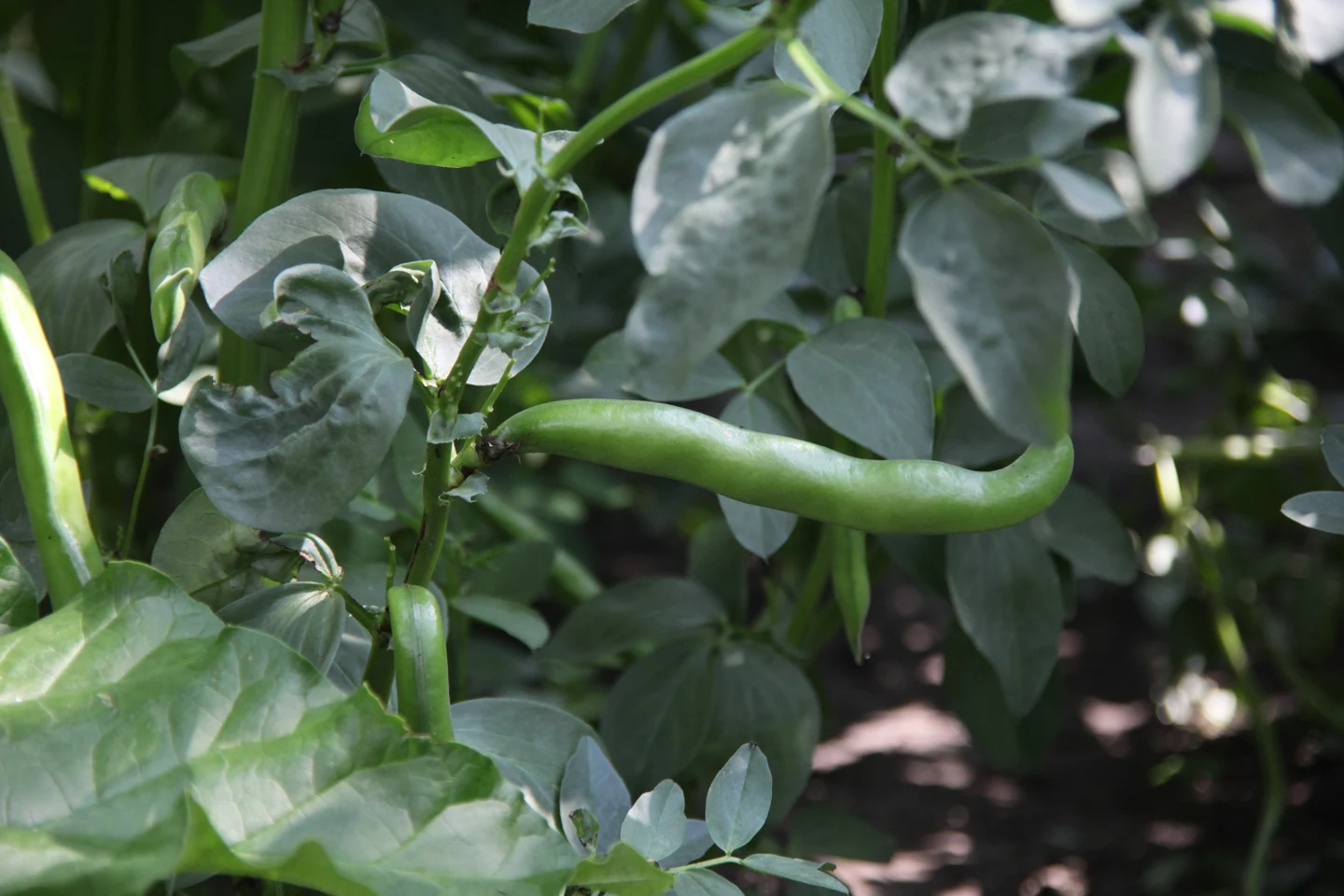
Broad bean growing
Broad beans: from sowing to a full pod
Broad beans, also called fava beans, are a cool-season crop. Choose a sowing window for your variety and site. If the crop is already growing, start with the stage that went wrong. A bare row after sowing, blackened shoot tips after frost and black insects on new growth need different checks.
Find my broad bean questionPhoto: Nina Gerlach / Wikimedia Commons, CC BY-SA 3.0; full frame resized and converted to WebP. https://commons.wikimedia.org/wiki/File:Vicia_faba.JPG Context illustration/photo, not confirmation of a plant problem.
Before you act
Check the sowing window, plant stage and visible clue
1. Is the bed ready to sow?
Match variety, local winter conditions and drainage before choosing an autumn or spring start.
Choose when to sow2. Is the damage on or in the leaf?
Check whether marks are flat, raised or made up of individual insects.
Compare leaf marks3. Have any flowers formed pods?
Look beneath older flowers for a tiny pod before treating flower drop.
Check flower and pod developmentBrowse problems by symptom
Start with what you can see.
Questions & answers
Browse broad beans
11 published answers
Sowing and growing
Choose a season, sow at the right depth and check emergence in beds or pots.
When should I sow broad beans?
Sow a hardy autumn variety outdoors only where local conditions suit overwintering and the bed is sheltered and drains freely. In a cold, exposed or persistently wet garden, plan for late winter under cover or spring outdoors once the soil is workable. November is a useful sowing window in some places. Use the local window on your seed packet or in a regional growing guide.
Open answerHow do I grow broad beans from seed?
Sow broad beans in a sunny bed that drains well. For many home-garden varieties, about 5 cm (2 in) deep and 15–20 cm (6–8 in) apart is a useful starting point. Follow the packet if it differs. Support tall plants before they lean, and check root-zone moisture as flowers and pods develop.
Open answerWhy aren’t my broad beans coming up?
Compare the sowing date, depth and soil moisture with the rest of the row. If similar seeds have already come up elsewhere, inspect one bare spot. A firm seed with a healthy emerging root supports waiting. A soft decaying seed or an empty hole points to a different next step.
Open answerCan I grow broad beans in pots?
Yes. Choose a dwarf variety, a sunny sheltered spot and a large pot with drainage holes. The RHS suggests a container at least 40 cm (about 16 in) wide and around 15 cm (6 in) between plants. Leave enough space for the variety you are growing.
Open answerLeaves, stems and growing tips
Separate frost and water stress from leaf spots, insects and missing tissue.
Will broad beans recover after frost?
Give plants time to thaw and check them again before deciding whether to replace them. Damage on exposed leaves or tips after a frost is compatible with recovery if lower stems remain firm and healthy growth resumes. If whole plants collapse or lesions keep spreading after the weather improves, investigate other causes as well.
Open answerWhat are the brown spots on my broad bean leaves?
Flat reddish-brown spots that expand during damp weather are consistent with chocolate spot. Small, raised, dusty brown pustules support rust. Check both sides of several leaves and inspect stems and pods. Colour alone cannot confirm either disease.
Open answerWhat are the black bugs on my broad beans?
Clusters of small, dark, soft-bodied insects on young tips and leaf undersides are consistent with aphids. Sticky honeydew, shed skins and ants are supporting clues. Light colonies on otherwise vigorous plants can often be monitored.
Open answerWhat’s eating my broad bean leaves?
Repeated rounded notches along the margins of young leaves suggest pea leaf weevil. Irregular holes or ragged edges on tender growth can point to slugs or snails. Look for the animal, fresh feeding or slime before choosing a response.
Open answerWhy are my broad beans yellowing or wilting?
Check moisture below the surface beside both a healthy and an affected plant. Water if the root zone is dry and the stems are firm. If it stays wet, pause unnecessary watering and check drainage. If plants collapse from the base or spots are spreading, look for evidence of disease and seek identification.
Open answerFlowers, pods and harvest
Look for young pods after flowering and sample a filled pod before picking the row.
Why are my broad beans flowering but not producing pods?
Some flowers drop naturally. Check the lower flower clusters for tiny pods before assuming that none have set. If successive clusters produce no pods, review weather and root-zone moisture during flowering. Check the shoot tips for aphids and whether covers restrict insect access when plants are in bloom.
Open answerWhen are broad beans ready to harvest?
For fresh shelled beans, pick when the pods are still green and the beans inside have filled out. Open one lower pod to check the beans. If you are growing for dry beans, leave the pods to mature and dry when conditions allow.
Open answer