Broad Beans
Why are my broad beans flowering but not producing pods?
The short answer
Some flowers drop naturally. Check the lower flower clusters for tiny pods before assuming that none have set. If successive clusters produce no pods, review weather and root-zone moisture during flowering. Check the shoot tips for aphids and whether covers restrict insect access when plants are in bloom.
A fading flower can leave a pod so small it is easy to miss. Look at older clusters before troubleshooting the next flowers.
Diagnostic snapshot
What to check before you act
What you are seeing
- A few faded flowers and tiny pods lower on the stem
- Repeated flower loss during hot, dry weather and a dry root zone
Check first
Compare flower clusters of different ages on several plants. Look for very small pods beneath faded flowers.
Hold off for now
Hold off on fertiliser, hand-pollination or pest treatment until you have checked whether pods are already forming and looked for the main sources of stress.
Investigate further if
Ask for local advice if flowers continue to fail under suitable conditions, especially if stems are spotted or plants are collapsing.
Photograph this before you act
- Photograph the whole plant and its growing area so the overall pattern is visible.
- Photograph affected flowers or buds together with nearby leaves and stems.

Next best check
Check two visible clues before you act.
This mini-check narrows the match using the same canonical diagnostic clues as this answer. It does not confirm a diagnosis from one or two clicks, and it does not make a photo-only diagnosis.
Two quick observations can tell you whether to keep reading this diagnosis closely or compare other possibilities first.
Choose the situation that fits
| What you see | Next step |
|---|---|
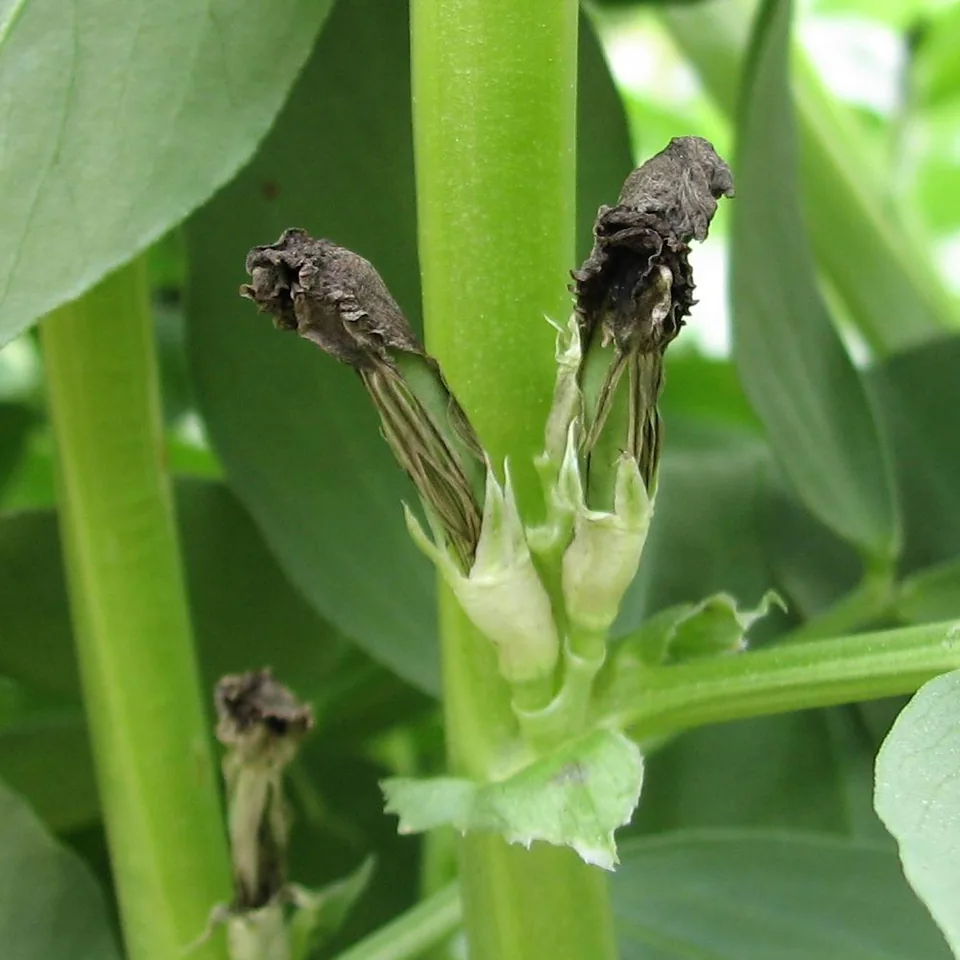
| A few faded flowers and tiny pods lower on the stem | Give newer flowers time and continue checking moisture. |
| Repeated flower loss during hot, dry weather and a dry root zone | Water at soil level when needed and monitor the next cluster. Damaged flowers cannot be restored. |
| Blackened flowers after a freeze | Monitor new flowers when weather improves. Check the rest of the plant for frost injury. |
| Crowded black insects, sticky shoots or spreading brown lesions on stems | Follow the relevant pest or leaf-spot check before treating the plant. |
| Flowers are opening inside a closed cover during mild weather | When conditions allow, open or remove the cover so pollinators can reach the flowers. Continue checking the other causes. |
What to check first
- Compare flower clusters of different ages on several plants. Look for very small pods beneath faded flowers.
- Check moisture below the surface and review the weather during bloom. Inspect shoot tips for colonies and check whether a cover limits pollinator access.
What to do now
- Keep soil moisture steady through bloom and early pod development without saturating it.
- Check the next set of flowers for improvement and record what changed.
- For repeated heat-related losses, choose an earlier locally suitable sowing in the next season.
GardenSolved checkpoint
Do not do this yet
- Hold off on fertiliser, hand-pollination or pest treatment until you have checked whether pods are already forming and looked for the main sources of stress.
Confirm the likely cause first, then choose the treatment.
When to get help
Ask for local advice if flowers continue to fail under suitable conditions, especially if stems are spotted or plants are collapsing.
Follow the next useful clue
- Flowers blackened after freezing weather: Check stems and shoots for frost injury.Will broad beans recover after frost?
- Black insects cluster around the growing tips: Inspect for aphids.What are the black bugs on my broad beans?
- Small pods are present: Check when they will be ready to pick.When are broad beans ready to harvest?
Consulted sources
Save & recheck
Compare what changes before changing course.
Save this diagnosis only in this browser, then come back and compare the same clues. No account, reminder subscription, or server-stored diagnostic record is created.
Your baseline
- A few faded flowers and tiny pods lower on the stem
- Repeated flower loss during hot, dry weather and a dry root zone
Check again when you return
- Compare flower clusters of different ages on several plants. Look for very small pods beneath faded flowers.
- Check moisture below the surface and review the weather during bloom. Inspect shoot tips for colonies and check whether a cover limits pollinator access.
Tip: photograph the same area from a similar angle so the visible pattern is easier to compare.
Related questions
Diagnostic Finder
Still not sure this answer fits?
Open the Diagnostic Finder with the relevant growing subject or care context preselected and compare other published GardenSolved diagnoses.
Compare other possibilities