Garlic
Is allium leafminer damaging my garlic?
The short answer
Look for lines of pale feeding punctures, mines and legless larvae or brown pupae in affected garlic tissue. Allium leafminer is a regional risk, not the explanation for every damaged leaf. Leek moth larvae have a distinct head and legs; surface silvering may instead suggest thrips. Pale marks alone do not establish the insect species. Confirm signs and local activity before choosing protection.
Twisted garlic leaves do not identify an insect. Feeding punctures, internal mines and the actual insect stage give a more useful starting point.
Diagnostic snapshot
What to check before you act
What you are seeing
- Pale punctures in lines and mines in garlic foliage
- Brown pupae or legless larvae associated with damaged leaf sheaths
Check first
Inspect attached leaves for lines of punctures and true mines. Photograph marks and any insect with a scale reference; avoid tearing healthy stems apart.
Compare first
- Allium leafminer clues
- Leek moth lookalike
- Thrips-like injury
Hold off for now
Do not treat every twisted leaf as leafminer or spray simply because a small fly is present.
Investigate further if
Seek identification when mines extend into stems or bulbs, pupae are found, or secondary rot develops. Include location, dates, crop history and close photographs so an adviser can distinguish regional pests and advise suitable management.
Photograph this before you act
- Photograph the whole plant and its growing area so the overall pattern is visible.
- Take a sharp close-up of the affected leaf and a second photo of the underside.
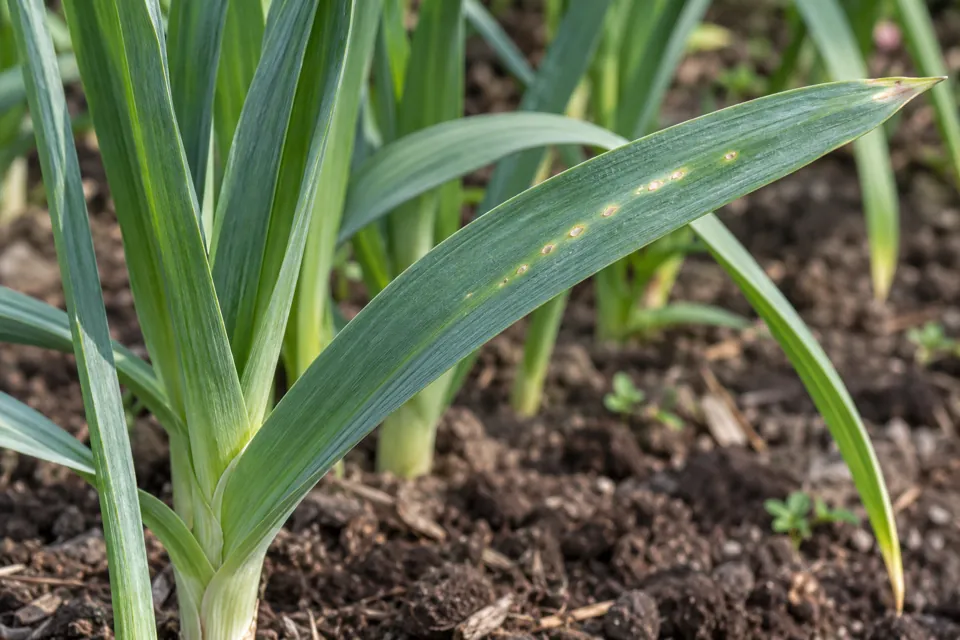
Recommended diagnostic check
Pest Evidence Checker
What pest evidence can you actually confirm?
Match insects, eggs, webbing, residue, frass, feeding marks, or another physical sign before treating. This checker is generated from this answer’s canonical diagnostic comparison.
First evidence check
Inspect attached leaves for lines of punctures and true mines. Photograph marks and any insect with a scale reference; avoid tearing healthy stems apart.
Do not choose a pesticide from symptoms alone. Confirm the pest or a pest-specific physical pattern first.
Match the situation before acting
Allium leafminer clues
- Puncture lines, internal mines, legless maggots or brown pupae
Photograph the combined signs and confirm local risk.
Leek moth lookalike
- Caterpillar with a visible brown head and small legs
Use the relevant moth guidance after identification.
Thrips-like injury
- Surface silvering with small slender insects rather than internal tunnels
Inspect protected leaf bases with a lens.
Weather distortion
- Twisting without feeding signs after changing spring conditions
Monitor new growth; distortion alone does not establish an infestation.
Safe checks before acting
- Inspect attached leaves for lines of punctures and true mines. Photograph marks and any insect with a scale reference; avoid tearing healthy stems apart.
- Use already damaged or removed material for a closer insect view, keeping it contained. Check local Extension or horticultural alerts; UK calendar windows are not a universal schedule for all growing regions.
What to do next
- Keep suspect material separate and get regional identification if mines or pupae are present. An insect photograph may still be insufficient for species-level confirmation.
- Where allium leafminer is locally active, plan appropriately secured insect mesh before egg-laying. Covering a site with overwintering pupae can trap emerging flies inside with the crop.
- Use crop-site history and hygiene alongside exclusion. Damaged tissue can develop secondary decay, so monitor the neck and bulb condition as well as the leaves.
- If chemical control is considered after confirmation, use local crop-specific advice and the current product label. Do not copy a commercial US product list into home-garden instructions elsewhere.
GardenSolved checkpoint
Do not do this yet
- Do not treat every twisted leaf as leafminer or spray simply because a small fly is present.
- Do not cover an infested planting without considering insects already beneath the mesh.
Confirm the likely cause first, then choose the treatment.
Scope and follow-up
An educational illustration is not photographic evidence of an infested plant. Puncture-like marks can resemble other injury; use the comparison, check for actual mines and insect stages in already damaged material, and seek regional identification. Do not infer the species from pale marks alone.
This answer owns the distinctive allium-leafminer comparison. Unidentified root or bulb maggots and rapid whole-plant collapse still need the broader wilt pathway.
When to get more help
Seek identification when mines extend into stems or bulbs, pupae are found, or secondary rot develops. Include location, dates, crop history and close photographs so an adviser can distinguish regional pests and advise suitable management.
Follow the next useful clue
- The neck or plant is collapsing: Investigate the root zone and secondary decay.Why is my garlic wilting or collapsing?
- There are spots but no mines or insect signs: Compare raised rust pustules with flat damage.Does my garlic have rust?
Consulted horticultural sources
Save & recheck
Compare what changes before changing course.
Save this diagnosis only in this browser, then come back and compare the same clues. No account, reminder subscription, or server-stored diagnostic record is created.
Your baseline
- Pale punctures in lines and mines in garlic foliage
- Brown pupae or legless larvae associated with damaged leaf sheaths
Check again when you return
- Inspect attached leaves for lines of punctures and true mines. Photograph marks and any insect with a scale reference; avoid tearing healthy stems apart.
- Use already damaged or removed material for a closer insect view, keeping it contained. Check local Extension or horticultural alerts; UK calendar windows are not a universal schedule for all growing regions.
Tip: photograph the same area from a similar angle so the visible pattern is easier to compare.
Related questions
Diagnostic Finder
Still not sure this answer fits?
Open the Diagnostic Finder with the relevant growing subject or care context preselected and compare other published GardenSolved diagnoses.
Compare other possibilities