Garlic
Why did my garlic form one round instead of cloves?
The short answer
A true-garlic bulb may remain an undivided round after insufficient winter cold, small planting cloves, poor seasonal growth or use of an unsuitable cultivar. Confirm maturity, cultivar and planting history before drawing that conclusion. Elephant garlic is a leek relative, and plants started from bulbils need a different developmental comparison from full-size cloves.
An undivided round and a small divided bulb are different outcomes. First establish what you planted and whether the bulb completed its normal season.
Diagnostic snapshot
What to check before you act
What you are seeing
- A mature bulb lacks separate developed cloves
- Planting history includes late planting or uncertain variety
Check first
Read the original stock label or supplier record. Distinguish true garlic, elephant garlic and aerial bulbils; do not identify the crop solely from one harvested round.
Compare first
- Immature bulb
- Mature true-garlic round
- Different starting material or identity
Hold off for now
Do not apply a high fertilizer dose to force an already mature round to divide.
Investigate further if
Consult the supplier or a local adviser if the cultivar and planting material are unknown or the whole planting remains undivided after an appropriate season. Soft tissue, abnormal growth or rot requires a disease assessment instead of a chilling explanation.
Photograph this before you act
- Photograph the whole plant and its growing area so the overall pattern is visible.
- Take one close-up of the clearest symptom and one wider view that shows the surrounding area for comparison.
Next best check
Check two visible clues before you act.
This mini-check narrows the match using the same canonical diagnostic clues as this answer. It does not confirm a diagnosis from one or two clicks, and it does not make a photo-only diagnosis.
Two quick observations can tell you whether to keep reading this diagnosis closely or compare other possibilities first.
Match the situation before acting
Immature bulb
- Plant still in active growth; final structure not established
Use maturity checks before calling division a failure.
Mature true-garlic round
- Known Allium sativum planted as a clove; review cold exposure, starting-clove size and growing constraints
Review cultivar-specific seasonal requirements.
Different starting material or identity
- Bulbils or elephant garlic rather than a standard true-garlic clove
Confirm identity before applying a one-season expectation.
Safe checks before acting
- Read the original stock label or supplier record. Distinguish true garlic, elephant garlic and aerial bulbils; do not identify the crop solely from one harvested round.
- Examine an already harvested representative bulb and its maturity record. Record whether it has distinct cloves under the wrapper and whether planting gave the cultivar a suitable cold period.
What to do next
- If immature, use the harvest pathway to decide when to reassess. Do not cut open the entire crop while it is still growing.
- If mature and undivided, retain the cultivar and timing record and compare it with local advice. A round alone does not prove a nutrient deficiency or identify a pathogen.
- Choose locally suitable true-garlic planting stock and a recommended season next time. For warm winters, ask the supplier about suitable cultivars rather than using an improvised chilling schedule.
- If you plan to replant a round, first establish its identity and health. Do not retain material from an unexplained declining patch as propagation stock.
GardenSolved checkpoint
Do not do this yet
- Do not apply a high fertilizer dose to force an already mature round to divide.
- Do not promise that every round will make a normal bulb next year, or treat elephant-garlic development as proof about true garlic.
Confirm the likely cause first, then choose the treatment.
Scope and follow-up
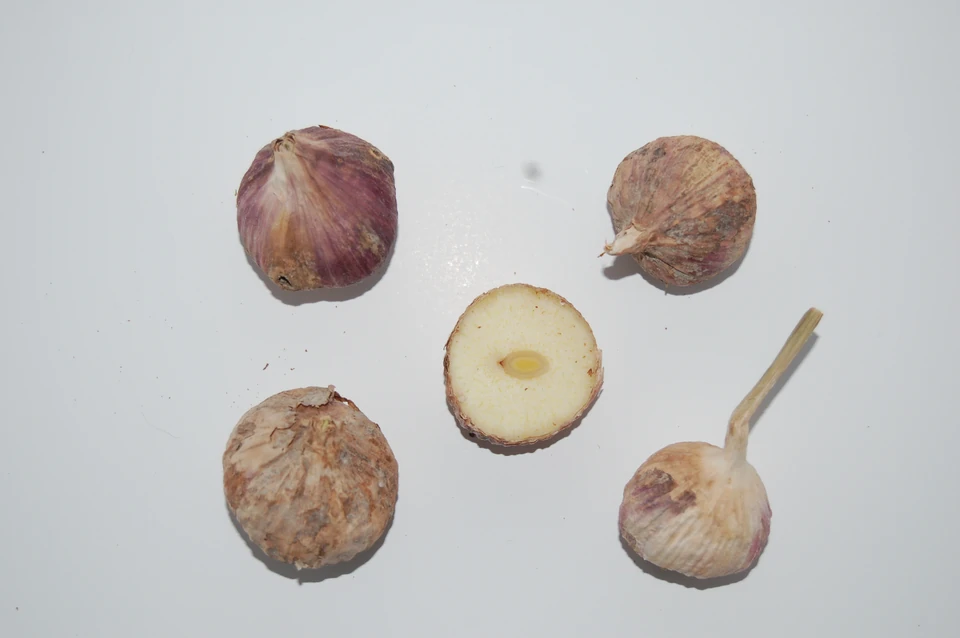
Michel Chauvet identifies the photographed specimens as common garlic that formed a single clove. The central section illustrates the undivided structure. The image does not identify a cultivar, establish maturity or prove which growing condition caused the result.
Nebraska also describes rounds after small cloves, poor growing conditions or an unsuitable cultivar. Compare those possibilities with the planting date and cold exposure instead of treating every mature round as proof of insufficient chilling.
When to get more help
Consult the supplier or a local adviser if the cultivar and planting material are unknown or the whole planting remains undivided after an appropriate season. Soft tissue, abnormal growth or rot requires a disease assessment instead of a chilling explanation.
Follow the next useful clue
- The bulb has cloves but they are small: Use the size and growing-season comparison.Why are my garlic bulbs small?
- Next season's timing needs changing: Choose a region-appropriate planting window.When should I plant garlic?
Consulted horticultural sources

Save & recheck
Compare what changes before changing course.
Save this diagnosis only in this browser, then come back and compare the same clues. No account, reminder subscription, or server-stored diagnostic record is created.
Your baseline
- A mature bulb lacks separate developed cloves
- Planting history includes late planting or uncertain variety
Check again when you return
- Read the original stock label or supplier record. Distinguish true garlic, elephant garlic and aerial bulbils; do not identify the crop solely from one harvested round.
- Examine an already harvested representative bulb and its maturity record. Record whether it has distinct cloves under the wrapper and whether planting gave the cultivar a suitable cold period.
Tip: photograph the same area from a similar angle so the visible pattern is easier to compare.
Related questions
Diagnostic Finder
Still not sure this answer fits?
Open the Diagnostic Finder with the relevant growing subject or care context preselected and compare other published GardenSolved diagnoses.
Compare other possibilities