Garlic
Why is my garlic wilting or collapsing?
The short answer
Compare moisture below the surface with the condition of the garlic neck. Dry soil, saturated soil, collar decay and feeding damage can all accompany wilt. If a firm plant wilts in dry conditions, correct moisture; if it is soft at the base, rotting or declining in a spreading patch, isolate the problem and seek a diagnosis.
Adding water to wilted garlic can help a dry root zone but worsen an already saturated one. Check the soil and the visible plant base before choosing a response.
Diagnostic snapshot
What to check before you act
What you are seeing
- Leaves lose firmness or whole plants collapse
- Decline concentrated in a wet patch or accompanied by neck damage
Check first
Check soil moisture beside both a wilted and an upright plant. Record recent rain, irrigation and heat; a dry surface can hide a wet root zone.
Compare first
- Water shortage
- Saturation or collar decay
- Basal rot
Hold off for now
Do not water again until moisture below the surface justifies it.
Investigate further if
Seek prompt local diagnosis for a soft neck, basal decay, unusual larvae, short thick distorted leaves or widening plant loss. Persistent wilt despite suitable moisture also warrants root and disease assessment; photograph the pattern before removing anything.
Photograph this before you act
- Photograph the soil surface and root-zone or container context; do not disturb roots just to take a photo.
- Take one close-up of the clearest symptom and one wider view that shows the surrounding area for comparison.
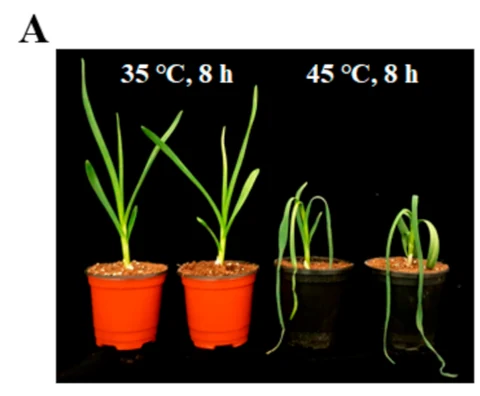
Next best check
Check two visible clues before you act.
This mini-check narrows the match using the same canonical diagnostic clues as this answer. It does not confirm a diagnosis from one or two clicks, and it does not make a photo-only diagnosis.
Two quick observations can tell you whether to keep reading this diagnosis closely or compare other possibilities first.
Match the situation before acting
Water shortage
- Root-zone soil is dry; base remains firm
Water appropriately and monitor fresh growth rather than assuming infection.
Saturation or collar decay
- Soil stays wet; neck is water-soaked or soft
Stop adding water and investigate drainage and disease.
Basal rot
- Already failing plant has basal decay, lost roots or fuzzy growth
Keep suspect soil separate; compare the white-rot differential.
Feeding or other root injury
- Mining, bulb holes, larvae or distorted short growth
Photograph signs and obtain regional identification.
Safe checks before acting
- Check soil moisture beside both a wilted and an upright plant. Record recent rain, irrigation and heat; a dry surface can hide a wet root zone.
- Look at the visible collar and leaf bases without pulling healthy plants. Map whether plants fail singly, along an irrigation line or in a widening patch; photograph any already exposed bulb damage.
What to do next
- For a dry root zone with a firm collar, water at soil level and confirm that water reaches the planting zone. Reassess later when heat is lower before repeating irrigation.
- For persistent wetness, pause unnecessary watering and find the drainage cause. Avoid digging through the whole bed while it is wet.
- Keep visibly decayed plants and their attached soil away from healthy planting stock. Ask a diagnostic service how to handle and submit material before moving suspect soil elsewhere.
- If insects are present, distinguish leaf mines and pupae from root or bulb feeding. Local onion maggot, thrips, bulb mite and nematode risks are not interchangeable or universal.
GardenSolved checkpoint
Do not do this yet
- Do not water again until moisture below the surface justifies it.
- Do not save bulbs from a collapsing, suspect disease patch as planting stock or apply a combined insecticide/fungicide without identifying the problem.
Confirm the likely cause first, then choose the treatment.
Scope and follow-up
The UMN key distinguishes neck rot, basal rots and several pests using additional signs. Pale leaves alone do not prove any of them. Weather injury can also complicate the picture, so keep the event timeline.
An upright new leaf and stable neighboring plants are useful follow-up observations. Existing dead tissue will not recover, and apparent short-term improvement does not rule out a root problem.
When to get more help
Seek prompt local diagnosis for a soft neck, basal decay, unusual larvae, short thick distorted leaves or widening plant loss. Persistent wilt despite suitable moisture also warrants root and disease assessment; photograph the pattern before removing anything.
Follow the next useful clue
- White growth occurs at a decaying bulb base: Compare white rot with other basal decay before deciding soil is contaminated.Is white growth at my garlic bulb base white rot?
- Puncture lines, mines or pupae are visible: Compare allium leafminer and its lookalikes.Is allium leafminer damaging my garlic?
- Color change dominates without collapse: Return to the yellow-leaf triage.Why are my garlic leaves turning yellow?
Consulted horticultural sources
Save & recheck
Compare what changes before changing course.
Save this diagnosis only in this browser, then come back and compare the same clues. No account, reminder subscription, or server-stored diagnostic record is created.
Your baseline
- Leaves lose firmness or whole plants collapse
- Decline concentrated in a wet patch or accompanied by neck damage
Check again when you return
- Check soil moisture beside both a wilted and an upright plant. Record recent rain, irrigation and heat; a dry surface can hide a wet root zone.
- Look at the visible collar and leaf bases without pulling healthy plants. Map whether plants fail singly, along an irrigation line or in a widening patch; photograph any already exposed bulb damage.
Tip: photograph the same area from a similar angle so the visible pattern is easier to compare.
Related questions
Diagnostic Finder
Still not sure this answer fits?
Open the Diagnostic Finder with the relevant growing subject or care context preselected and compare other published GardenSolved diagnoses.
Compare other possibilities