Garlic
Does my garlic have rust?
The short answer
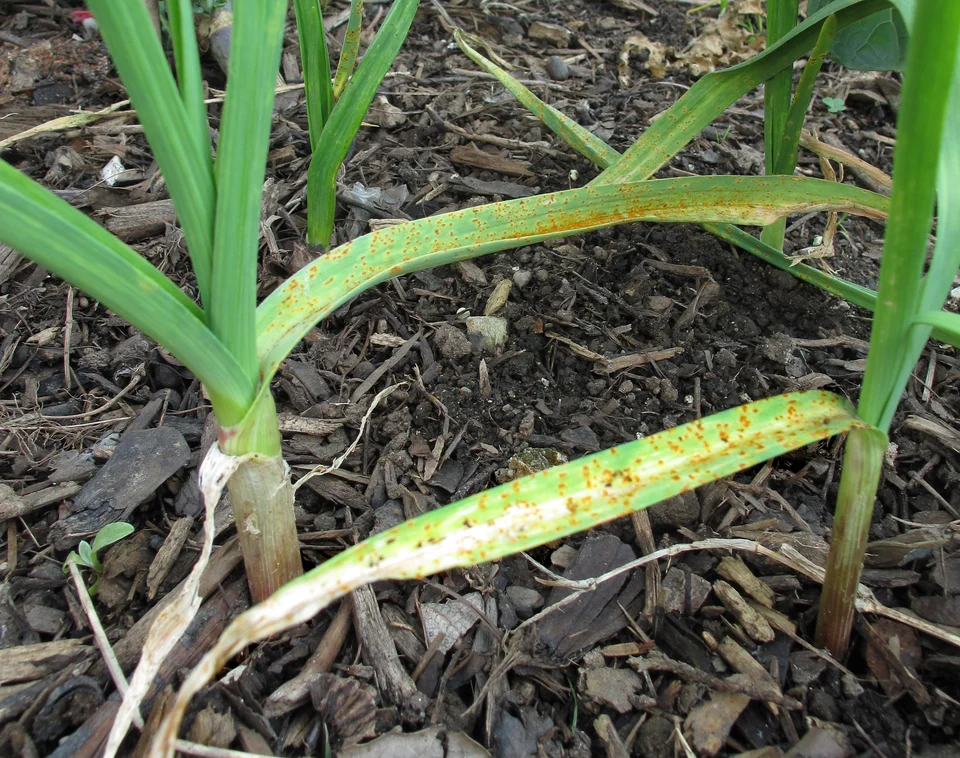
Garlic rust can begin as small pale flecks that later become raised orange pustules. Flecks alone are not diagnostic; the developing pustules are a stronger clue. Compare them with flat brown damage, inspect several leaves and record progression. Severe rust can reduce usable leaf area and bulb growth, but a photograph cannot establish every leaf disease or justify a fungicide choice.
Rust is a leaf disease, but orange color by itself is not enough. Look for a raised pustule pattern and how the marks develop across the foliage.
Diagnostic snapshot
What to check before you act
What you are seeing
- Raised orange pustules on flat garlic leaf blades
- Leaf decline following expanding spot coverage
Check first
Use a hand lens on attached leaves without rubbing spores around the bed. Photograph the raised surface, the whole leaf and an unaffected neighbor in similar light.
Compare first
- Rust-like pattern
- Flat injury or lesions
- Another disease pattern
Hold off for now
Do not spray a fungicide on the basis of orange color alone.
Investigate further if
Seek local diagnosis if lesions spread rapidly, most green foliage is being lost, or the marks do not match raised pustules. Any chemical option requires a supported diagnosis and a current local label for garlic, the target disease and the intended use.
Photograph this before you act
- Photograph the whole plant and its growing area so the overall pattern is visible.
- Take a sharp close-up of the affected leaf and a second photo of the underside.

Recommended diagnostic check
Disease Evidence Checker
Which disease pattern can you actually support?
Compare lesion shape, visible growth, affected tissue, progression, and lookalikes before choosing a treatment. This checker is generated from this answer’s canonical diagnostic comparison.
First evidence check
Use a hand lens on attached leaves without rubbing spores around the bed. Photograph the raised surface, the whole leaf and an unaffected neighbor in similar light.
Do not choose a fungicide or make a major removal decision from one spot, one color, or one photograph alone. Match the full physical pattern first.
Match the situation before acting
Rust-like pattern
- Multiple raised orange pustules, sometimes with darker later structures
Use a hand lens and compare several affected leaves.
Flat injury or lesions
- Brown marks without a raised spore-producing surface
Record shape and spread; do not assume rust from color.
Another disease pattern
- Pale elongated lesions with gray-purple fuzzy growth
Seek identification rather than applying a rust treatment.
Safe checks before acting
- Use a hand lens on attached leaves without rubbing spores around the bed. Photograph the raised surface, the whole leaf and an unaffected neighbor in similar light.
- Record which leaves were affected first and whether pustules are increasing. Note prolonged leaf wetness and local reports, while remembering that favorable weather supports suspicion rather than confirming a pathogen.
What to do next
- Keep the planting identifiable and monitor remaining green leaf area. Remove only clearly dead material where appropriate; stripping healthy leaves can itself reduce bulb growth.
- Water the soil rather than repeatedly wetting foliage and reduce avoidable crowding. These measures reduce favorable conditions but do not erase an established infection.
- Check nearby volunteer alliums and local guidance on crop hygiene. Do not assume every allium species or garlic cultivar responds identically.
- If damage is increasing, consult a local plant clinic or horticultural adviser. Commercial California treatment tables are not a home-garden product recommendation for another country.
GardenSolved checkpoint
Do not do this yet
- Do not spray a fungicide on the basis of orange color alone.
- Do not remove all green foliage, or assume an illustrated pustule comparison is equivalent to a confirmed field diagnosis.
Confirm the likely cause first, then choose the treatment.
Scope and follow-up
The photograph documents rust described by its photographer on garlic in Los Angeles. Compare the distribution of orange lesions with your plants, but use a hand lens and the linked diagnostic guidance for surface detail; this photograph is not laboratory confirmation of your crop.
UC and Pacific Northwest sources describe regional rust behavior. Their evidence supports identification and hygiene decisions here, without exporting commercial spray schedules or promising resistant varieties.
When to get more help
Seek local diagnosis if lesions spread rapidly, most green foliage is being lost, or the marks do not match raised pustules. Any chemical option requires a supported diagnosis and a current local label for garlic, the target disease and the intended use.
Follow the next useful clue
- Yellowing is diffuse without pustules: Compare leaf age, moisture and other yellowing clues.Why are my garlic leaves turning yellow?
- Plants collapse at the base: Investigate root and collar damage rather than assuming leaf rust caused everything.Why is my garlic wilting or collapsing?
Consulted horticultural sources
Save & recheck
Compare what changes before changing course.
Save this diagnosis only in this browser, then come back and compare the same clues. No account, reminder subscription, or server-stored diagnostic record is created.
Your baseline
- Raised orange pustules on flat garlic leaf blades
- Leaf decline following expanding spot coverage
Check again when you return
- Use a hand lens on attached leaves without rubbing spores around the bed. Photograph the raised surface, the whole leaf and an unaffected neighbor in similar light.
- Record which leaves were affected first and whether pustules are increasing. Note prolonged leaf wetness and local reports, while remembering that favorable weather supports suspicion rather than confirming a pathogen.
Tip: photograph the same area from a similar angle so the visible pattern is easier to compare.
Related questions
Diagnostic Finder
Still not sure this answer fits?
Open the Diagnostic Finder with the relevant growing subject or care context preselected and compare other published GardenSolved diagnoses.
Compare other possibilities