Garlic
Why are my garlic bulbs splitting open?
The short answer
Opening garlic wrappers and separating cloves often follow a late harvest. Check maturity, whether splitting happened before or during lifting, and whether tissue is firm or decaying. Lift mature bulbs carefully, sort split ones away from sound storage stock and investigate any softness or mold separately.
A wrapper opening around separate cloves is different from a round that never divided. The immediate decision is how soon to lift, sort and use the crop.
Diagnostic snapshot
What to check before you act
What you are seeing
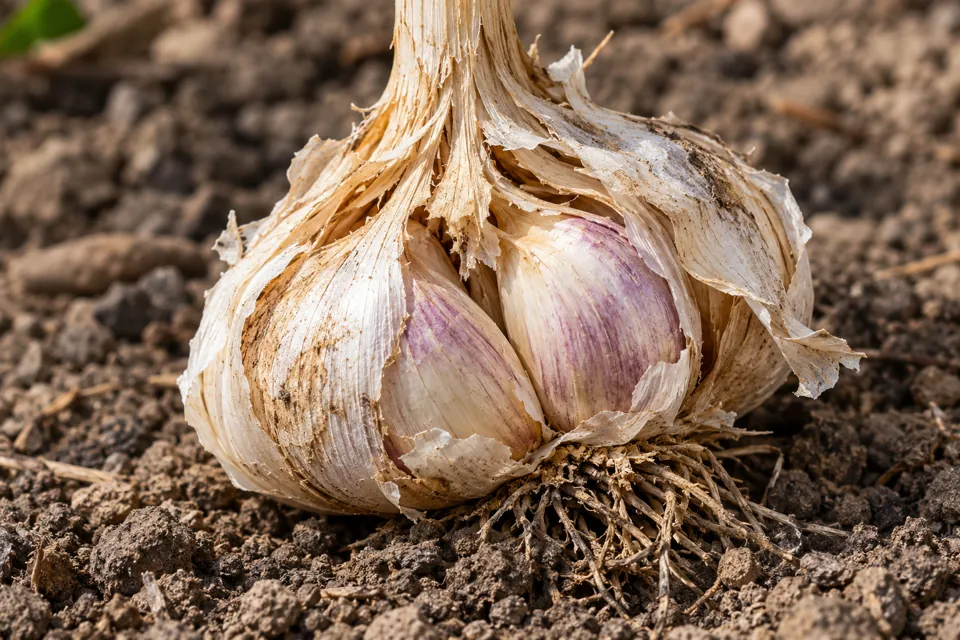
- Outer tunic opened around distinct cloves
- Cloves separating while a mature crop remains in soil
Check first
Examine a representative already lifted bulb. Record whether cloves are firm, wrappers are dry and the basal plate is intact; appearance alone cannot certify food safety.
Compare first
- Overmature wrapper opening
- Handling injury
- Decay rather than simple opening
Hold off for now
Do not leave an already mature, opening crop in the ground to increase bulb size.
Investigate further if
Ask for diagnosis if opening accompanies soft tissue, abnormal basal growth, widespread early collapse or deterioration despite good drying. Distinguish a simple torn wrapper from a damaged or diseased bulb before deciding what to retain.
Photograph this before you act
- Photograph the whole plant and its growing area so the overall pattern is visible.
- Take one close-up of the clearest symptom and one wider view that shows the surrounding area for comparison.
Next best check
Check two visible clues before you act.
This mini-check narrows the match using the same canonical diagnostic clues as this answer. It does not confirm a diagnosis from one or two clicks, and it does not make a photo-only diagnosis.
Two quick observations can tell you whether to keep reading this diagnosis closely or compare other possibilities first.
Match the situation before acting
Overmature wrapper opening
- Distinct cloves exposed through deteriorating tunic
Lift mature crop and sort for shorter keeping.
Handling injury
- A tear or cut appeared during lifting or cleaning
Keep damaged bulbs apart and change handling.
Decay rather than simple opening
- Soft brown tissue, mold or spreading deterioration
Do not treat it as a harmless wrapper defect.
Undivided round
- One structure without separate developed cloves
Use the division pathway instead.
Safe checks before acting
- Examine a representative already lifted bulb. Record whether cloves are firm, wrappers are dry and the basal plate is intact; appearance alone cannot certify food safety.
- Check harvest timing and handling: was the crop left after widespread leaf drydown, or did a fork, pulling or aggressive cleaning damage it? Compare sound and split bulbs from the same cultivar.
What to do next
- Lift remaining mature bulbs before wrappers deteriorate further. Avoid stabbing bulbs or pulling them through resistant soil.
- Separate split or wounded bulbs from the best intact curing and storage stock. Exposed cloves have less protection and should not be assigned the same keeping expectation.
- Keep drying conditions airy and sheltered, and inspect the separated group frequently. Do not pack exposed damp cloves into a closed container.
- Record the cultivar's harvest signs for next season so you begin representative checks earlier. If tissue deteriorates, follow storage-rot guidance rather than trying to cure the damage away.
GardenSolved checkpoint
Do not do this yet
- Do not leave an already mature, opening crop in the ground to increase bulb size.
- Do not call soft or moldy cloves safe merely because splitting can also be a harvest-timing problem.
Confirm the likely cause first, then choose the treatment.
Scope and follow-up
The AI-generated illustration shows a possible wrapper appearance, not a real photograph, a documented individual case or a confirmed harvest-delay diagnosis. Compare your own bulb, crop stage and handling history. Neither the illustration nor wrapper appearance certifies edibility or storage duration.
RHS and Illinois both describe late harvest and opening cloves. This supports a separate action-oriented harvest problem, while the round-bulb answer retains ownership of failed clove division.
When to get more help
Ask for diagnosis if opening accompanies soft tissue, abnormal basal growth, widespread early collapse or deterioration despite good drying. Distinguish a simple torn wrapper from a damaged or diseased bulb before deciding what to retain.
Follow the next useful clue
- You need to assess the remaining crop: Check maturity with leaves and representative bulbs.When is garlic ready to harvest?
- Separated bulbs become soft or moldy: Investigate deterioration and storage conditions.Why is stored garlic going soft or mouldy?
- There are no separate cloves: Review undivided rounds instead.Why did my garlic form one round instead of cloves?
Consulted horticultural sources
Save & recheck
Compare what changes before changing course.
Save this diagnosis only in this browser, then come back and compare the same clues. No account, reminder subscription, or server-stored diagnostic record is created.
Your baseline
- Outer tunic opened around distinct cloves
- Cloves separating while a mature crop remains in soil
Check again when you return
- Examine a representative already lifted bulb. Record whether cloves are firm, wrappers are dry and the basal plate is intact; appearance alone cannot certify food safety.
- Check harvest timing and handling: was the crop left after widespread leaf drydown, or did a fork, pulling or aggressive cleaning damage it? Compare sound and split bulbs from the same cultivar.
Tip: photograph the same area from a similar angle so the visible pattern is easier to compare.
Related questions
Diagnostic Finder
Still not sure this answer fits?
Open the Diagnostic Finder with the relevant growing subject or care context preselected and compare other published GardenSolved diagnoses.
Compare other possibilities