Garlic
Is white growth at my garlic bulb base white rot?
The short answer
Suspect white rot when basal decay and lost roots occur with white fungal growth and tiny black seed-like structures. Black structures may develop later, so their absence does not rule out an early infection. White growth alone is insufficient: Fusarium and secondary decay can look similar. Keep suspect bulbs and attached soil separate, photograph the signs and arrange local confirmation before making a long-term planting decision.
White rot matters because its resting structures can persist in soil. Confirming the pattern is more important than naming every white patch as this disease.
Diagnostic snapshot
What to check before you act
What you are seeing
- White growth around a decaying basal plate
- Tiny black structures alongside root loss and yellowing
Check first
Examine an already exposed or failing bulb over a tray or bag so soil is retained. Photograph its basal plate, remaining roots and any black structures; do not carry it across clean beds for comparison.
Compare first
- White-rot suspicion
- Fusarium or another basal rot
- Superficial growth on old material
Hold off for now
Do not declare the whole plot permanently infected from a white patch or this illustration alone.
Investigate further if
Contact a plant diagnostic service promptly when the sign combination fits, especially before saving stock or moving soil. RHS states there is no treatment available to UK gardeners; commercial treatments elsewhere require local professional and label guidance and are not a universal remedy.
Photograph this before you act
- Photograph the soil surface and root-zone or container context; do not disturb roots just to take a photo.
- Take one close-up of the clearest symptom and one wider view that shows the surrounding area for comparison.
Recommended diagnostic check
Disease Evidence Checker
Which disease pattern can you actually support?
Compare lesion shape, visible growth, affected tissue, progression, and lookalikes before choosing a treatment. This checker is generated from this answer’s canonical diagnostic comparison.
First evidence check
Examine an already exposed or failing bulb over a tray or bag so soil is retained. Photograph its basal plate, remaining roots and any black structures; do not carry it across clean beds for comparison.
Do not choose a fungicide or make a major removal decision from one spot, one color, or one photograph alone. Match the full physical pattern first.
Match the situation before acting
White-rot suspicion
- Basal rot, white growth and small black resting structures together
Contain material and request confirmation.
Fusarium or another basal rot
- Brown watery basal decay; white growth may also occur
A white patch cannot separate the pathogens.
Superficial growth on old material
- Growth without a demonstrated basal-rot pattern
Record storage or growing context; avoid naming a disease from fuzz alone.
Safe checks before acting
- Examine an already exposed or failing bulb over a tray or bag so soil is retained. Photograph its basal plate, remaining roots and any black structures; do not carry it across clean beds for comparison.
- Map affected plants and record the planting-stock source and prior allium problems. Ask a diagnostic service about collection and submission; do not dig up a healthy row merely to look for disease.
What to do next
- Stop moving suspect bulbs, soil and debris into other beds. Keep tools and footwear from carrying attached soil to a clean planting site.
- Separate affected material from stored crop and future planting stock. Seek local advice about disposal and sample handling rather than putting it into ordinary home compost.
- If white rot is confirmed, record the affected site and plan alternative allium production with local advice. A short rotation is not a reliable way to make the soil safe again.
- Use clean stock of known origin for future planting. A healthy-looking clove cannot certify that it came from an uninfected site.
GardenSolved checkpoint
Do not do this yet
- Do not declare the whole plot permanently infected from a white patch or this illustration alone.
- Do not attempt homemade garlic drenches, hot-water treatments or soil sterilization as an improvised cure. Do not move suspect soil into a new raised bed.
Confirm the likely cause first, then choose the treatment.
Scope and follow-up
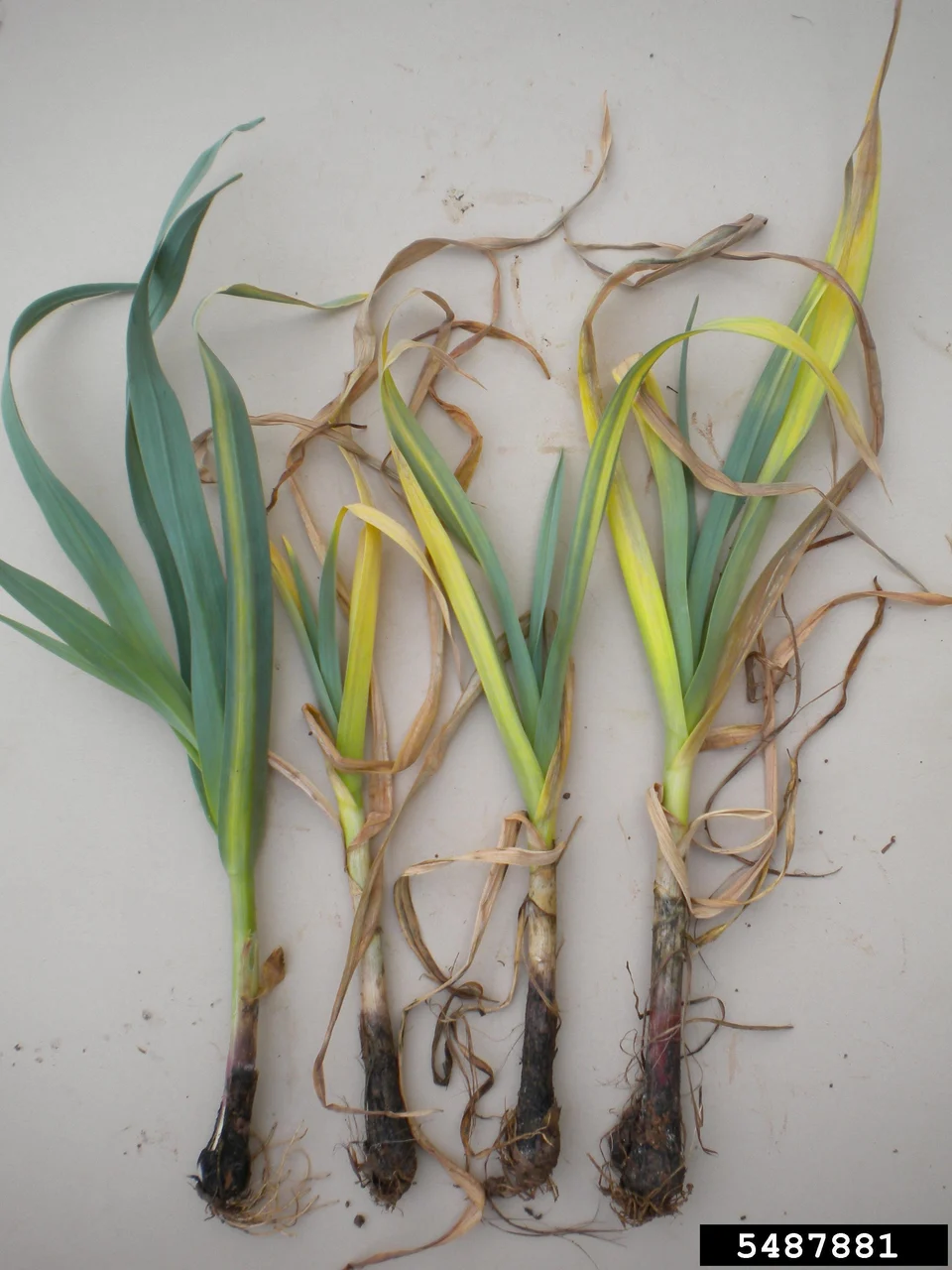
The source identifies the photographed garlic specimens as affected by white rot. They show yellowing, leaf loss and damaged bases; the whole-plant view is not a close-up for confirming tiny sclerotia. Ask a diagnostic service when the basal signs remain unclear.
RHS and UC agree that sanitation and avoiding introduction matter because resting structures can survive for many years. Their exact persistence estimates differ; neither supports a reassuring short reset period.
When to get more help
Contact a plant diagnostic service promptly when the sign combination fits, especially before saving stock or moving soil. RHS states there is no treatment available to UK gardeners; commercial treatments elsewhere require local professional and label guidance and are not a universal remedy.
Follow the next useful clue
- The crop wilts but basal signs are unknown: Return to the broader collar and root-zone triage.Why is my garlic wilting or collapsing?
- Rot appeared only after storage: Review storage and curing history while keeping suspect stock separate.Why is stored garlic going soft or mouldy?
Consulted horticultural sources
Save & recheck
Compare what changes before changing course.
Save this diagnosis only in this browser, then come back and compare the same clues. No account, reminder subscription, or server-stored diagnostic record is created.
Your baseline
- White growth around a decaying basal plate
- Tiny black structures alongside root loss and yellowing
Check again when you return
- Examine an already exposed or failing bulb over a tray or bag so soil is retained. Photograph its basal plate, remaining roots and any black structures; do not carry it across clean beds for comparison.
- Map affected plants and record the planting-stock source and prior allium problems. Ask a diagnostic service about collection and submission; do not dig up a healthy row merely to look for disease.
Tip: photograph the same area from a similar angle so the visible pattern is easier to compare.
Related questions
Diagnostic Finder
Still not sure this answer fits?
Open the Diagnostic Finder with the relevant growing subject or care context preselected and compare other published GardenSolved diagnoses.
Compare other possibilities