Garlic
Should I remove garlic scapes, and when?
The short answer
If your hardneck garlic produces a central round flower stalk and your aim is bulb production, remove the scape while it is young and identifiable. UMN describes cutting just after it begins curling. Preserve the flat leaves. A missing scape on softneck garlic is usually normal, not a flowering failure that needs treatment.
A scape is a flower stalk, not a diseased leaf. Identifying it correctly makes the removal decision straightforward and protects the foliage that feeds the bulb.
Diagnostic snapshot
What to check before you act
What you are seeing
- Round central stalk with a pointed enclosed flower head
- Hardneck garlic stalk begins to curl above flat leaves
Check first
Trace the suspect stalk visually to its terminal head and compare its round form with the flat foliage. Do not pull it to test its identity.
Compare first
- Identified hardneck scape
- Flat green leaf
- No scape on softneck
Hold off for now
Do not cut off the flat leaves along with the scape.
Investigate further if
Seek identification when a stalk cannot be distinguished from distorted foliage or when unusual growth accompanies stunting, yellowing or collapse. Investigate those extra symptoms separately rather than calling them normal scape development.
Photograph this before you act
- Photograph the whole plant and its growing area so the overall pattern is visible.
- Take one close-up of the clearest symptom and one wider view that shows the surrounding area for comparison.

Next best check
Check two visible clues before you act.
This mini-check narrows the match using the same canonical diagnostic clues as this answer. It does not confirm a diagnosis from one or two clicks, and it does not make a photo-only diagnosis.
Two quick observations can tell you whether to keep reading this diagnosis closely or compare other possibilities first.
Match the situation before acting
Identified hardneck scape
- Round stalk ends in a pointed spathe and may curl
Remove selectively for bulb-focused production.
Flat green leaf
- Strap-shaped blade without a terminal flower head
Retain it; it is not the scape.
No scape on softneck
- Healthy softneck crop with no central flower stalk
Do not cut leaves or treat missing scapes as a disorder.
Safe checks before acting
- Trace the suspect stalk visually to its terminal head and compare its round form with the flat foliage. Do not pull it to test its identity.
- Check the cultivar label and the crop's condition. If the structure is damaged, deformed or not clearly a flower stalk, obtain an identification before cutting.
What to do next
- For a bulb harvest, make a clean selective cut through the identified young scape above the leaves. Support the stalk so you do not tear or uproot the plant.
- Keep the remaining foliage intact and continue appropriate care through bulb development. Scape removal is a management choice, not a cure for root stress or poor timing.
- If keeping scapes deliberately for bulbils or observation, mark those plants so their purpose is clear. Do not compare their bulb outcome with removed-scape plants without recording the difference.
- Recheck for harvest readiness later using leaves and bulb condition. A scape curl is not a stand-alone harvest date.
GardenSolved checkpoint
Do not do this yet
- Do not cut off the flat leaves along with the scape.
- Do not yank a scape from the plant or feed a healthy softneck crop to force flower-stalk production.
Confirm the likely cause first, then choose the treatment.
Scope and follow-up
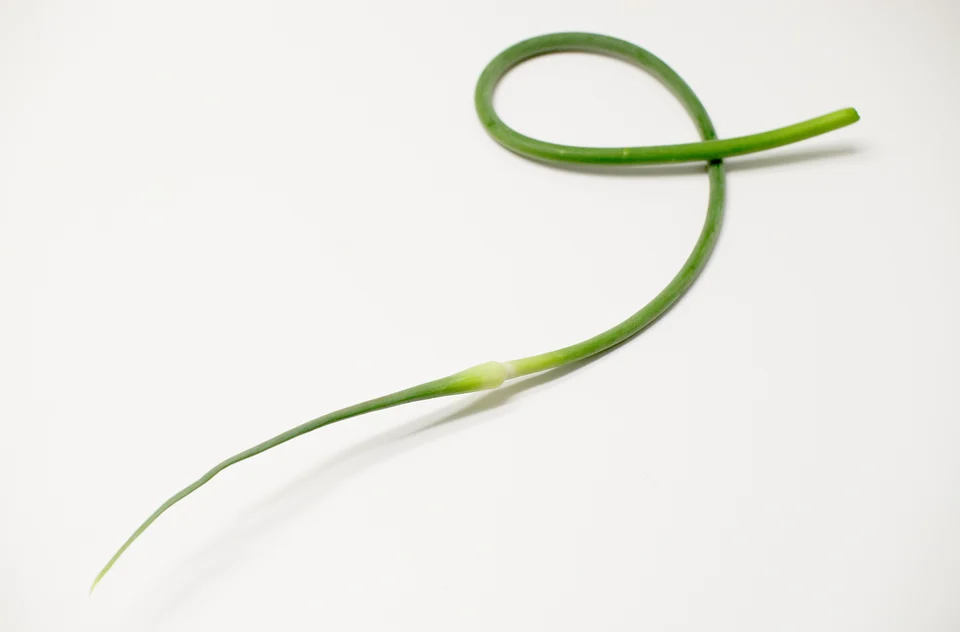
The photograph shows a real removed garlic scape with its curled stalk and enclosed flower head. It helps identify the structure but does not demonstrate a cutting position on an attached plant. Curl timing varies; follow the actual structure rather than one calendar week.
Hardneck garlic commonly produces scapes. Softneck behavior can vary with environment, so use cultivar identity and visible structure together rather than an absolute rule that softneck can never flower.
When to get more help
Seek identification when a stalk cannot be distinguished from distorted foliage or when unusual growth accompanies stunting, yellowing or collapse. Investigate those extra symptoms separately rather than calling them normal scape development.
Follow the next useful clue
- You need to decide whether bulbs are ready: Check foliage and representative bulb maturity.When is garlic ready to harvest?
- Bulbs remain small despite removing scapes: Review the wider growing-season constraints.Why are my garlic bulbs small?
Consulted horticultural sources
Save & recheck
Compare what changes before changing course.
Save this diagnosis only in this browser, then come back and compare the same clues. No account, reminder subscription, or server-stored diagnostic record is created.
Your baseline
- Round central stalk with a pointed enclosed flower head
- Hardneck garlic stalk begins to curl above flat leaves
Check again when you return
- Trace the suspect stalk visually to its terminal head and compare its round form with the flat foliage. Do not pull it to test its identity.
- Check the cultivar label and the crop's condition. If the structure is damaged, deformed or not clearly a flower stalk, obtain an identification before cutting.
Tip: photograph the same area from a similar angle so the visible pattern is easier to compare.
Related questions
Diagnostic Finder
Still not sure this answer fits?
Open the Diagnostic Finder with the relevant growing subject or care context preselected and compare other published GardenSolved diagnoses.
Compare other possibilities