Peppers
How often should I water pepper plants?
The short answer
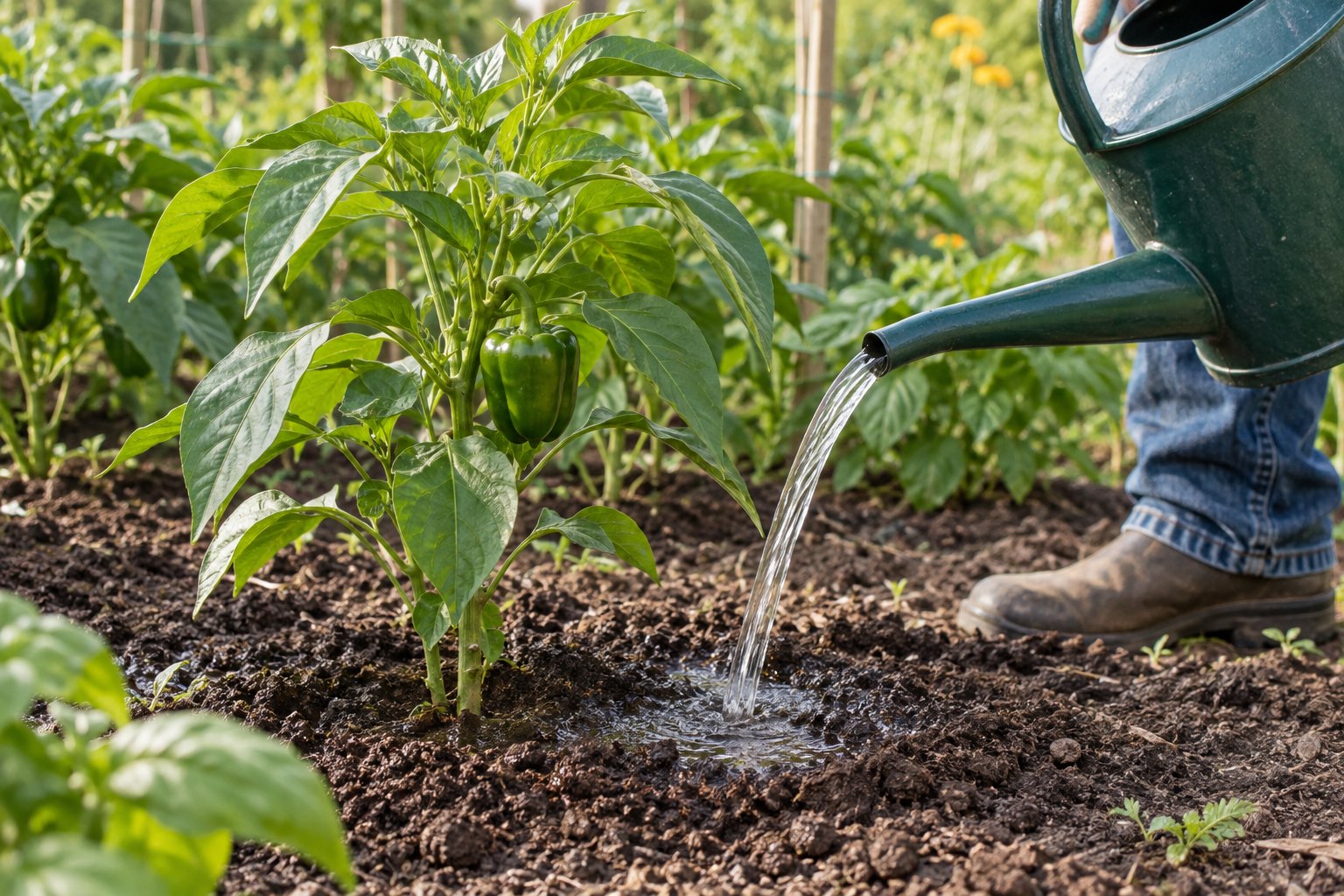
Check the soil below the surface near the active roots. Water slowly and thoroughly when that zone is beginning to dry, then let excess water drain. Check containers and plants in hot, windy, or fruiting conditions more often; wait after rain or when heavy soil is still wet.
Pepper watering should follow root-zone moisture and current conditions, not one fixed calendar interval. Soil texture, drainage, container size, weather, plant size, and flowering or fruiting can all change how quickly the root zone dries.
Checks before deciding what to do
- Use the stem attachment as a landmark and inspect the exact opposite end of several affected and unaffected fruits.
- Compare the lesion texture: dry and sunken supports blossom-end rot, while wet, soft, spreading, or foul-smelling tissue needs a different or secondary-rot assessment.
- Check moisture below the surface in more than one place and confirm that excess water can leave the bed or container.
- Review watering, rainfall, drainage, root disturbance, transplanting, and fertilizer history from the period when the fruit was small.
- Use soil-test or local extension evidence before applying lime, gypsum, or another calcium amendment.
Let the root zone decide when to water
- Soil is beginning to dry at root depth and drains freely: Water the root zone slowly and thoroughly, then recheck before the next irrigation.
- Only the surface is dry but deeper soil is moist: Wait and check again; a dry crust is not proof that the plant needs another watering.
- Soil is saturated, ponding, sour-smelling, or slow to drain: Pause irrigation and correct drainage or compacted media instead of adding more water.
Adjust the next check to the growing conditions
| Condition | How the decision changes |
|---|---|
| In-ground bed with moisture-retentive, well-drained soil | Check below the surface and water as drying develops; do not assume a fixed weekly interval. |
| Sandy soil or a small container | Expect faster or less even drying and check more often, while still waiting if the active root zone is moist. |
| Large plant, flowering, or fruiting | Inspect more of the active root zone because canopy and fruit demand may rise. |
| Hot, sunny, windy weather | Shorten the observation interval because evaporation and plant water loss can increase. |
| Cool, cloudy weather or recent rain | Recheck before irrigating because the root zone may remain wet longer. |
| Mulch | Expect slower surface drying, but check below the mulch and keep it away from direct stem contact. |
| Poor drainage or compacted soil | Restore air and drainage; more frequent watering is not the correction. |
Use a practical Pepper watering routine
- Check the active root zone several inches below the surface near, but not directly against, the stem.
- When that zone is beginning to dry, apply water slowly at soil level so it soaks in rather than running off.
- For containers, water thoroughly enough to wet the root zone and confirm that excess exits the drainage holes; empty standing saucers.
- Water in the morning when practical so foliage and the soil surface have time to dry, while watering later is preferable to allowing a dry plant to remain stressed.
- Recheck after heat, wind, heavy rain, transplanting, a growth spurt, or a change in fruit load instead of locking the plant to a fixed interval.
- Use mulch where appropriate to reduce evaporation swings without covering the stem.
Watering supports the plant but does not diagnose every symptom
Wilting, yellow leaves, curling leaves, flower drop, blossom-end rot, and poor fruit set can all involve water, but each also has other causes. Route by the defining symptom and root-zone evidence rather than treating every problem by increasing irrigation.
Deep watering means wetting the active root zone rather than giving repeated surface sips. The amount and interval depend on soil, container volume, weather, plant size, drainage, mulch, and rainfall, so a universal litres-per-plant or days-between-waterings rule would be misleading.
When a watering question is actually a symptom diagnosis
- The whole plant is wilting, especially while soil is wet or after watering: Separate dry-soil stress from heat, drainage, root damage, and progressive wilt.Why are my pepper plants wilting?
- Leaves are turning yellow: Use the Pepper yellow-leaf owner because moisture is only one possible cause.Why are my pepper leaves turning yellow?
- Leaves are curling or distorted: Use the Pepper leaf-curl owner and inspect heat, pests, disease, and exposure.Why are my pepper leaves curling?
- Flowers are physically falling: Use the Pepper flower-drop owner rather than treating loss as a calendar-watering problem.Why are my pepper flowers falling off?
- Fruit has a dark, sunken patch at the blossom end: Use the Pepper blossom-end-rot owner and check calcium delivery, moisture swings, roots, and lesion location.Why do my peppers have black spots on the blossom end?
GardenSolved checkpoint
Do not do this yet
Avoid universal watering shortcuts
- Do not water every day or every fixed number of days without checking the root zone and weather.
- Do not give repeated shallow splashes that wet only the surface.
- Do not water already saturated soil because leaves look limp.
- Do not leave container peppers standing in water or assume a drainage hole works without checking the outlet.
- Do not use a rigid litres-per-plant amount as if soil, pot size, weather, and plant stage were identical.
- Do not use extra fertilizer to compensate for an unstable water supply.
Confirm the likely cause first, then choose the treatment.
Make moisture easier to manage
- Use a moisture-retentive but well-drained soil or potting mix and keep drainage openings clear.
- Apply mulch where appropriate to moderate evaporation and soil-temperature swings while keeping it away from the stem.
- Deliver water near the root zone with a slow hose, drip line, or soaker hose where practical.
- Check containers, sandy beds, and exposed patios more often than established beds after weather changes.
- Maintain steady moisture during flowering and fruiting because sharp drought-to-saturation swings can stress flowers and developing fruit.
When to investigate instead of watering again
Use the Pepper wilting or other symptom diagnosis when the plant remains limp in wet soil, fails to recover after the root zone is corrected, develops progressive yellowing or distortion, has damaged roots or stem tissue, or produces repeated blossom-end lesions despite stable moisture. Watering frequency cannot repair blocked drainage, damaged roots, disease, or a separate fruit disorder.