Peppers
Why Are My Peppers Splitting or Cracking?
The short answer
Fine corky cracks around the shoulder can be a physiological surface-cracking pattern influenced by cultivar, temperature shifts, moisture, dew, or irrigation on the fruit. Deeper fissures between lobes at the blossom end are a different cracking pattern. Keep these separate from blossom-end rot, which produces dead, dark, sunken tissue rather than a clean fissure, and from soft or spreading decay. Do not add calcium, fertilizer, or a fungicide from the word crack alone.
Cracks in pepper fruit are a surface or tissue-splitting symptom, not a diagnosis by themselves. Start by checking where the crack begins, whether it is shallow and corky or a deeper fissure, whether the surrounding tissue stays firm, and whether the fruit also has a dark sunken lesion, soft decay, or another separate problem.
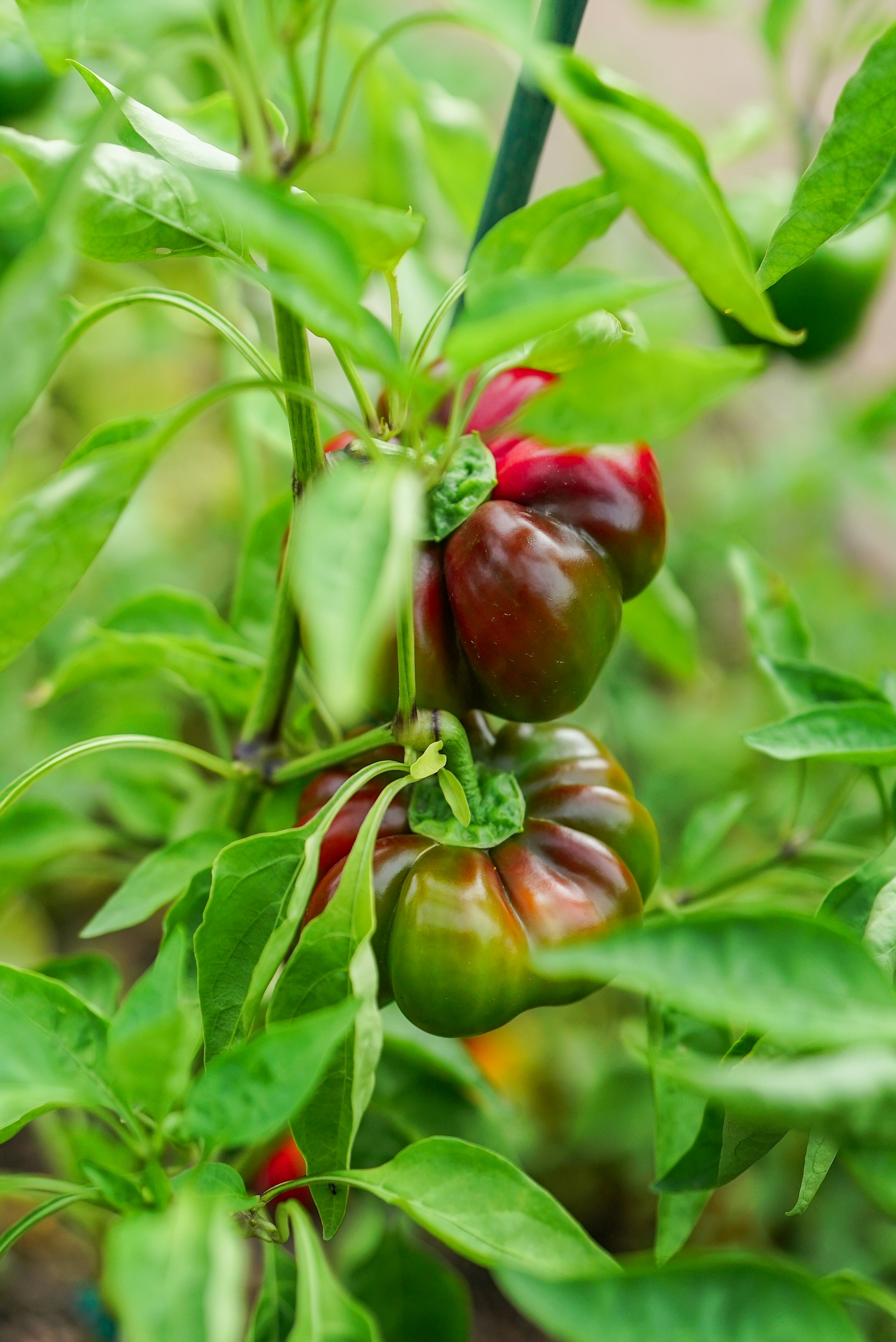
Start with the shape and location of the crack
| What you see | What it suggests first | What to check next |
|---|---|---|
| Fine corky or ring-like surface cracks, often near the shoulder | Surface cracking / corking is the stronger fit | Check cultivar, recent temperature swings, dew or irrigation on fruit, and whether tissue remains firm |
| A deeper fissure between lobes at the blossom end | Blossom-end cracking is the stronger fit | Confirm that this is an actual split rather than a dark sunken blossom-end-rot lesion |
| Dark tan-to-black sunken tissue at the blossom end | Blossom-end rot is a better diagnostic branch | Use the Pepper Blossom-End Rot answer and review moisture consistency before adding nutrients |
| Soft, water-soaked, spreading, moldy, or oozing tissue | Active decay or disease is more important than simple cracking | Separate affected fruit and seek a disease-specific diagnosis if the pattern is spreading |
Compare the main lookalikes
Surface cracking or corking
- Lines are shallow and often cork over rather than becoming a soft lesion.
- Cracks may be concentric or radial and commonly occur around the fruit shoulder.
More likely if
- The surrounding pepper remains firm.
- Several fruit of the same cultivar show a similar pattern, or cracking followed temperature and moisture swings.
Less likely if
- The damaged area is dark, sunken, wet, or actively expanding.
Stabilize moisture and reduce avoidable fruit wetting while judging new fruit; do not treat the dry crack as a fungal disease.
Blossom-end cracking
- A distinct fissure opens between lobes at the blossom end.
- The defect can be hidden from a top view and is easier to see when the fruit is turned over.
More likely if
- The fruit is mature and the split follows the lobe boundaries.
- The surrounding tissue is otherwise firm.
Less likely if
- The blossom end is a broad dark necrotic patch rather than a fissure.
Treat it as a cracking pattern, monitor new fruit, and keep it separate from blossom-end rot.
Blossom-end rot
- The blossom end develops dead, tan-to-black tissue that becomes sunken or leathery.
- Secondary mold can develop on damaged tissue.
More likely if
- Moisture has fluctuated while fruit was developing.
- The symptom is a necrotic patch rather than a clean split.
Less likely if
- Only superficial corky lines are present and the fruit surface remains firm.
Use the Pepper Blossom-End Rot diagnosis before changing calcium or fertilizer.
Decay or injury
- The area becomes soft, water-soaked, oozing, moldy, or irregularly torn.
- The damage does not follow a consistent growth-crack pattern.
More likely if
- The lesion is spreading or insects and secondary organisms are entering the damaged tissue.
- Only one fruit has an isolated puncture or tear.
Less likely if
- Several fruit show stable dry corky lines in the same location.
Diagnose the lesion or injury rather than treating every opening in the skin as physiological splitting.
Checks before changing pepper care
- Photograph an early crack and compare it with older fruit so you can tell stable corking from an expanding lesion.
- Turn bell peppers over and inspect between the blossom-end lobes for hidden fissures.
- Compare at least three fruit when possible; repeated shallow corking is more informative than one isolated tear.
- Check soil moisture below the surface and review recent rain, irrigation, dew, and temperature shifts.
- Use the Blossom-End Rot answer when the blossom end is necrotic and sunken rather than simply split.
Route the strongest companion clue
- The blossom end is dark, sunken, leathery, or later moldy: Use the Pepper Blossom-End Rot diagnosis; that is a different physiological disorder.Why do my peppers have black spots on the blossom end?
- The fruit is changing black or purple without a physical split: Use the Pepper Turning Black diagnosis rather than a cracking diagnosis.Why are my peppers turning black?
- Fruit remains green or otherwise fails to reach expected mature color: Use the Pepper Not Ripening diagnosis.Why are my peppers not ripening?
- You want to compare the same visible symptom on another crop: Use the Tomato Splitting answer for the tomato-specific cracking differential.Why are my tomatoes splitting?
What to do now
- Check root-zone moisture and move toward consistent watering rather than repeated dry-to-saturated cycles.
- Use mulch where appropriate to reduce rapid soil-moisture swings, while keeping stems and crowns clear.
- Avoid unnecessary overhead irrigation or repeated wetting of fruit when a soil-level watering method is practical.
- Harvest mature fruit carefully so cracks are not enlarged by rough handling.
- Track whether newly developing peppers remain intact after moisture and irrigation become more consistent.
GardenSolved checkpoint
Do not do this yet
- Do not diagnose every pepper crack as blossom-end rot; a fissure and a dark necrotic lesion are different starting clues.
- Do not add calcium or fertilizer just because fruit split; first confirm whether blossom-end rot or a nutrient problem is actually present.
- Do not spray a fungicide on dry corky cracks without evidence of an infectious lesion.
- Do not respond to a dry spell by keeping the root zone continuously saturated; the goal is steadier moisture, not waterlogging.
- Do not call a soft, wet, expanding lesion simple cracking; active decay needs its own diagnosis.
Confirm the likely cause first, then choose the treatment.
What improvement looks like
- Existing cracks remain visible, but new fruit develops with fewer or less severe fissures.
- The root zone stays more evenly moist instead of cycling between very dry and saturated conditions.
- New fruit stays firm around any superficial corking and does not develop spreading wet or sunken lesions.
- Repeated cracking becomes less common as weather, irrigation, and fruit maturity stabilize.
Reduce repeat cracking
- Water deeply and consistently through fruit development, adjusting for rainfall rather than using a fixed calendar.
- Use organic mulch where suitable to buffer rapid soil-moisture changes.
- Choose cultivars with lower cracking susceptibility when repeated cracking is a major local problem.
- Reduce avoidable fruit wetting from irrigation and preserve healthy foliage that moderates fruit exposure.
- Harvest at an appropriate mature stage, especially when prolonged rain or heavy dew is expected.
When cracking needs a different diagnosis
Escalate beyond a physiological cracking diagnosis when openings are surrounded by rapidly softening tissue, oozing, mold, dark expanding lesions, or when fruit symptoms appear together with unusual leaf, stem, or whole-plant decline. Those patterns can indicate injury or disease entering through damaged tissue and need a more specific local diagnosis.