Peppers
Why do my peppers have black spots on the blossom end?
The short answer
Confirm that the patch is centered at the end opposite the stem and is dry, sunken, or leathery. Remove affected fruit, then keep the root zone evenly moist and well drained for later fruit. Do not assume the soil lacks calcium or add calcium blindly: calcium movement depends on functioning roots and a steady water supply.
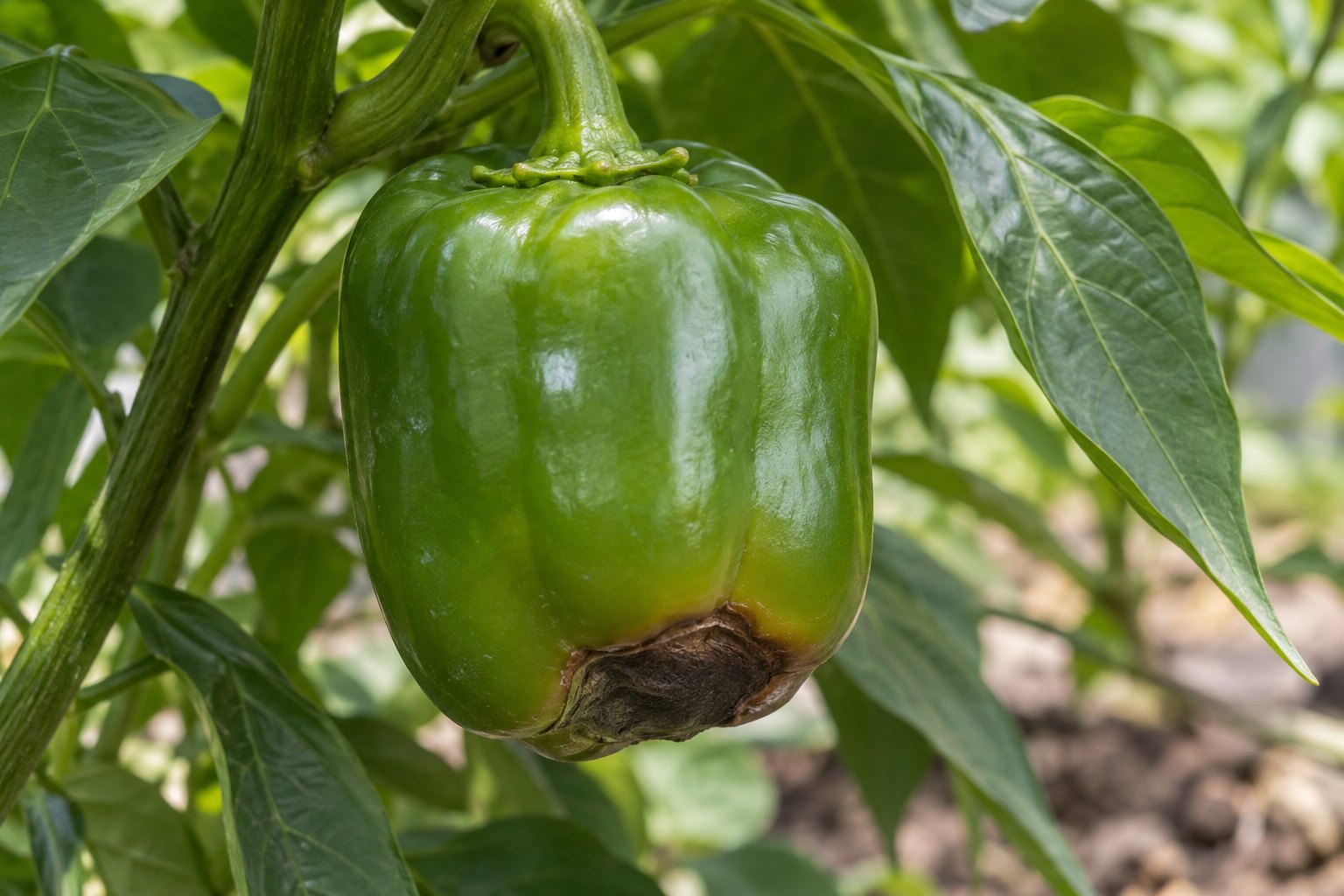
A dark, sunken patch at the blossom end of a pepper is commonly blossom-end rot, a physiological disorder of developing fruit. The location and texture matter: a dry lesion opposite the stem points in a different direction from a wet spot on the side, sunscald, or general fruit blackening.
Checks before deciding what to do
- Check moisture several inches below the surface near the root zone and in more than one place; do not judge from a dry crust alone.
- Confirm that water can move into the soil and that excess water can leave the bed, pot, or saucer.
- Review recent rain, irrigation, temperature, wind, sun exposure, mulch, soil texture, container size, and growth stage before changing the interval.
- Check moisture before and after a thorough watering so the next decision is based on the root zone rather than leaf appearance alone.
- If the whole plant is limp in wet soil or symptoms continue after moisture is corrected, route to the matching symptom owner.
Make a 30-second blossom-end check
| What you see | What it suggests first | Next check |
|---|---|---|
| Patch centered opposite the stem | The location supports blossom-end rot | Compare texture and check several developing fruits |
| Dry, sunken, firm, or leathery tissue | The progression fits blossom-end rot | Review moisture, drainage, roots, and growth conditions |
| Soft, wet, leaking, mouldy, or foul-smelling tissue | Secondary decay or another fruit rot is more concerning | Remove the fruit and investigate the entry point and spread |
| Pale or papery patch on an exposed side or shoulder | Sunscald is more likely | Compare exposure and leaf cover rather than adding calcium |
| Dark colour is even and the fruit remains firm | Normal cultivar colour or general blackening remains possible | Use the Pepper fruit-blackening owner |
| Several young fruits repeat the same bottom lesion | A shared root-zone or calcium-delivery problem is possible | Check irrigation, rainfall, drainage, and root disturbance |
Why blossom-end rot is not simply a soil-calcium shortage
Blossom-end rot reflects a local calcium shortage in the developing fruit tissue, but that does not prove the whole soil is deficient. Calcium is delivered through the plant with moving water, so drought, rapidly changing moisture, damaged roots, saturated soil, and rapid fruit growth can interrupt delivery even when calcium is present in the soil.
A soil test and local recommendation are the evidence for lime, gypsum, or another calcium amendment. Spraying calcium on the fruit or adding an amendment from the symptom alone does not repair an existing lesion or reliably correct the underlying root-zone problem.
Compare blossom-end rot with other dark pepper damage
Blossom-end rot
- Damage starts at the end opposite the stem.
- The patch becomes dark, sunken, dry, or leathery.
More likely if
- Multiple developing fruits repeat the same location.
- Moisture swings, poor drainage, root disturbance, or rapid growth occurred.
Less likely if
- The first damage is on the side or around the stem.
- Tissue is wet, leaking, or foul-smelling.
Remove affected fruit and stabilize root-zone moisture while checking drainage and soil evidence.
General fruit blackening
- Colour is spread across the fruit or appears in different locations.
- The variety may naturally pass through purple, brown, or near-black colour while fruit stays firm.
More likely if
- Several fruits show the same even cultivar colour.
- The fruit later reaches its expected mature colour.
Less likely if
- A dry, sunken lesion is centered at the blossom end.
Use the Pepper fruit-blackening owner rather than collapsing every dark fruit into blossom-end rot.
Sunscald or physical injury
- Sunscald creates pale, tan, papery, or wrinkled tissue on exposed fruit.
- Bruising, rubbing, punctures, and cracks follow contact or injury points.
More likely if
- Leaf cover was lost or a stake, tie, pest, hail, or handling explains the mark.
Less likely if
- Several fruits develop a centered bottom lesion without an injury event.
Protect fruit from exposure and remove the source of injury; do not treat the mark as a calcium diagnosis.
Soft rot or disease-related fruit damage
- The lesion is water-soaked, soft, spreading, mouldy, or foul-smelling.
- The plant may also have leaf, stem, or whole-plant symptoms.
More likely if
- Decay progresses quickly or fruit remains attached while the plant declines.
Less likely if
- The original lesion remains dry and leathery at the blossom end.
Remove decaying fruit and seek a crop-specific diagnosis if the pattern recurs.
Route the next decision by the defining symptom
- The main question is a continuing watering routine: Use the Pepper watering owner after checking the immediate root-zone condition.How often should I water pepper plants?
- The whole plant is wilting or remains limp in wet soil: Use the Pepper wilting owner instead of treating wilt as blossom-end rot.Why are my pepper plants wilting?
- Dark colour is broad, even, or not centered at the blossom end: Use the broader Pepper fruit-blackening owner.Why are my peppers turning black?
- The crop is tomato rather than pepper: Use the Tomato blossom-end-rot owner; the physiological category overlaps but crop-specific guidance should remain separate.Why do my tomatoes have blossom-end rot?
What to do now
- Remove affected peppers and discard them rather than leaving damaged fruit to decay on the plant.
- Check moisture below the surface. If the root zone is dry, water slowly and thoroughly; if it is saturated, pause irrigation and restore drainage instead of adding more water.
- Use mulch where appropriate to reduce sharp drying and wetting swings, leaving space around the stem.
- Avoid digging, hoeing deeply, transplanting, or otherwise disturbing roots while fruit is developing.
- Pause unneeded high-nitrogen feeding and use a soil test before adding calcium, lime, or gypsum.
- Judge improvement by newer fruit that develops without the lesion; existing damaged tissue will not heal.
GardenSolved checkpoint
Do not do this yet
Avoid the common calcium shortcuts
- Do not assume black tissue at any location proves blossom-end rot.
- Do not assume blossom-end rot proves the soil lacks calcium.
- Do not add lime, gypsum, eggshells, or calcium fertilizer without soil, pH, or local evidence that supports the amendment.
- Do not overwater saturated soil in an attempt to move more calcium; oxygen-starved roots cannot use that extra water normally.
- Do not promise recovery of a fruit that is already damaged.
Confirm the likely cause first, then choose the treatment.
What recovery looks like
- Expect the existing lesion to remain damaged and possibly enlarge as that fruit grows.
- After moisture and drainage improve, inspect the next flowers and young fruit for a repeat lesion.
- If new fruit is healthy, that is the useful recovery signal; if new fruit is affected, recheck irrigation coverage, drainage, roots, growth rate, and soil-test evidence.
Reduce blossom-end rot on later fruit
- Build watering around actual root-zone moisture, weather, and the growing system rather than a rigid calendar.
- Use adequate soil volume, clear drainage, and mulch where appropriate, especially for containers and raised beds.
- Avoid root damage during transplanting and cultivation.
- Feed moderately according to a soil test or product label and avoid excessive nitrogen that drives uneven growth.
- Check developing fruit after drought, heavy rain, heat, or a change in irrigation rather than waiting for a large lesion.
When to investigate beyond blossom-end rot
Ask a local extension office or plant-diagnostic service when lesions are wet, leaking, mouldy, foul-smelling, or away from the blossom end; when the plant also wilts or develops stem and leaf symptoms; when several different fruit patterns overlap; or when new fruit remains affected despite stable moisture and drainage.