Peppers
Why are my pepper plants not producing peppers?
The short answer
Start with the flower stage. No flowers points first to maturity and growing conditions; flowers that physically fall belong to the flower-drop diagnosis; flowers that remain but produce no pepper call for a fruit-set check. Temperature, light, root-zone moisture, and fertilization can affect these stages, but none should be diagnosed from one clue alone.
A pepper plant can reach the no-fruit outcome at several different stages. First determine whether flowers are absent, visibly dropping, remaining without setting fruit, or beginning to form small fruit that later stops developing.
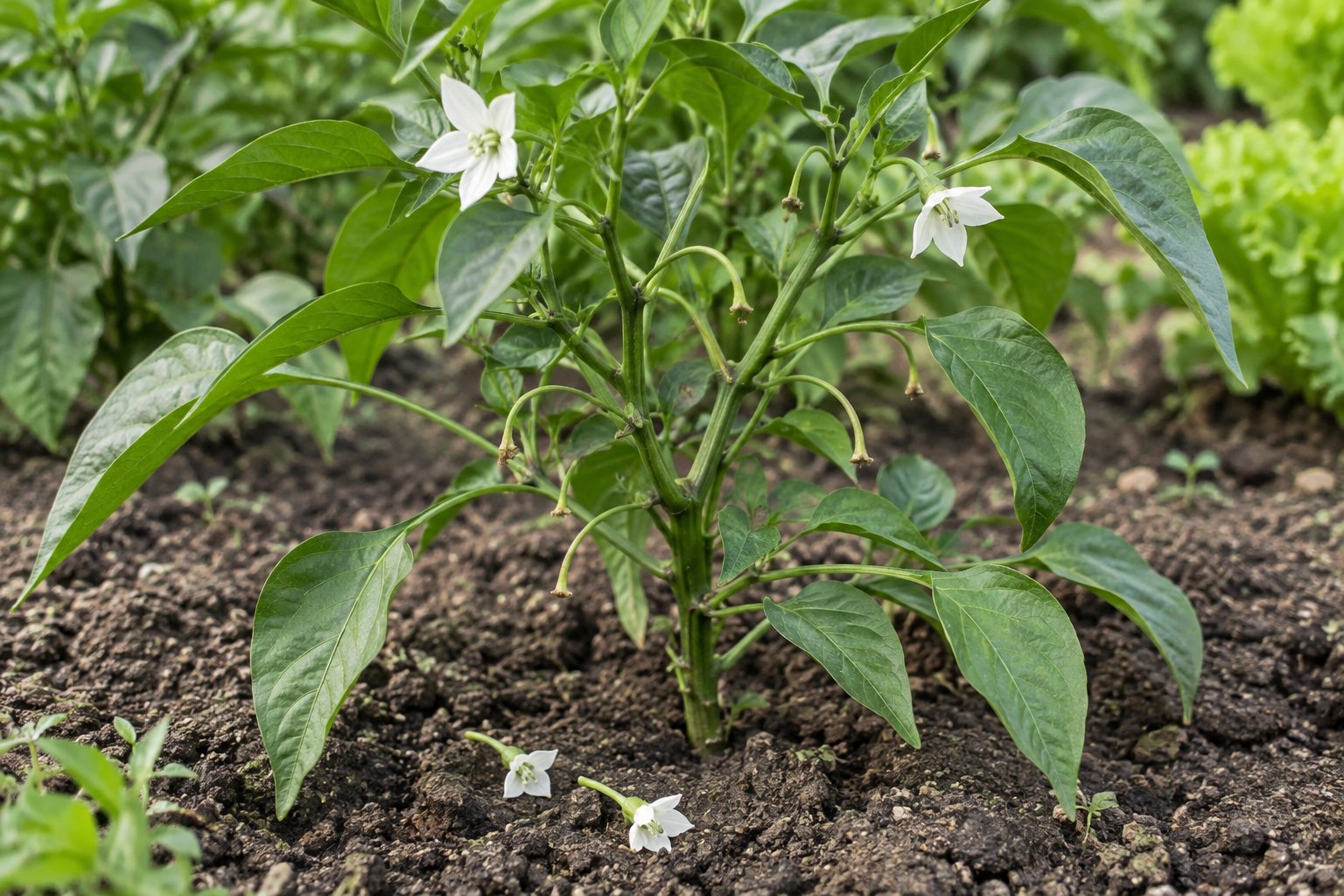
Find the stage where pepper production is stopping
| What you observe | Decision | Next check |
|---|---|---|
| No flowers are forming | Flowering has not begun or is being delayed | Check maturity, growing temperatures, direct light, and recent fertilizer use |
| Flowers form and visibly fall | Physical flower drop is the defining symptom | Use the dedicated flower-drop diagnosis instead of duplicating it here |
| Flowers remain but no tiny pepper develops | Fruit set is failing after flowering | Review temperature, flower condition, environmental stress, and possible pollen-transfer limits |
| A tiny pepper starts and later stalls or drops | Early fruit retention is failing | Check temperature and root-zone moisture, then inspect the fruit and plant for additional symptoms |
| Some peppers are setting while others are not | The plant is capable of fruit set | Track whether the pattern is temporary and linked to a weather or care change |
Separate flowering, flower drop, and fruit-set problems
No flowers
- The plant is still young or recently transplanted.
- New growth continues but buds are absent.
More likely if
- Conditions have been cool, light is limited, or the plant is producing abundant vegetative growth.
Less likely if
- Flowers are already present or their remains are visible.
Confirm maturity and growing conditions before changing fertilizer or attempting pollination.
Flowers physically drop
- Whole blossoms or flower stems detach.
- Dropped flowers collect below the plant.
More likely if
- The loss coincides with unfavorable temperatures or a root-zone moisture problem.
Less likely if
- Flowers remain attached and simply fail to produce a visible pepper.
Use the Pepper flower-drop owner for the detailed diagnosis.
Flowers remain but no fruit sets
- Flowers open and remain long enough to inspect.
- No expanding ovary or small pepper follows.
More likely if
- Flowering coincides with stressful temperatures, dry or wet root-zone conditions, or limited pollen movement in a protected setting.
Less likely if
- The flower physically detached before the fruit-set stage could be observed.
Stabilize conditions first; treat optional pollen movement as a secondary check, not the default fix.
Small fruit starts but fails
- A tiny pepper is visible before growth stops or the fruit drops.
- The event occurs after the flower stage.
More likely if
- The timing matches heat, cold, drought, saturation, or broader plant stress.
Less likely if
- No fruit structure ever became visible.
Inspect the developing fruit and whole plant for additional symptoms before naming one cause.
Confirm the pattern before changing care
- Mark or photograph several buds and open flowers, then check whether they remain, fall, or begin forming peppers.
- Record recent hot and cool periods, including nights; pepper flower and small-fruit retention can be disrupted at temperature extremes.
- Check soil moisture several inches down and confirm drainage before adding water.
- Review the fertilizer label, amount, and timing; leafy growth alone does not prove that fertilizer caused the no-fruit result.
- In a greenhouse or sheltered setting, observe whether flowers move naturally before considering a gentle vibration test.
Route the next decision by the defining symptom
- Flowers are visibly falling from the plant: Continue with the dedicated blossom-drop diagnosis.Why are my pepper flowers falling off?
- Flowers remain but no pepper develops: Stay on this page and evaluate fruit-set conditions rather than calling it flower drop.
- The main question is the ongoing watering routine: Use the Pepper watering owner after checking the immediate root-zone condition.How often should I water pepper plants?
- The whole plant is losing firmness: Use the wilting owner rather than treating wilt as a fruit-set diagnosis.Why are my pepper plants wilting?
What to do after identifying the stage
- Keep light, temperature protection, and root-zone moisture as stable as the growing system allows while new flowers develop.
- Do not add nitrogen simply because fruit is absent; follow soil-test or product-label guidance and review what was already applied.
- If flowers physically fall, move to the flower-drop owner instead of applying every no-fruit remedy.
- If flowers remain but fruit does not set in a sheltered environment, gentle plant movement can be tried as a secondary observation while environmental stress is corrected first.
- Watch the next group of flowers before making another major care change.
GardenSolved checkpoint
Do not do this yet
Avoid shortcuts that blur the diagnosis
- Do not describe physical flower drop and flowers remaining without fruit as the same symptom.
- Do not assume peppers always need insect pollination or routine hand pollination.
- Do not use one temperature threshold as a universal rule for every cultivar and growing system.
- Do not diagnose excess nitrogen from leafiness alone or add a bloom fertilizer without evidence.
- Do not turn this diagnosis into a fixed watering schedule.
Confirm the likely cause first, then choose the treatment.
Judge recovery from new growth
- Track new buds and flowers after the stressful weather or care problem changes.
- Look for a small pepper beginning to enlarge rather than expecting an older failed flower to recover.
- Keep conditions steady long enough to observe the next flowering cycle before adding another treatment.
Reduce repeat fruit-set interruptions
- Choose pepper varieties suited to the local season and provide a sunny, well-drained growing position.
- Use actual soil moisture and drainage to guide watering instead of alternating drought with saturation.
- Apply fertilizer according to a soil test or label and avoid repeated high-nitrogen feeding.
- Keep pollinator habitat nearby without presenting insects as an absolute requirement for pepper fruit set.
When no fruit needs a different diagnosis
Seek plant-specific diagnostic help when absent fruit is accompanied by severe stunting, mottling, distorted new growth, persistent wilt in suitable moisture, stem or root injury, or developing fruit with lesions or decay.