Peppers
Why are my pepper leaves sticky?
The short answer
Wipe or rinse one leaf and inspect the undersides, growing tips, stems, and leaves above and below it for aphids, whiteflies, scale, or another sap-feeder. Honeydew is clear and glossy, ants can be a supporting clue, and black sooty mold is a secondary growth on residue—not the original cause. Confirm active pests or another residue source before choosing a response.
Sticky pepper leaves often have honeydew on their surface, a sugary waste produced by sap-feeding insects. The residue may be on leaves below an infested growing tip, while the insects remain hidden on undersides, stems, or dense new growth; stickiness alone does not identify aphids or prove an infestation.
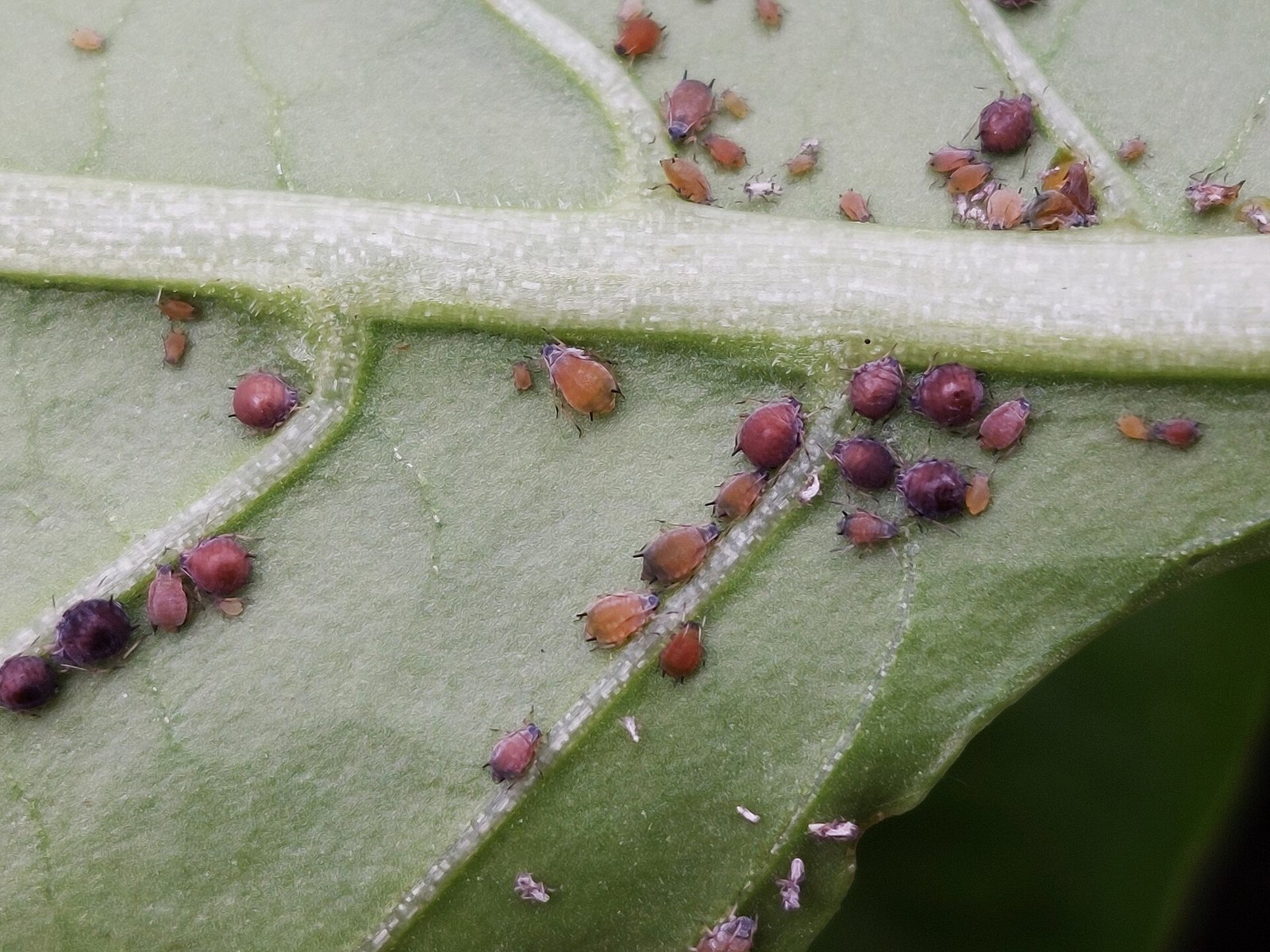

Trace the sticky residue to its source
| What you see | What it suggests first | Next check |
|---|---|---|
| Clear, glossy, tacky residue below tender growth | Honeydew from a sap-feeding insect is possible | Inspect undersides, tips, stems, and leaves above the residue |
| Small soft-bodied clusters on new growth with curling | Aphids become more likely | Look for live aphids, shed skins, ants, and fresh residue |
| Tiny white insects fly up when foliage is disturbed | Whiteflies become more likely | Check undersides for adults and immature stages |
| Fixed bumps or covers on stems or leaves | Scale or another attached sap-feeder is possible | Confirm bumps are pests rather than spray deposits or plant tissue |
| Black soot-like film over a sticky surface | Sooty mold is growing on honeydew; it is a consequence | Find and manage the sap-feeder instead of treating mold as the cause |
| Residue appeared after a spray, feeding, injury, or contact | An external or physical residue is possible | Clean a patch and see whether it returns near active growth |
Compare honeydew with sticky-leaf lookalikes
Honeydew from aphids
- Clear sticky residue is concentrated around tender shoots or undersides.
- Aphids may cluster or leave pale cast skins.
More likely if
- New growth is curled or distorted.
- Ants visit the same stems or residue.
Less likely if
- Residue never returns after cleaning and no pest evidence is found.
Rinse or physically remove small colonies where practical, then monitor new growth.
Whiteflies
- Small white insects flutter when leaves are disturbed.
- Nymphs may remain underneath while honeydew collects below.
More likely if
- Adults rise together or immature stages are attached under leaves.
Less likely if
- No insects or nymphs are found after repeated checks.
Confirm underside stages and assess whether physical control is enough.
Scale or another sap-feeder
- Small fixed bumps or covers remain attached to stems or leaf veins.
- Residue may drip onto leaves below.
More likely if
- Bumps remain after gentle cleaning and cluster on stems or veins.
Less likely if
- The mark wipes away as spray residue or debris.
Confirm attachment is a pest before choosing a product.
Sooty mold on honeydew
- A black, soot-like coating covers honeydew-exposed surfaces.
- The coating is on the surface rather than primary leaf tissue.
More likely if
- Sap-feeders or residue are found nearby.
Less likely if
- Black marks are dry lesions without stickiness.
Control the honeydew-producing pest first; wash residue afterward.
Spray, sap, or harmless external residue
- Tackiness follows a recent product, plant injury, or contact.
- No active pests are found at feeding sites.
More likely if
- A cleaned patch stays clean and residue is limited to exposure.
Less likely if
- Fresh residue reappears below living pests.
Identify the source and avoid repeating an unknown spray while monitoring.
Confirm active honeydew production
- Clean a small leaf area and note whether a glossy film returns.
- Inspect undersides and growing tips before looking only at the top surface.
- Place a white card beneath a branch and gently disturb foliage to see tiny moving or flying insects.
- Inspect stems, leaf axils, and leaves below infested growth for pests, honeydew, ants, or sooty mold.
- Separate a black surface coating from black tissue lesions; sooty mold is a clue to residue, not proof it caused the symptom.
Keep pest causes under the correct symptom owner
- Stickiness is the main observed symptom: Stay with this Pepper sticky-leaves owner and identify the residue source before treating.
- Leaves are primarily curling or distorted and stickiness is absent or secondary: Use the Pepper leaf-curl owner; aphids may be a cause but do not change symptom ownership.Why are my pepper leaves curling?
- Yellowing is the main symptom without confirmed honeydew: Use the Pepper yellow-leaf owner and inspect age, pattern, moisture, roots, and pests.Why are my pepper leaves turning yellow?
- Missing tissue or holes are the main symptom: Use the Pepper leaf-holes owner and inspect chewing evidence separately.Why do my pepper leaves have holes?
- The whole plant is wilting or declining: Use the Pepper wilting owner and do not reduce whole-plant decline to honeydew alone.Why are my pepper plants wilting?
Act on a confirmed small infestation
- Rinse a small pepper plant with a gentle stream of water, focusing on undersides and tender growth when practical.
- Remove heavily infested tissue only when practical and keep healthy growth for recovery.
- Reduce weeds or dense contact growth that shelters pests, and monitor nearby peppers.
- Discourage persistent ant traffic as a supporting step, but do not treat ants as the diagnosis.
- If stronger control is justified, use only a product labeled for peppers and the identified pest, following label, harvest, pollinator, and local-use directions.
GardenSolved checkpoint
Do not do this yet
Avoid treating residue without finding its source
- Do not claim every sticky leaf has aphids; whiteflies, scale, other sap-feeders, and external residues can look similar.
- Do not treat sooty mold as the primary disease when it is growing on honeydew.
- Do not use ants alone as proof of a particular pest.
- Do not spray an unidentified product repeatedly or use one not labeled for edible peppers.
- Do not let a sticky-leaf article absorb curling, yellowing, holes, or wilting queries when those symptoms are dominant.
Confirm the likely cause first, then choose the treatment.
Judge recovery by new growth and returning residue
- Existing stickiness and sooty film may remain; the useful signal is that fresh residue stops returning after the source is reduced.
- Monitor growing tips and new leaves for normal development while checking undersides again.
- Wash residue only after controlling the source; renewed stickiness means the decision needs another check.
Make sap-feeder problems easier to catch
- Scout tender growth, leaf undersides, stems, and nearby plants regularly.
- Keep weeds and dense contact growth from hiding pests while preserving useful natural enemies.
- Use spacing and plant vigor so leaves are accessible for inspection.
- Avoid unnecessary broad-spectrum sprays that can disrupt natural enemies and make symptoms harder to interpret.
When sticky leaves need a closer diagnosis
Escalate to a local extension office or plant-diagnostic service when pests cover new growth, distortion or yellowing is severe, the plant wilts or declines quickly, fruit is affected, residue keeps returning after careful inspections, or no credible source can be found.