Peppers
Why are my peppers turning black?
The short answer
Check the variety, the fruit's location of discoloration, and its texture. Firm, glossy, evenly colored fruit that matches the cultivar's expected immature or mature color may be normal; a localized sunken, soft, wet, expanding, leaking, or moldy patch is concerning. If the dark tissue is specifically at the blossom end, use the Pepper blossom-end-rot owner rather than this general-blackening page.
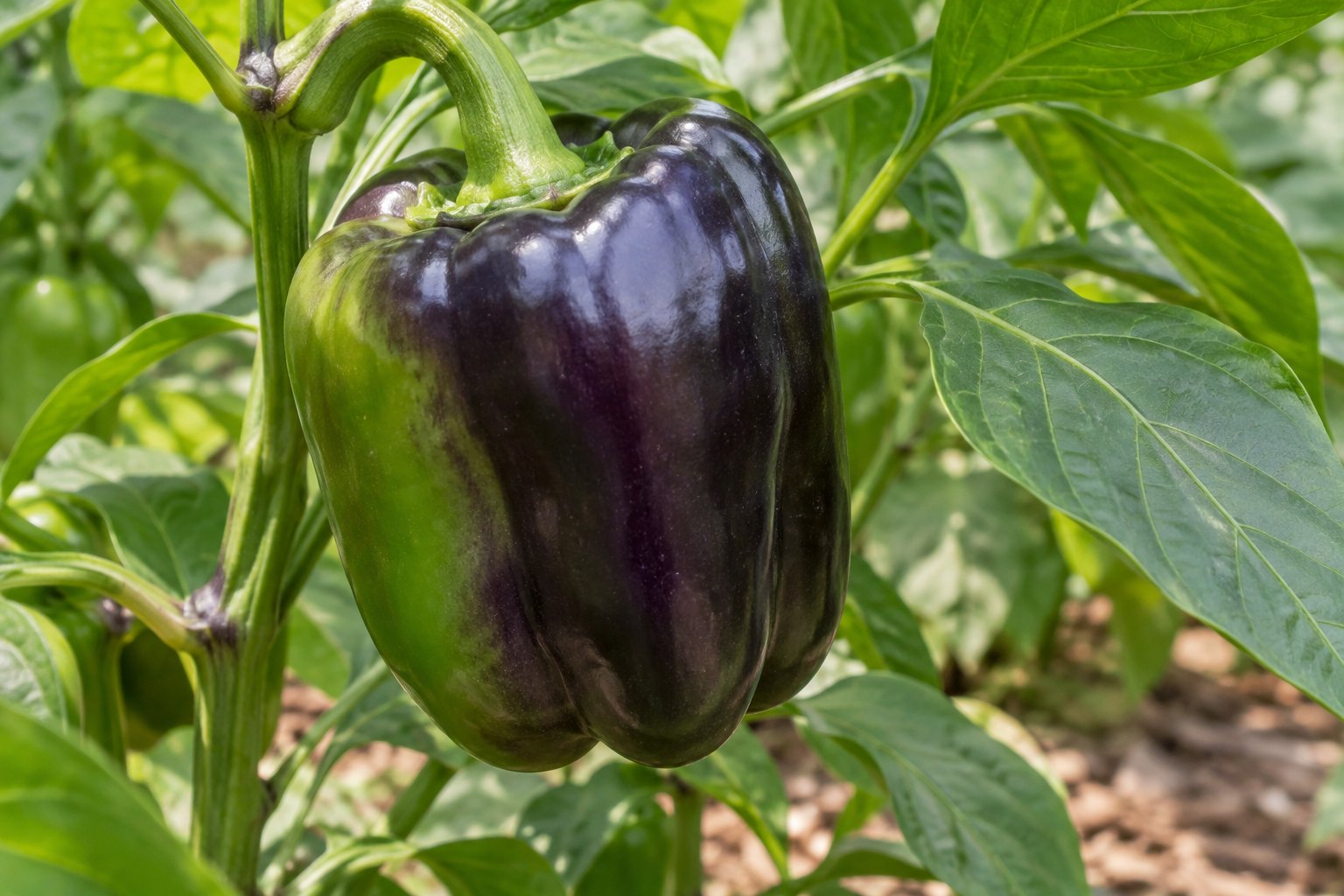
Black or very dark pepper fruit is not automatically diseased. Some peppers develop purple-to-near-black color as part of their normal cultivar and maturity pattern, while sun exposure, injury, a blossom-end lesion, or decay can darken damaged tissue. Use location, texture, and whether the change is uniform or spreading before deciding what it means.
Start with color, location, and texture
| What you see | What it suggests first | Next check |
|---|---|---|
| Even dark purple or near-black color; fruit is firm and intact | Normal cultivar pigmentation or a maturity stage remains possible | Check expected cultivar color and compare other fruit |
| Pale, tan, papery, or wrinkled patch on the sun-facing side | Sunscald or heat-related injury is possible | Check leaf cover and recent heat or exposure |
| Darkening follows a bruise, crack, puncture, or rubbing point | Physical injury with localized tissue damage is possible | Remove the source of injury and monitor the edge |
| Dry, sunken discoloration at the end opposite the stem | Blossom-end rot becomes the defining possibility | Route to the Pepper blossom-end-rot owner |
| Soft, wet, spreading, leaking, moldy, or foul-smelling patch | Fruit rot or secondary decay is more concerning | Remove affected fruit and seek a crop-specific diagnosis if it recurs |
| Stable old mark with firm surrounding tissue | Past injury or old surface damage may be stable | Watch new fruit rather than spraying from color alone |
Compare normal dark color with damaged tissue
Normal cultivar pigmentation
- Color is relatively even and fruit remains firm, glossy, and intact.
- Color changes as fruit moves through the variety's known maturity stages.
More likely if
- Several fruits show a similar pattern.
- The label or cultivar description supports purple or dark mature color.
Less likely if
- A single patch is sunken, soft, wet, or expanding.
Monitor maturity and harvest according to the cultivar rather than treating color alone.
Sunscald or heat injury
- Damage is localized on exposed fruit and may be pale, tan, papery, wrinkled, or later colonized by decay.
More likely if
- Leaf cover was lost or intense heat and direct sun reached the patch.
Less likely if
- The same dark color is uniform across sheltered fruit.
Protect fruit with healthy canopy and reduce avoidable exposure; do not call it a disease from color alone.
Bruising or physical injury
- Discoloration follows a contact point, crack, puncture, rubbing, tie, stake, hail event, or handling.
More likely if
- The change appeared after an injury and remains localized.
Less likely if
- New unrelated fruit develops spreading wet lesions.
Remove the rubbing or handling cause and monitor fresh fruit.
Blossom-end rot
- The lesion is dark, dry or leathery, and centered at the end opposite the stem.
More likely if
- Several developing fruit repeat the same end-centered pattern.
Less likely if
- The mark is on the side, around the stem, or evenly covers firm fruit.
Use the Pepper blossom-end-rot owner for the location-specific diagnosis and care.
Fruit rot or secondary decay
- Tissue softens, becomes water-soaked, spreads, leaks, collapses, molds, or smells foul.
More likely if
- The lesion progresses quickly or damaged fruit remains wet in contact with soil or other fruit.
Less likely if
- Fruit is firm and color matches the cultivar.
Remove decaying fruit and seek diagnosis if the pattern affects multiple fruit or returns.
Confirm the pattern before acting
- Compare several fruit at different stages, including healthy fruit, and record whether color is uniform or patchy.
- Inspect the stem end, blossom end, exposed side, shaded side, and any crack or contact point rather than judging only the darkest surface.
- Gently check firmness and look for water-soaking, leaks, mold, odor, collapse, or a spreading edge.
- Review cultivar information and recent heat, sun exposure, hail, rain, irrigation, support contact, and handling.
- Inspect leaves and stems for a separate symptom, but do not label discoloration fungal or bacterial without supporting signs.
Route by the defining symptom
- The dark, sunken patch is specifically at the blossom end: Use the Pepper blossom-end-rot owner; do not repeat its full treatment protocol here.Why do my peppers have black spots on the blossom end?
- The main question is a continuing watering routine: Use the Pepper watering owner and inspect root-zone moisture separately.How often should I water pepper plants?
- The plant is wilting or declining rather than fruit being the primary symptom: Use the Pepper wilting owner instead of treating fruit color as the whole diagnosis.Why are my pepper plants wilting?
Act on the confirmed pattern
- Leave firm, intact cultivar-colored fruit in place and monitor its expected maturity change; dark color alone is not a reason for pesticide use.
- Remove fruit that is soft, leaking, moldy, foul-smelling, or collapsing, and keep decaying fruit from contacting healthy fruit or soil.
- Protect exposed fruit with healthy leaf cover where practical and correct avoidable rubbing, ties, supports, or handling damage.
- If the pattern is at the blossom end, follow the linked blossom-end-rot owner; do not add a calcium product from color alone.
- Use a product only for an identified, labeled target; discoloration by itself is not a diagnosis.
GardenSolved checkpoint
Do not do this yet
Avoid treating color as a diagnosis
- Do not assume every black pepper is diseased or every dark patch is rot.
- Do not call normal cultivar pigmentation harmless without checking the variety and tissue condition.
- Do not collapse a blossom-end lesion into general blackening; location determines the owner.
- Do not apply fungicide, insecticide, or calcium as a diagnostic test.
- Do not eat fruit with soft, leaking, moldy, or foul-smelling decay.
Confirm the likely cause first, then choose the treatment.
Judge recovery by later fruit
- Existing dead, bruised, or rotted tissue will not become healthy again; remove fruit that is actively decaying.
- Normal cultivar color may continue to change as fruit matures, while a damaged patch should remain stable rather than expand.
- Use healthy new fruit and a lack of new lesions as the recovery signal, then repeat the location and texture check if the pattern returns.
Reduce avoidable fruit damage
- Keep the cultivar label or a reliable variety description so expected fruit color is known before harvest.
- Maintain healthy leaf cover and monitor exposed fruit during intense heat, while avoiding unnecessary pruning that increases exposure.
- Support plants so fruit does not rub against ties, stakes, cages, soil, or neighboring fruit.
- Keep moisture and drainage steady, inspect after severe weather, and remove decaying fruit promptly.
- Scout both fruit and the rest of the plant so a separate leaf, stem, or wilt symptom is not hidden by the color question.
When to investigate beyond appearance
Ask a local extension office or plant-diagnostic service when multiple fruits develop rapidly expanding soft or wet lesions, mold, leaks, foul odor, stem symptoms, whole-plant decline, or an unexplained pattern that continues on new fruit.