Tomatoes
Why do my tomatoes have blossom-end rot?
The short answer
Confirm that the patch begins at the blossom end opposite the stem and becomes dark, sunken, and leathery. Then check for sharp moisture swings, poor drainage, recent root injury, or very rapid growth. Stabilize the root zone for future fruit; do not assume the soil lacks calcium or add an amendment without soil or pH evidence.
Blossom-end rot is a physiological disorder in developing fruit, not an infection spreading from fruit to fruit. The visible damage reflects too little calcium reaching that fruit tissue, but the useful question is why delivery was disrupted—not simply whether a calcium product exists.
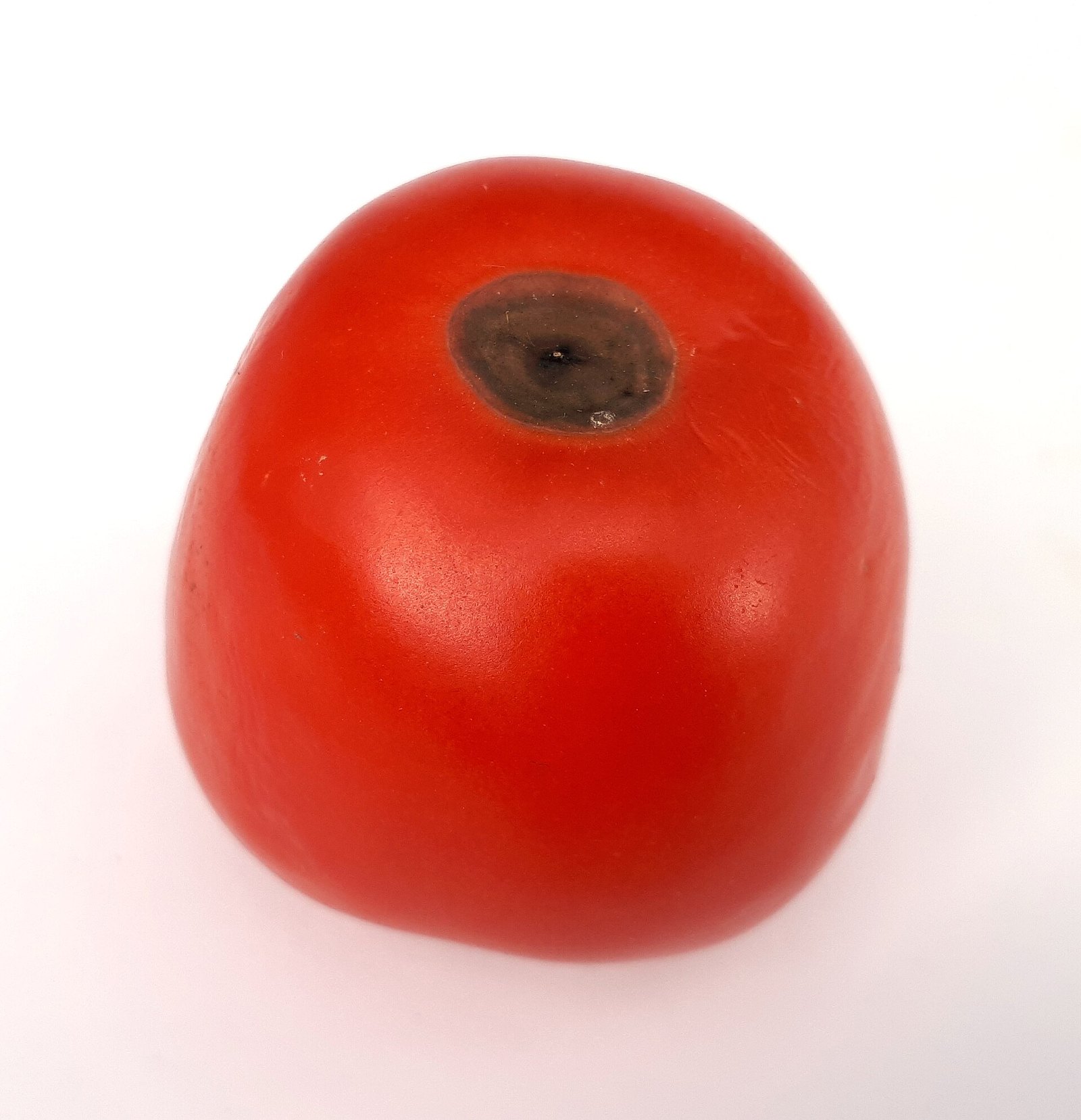

30-second blossom-end check
| What you see | Best next interpretation |
|---|---|
| Patch centered opposite the stem | Location supports blossom-end rot. |
| Dry, sunken, firm, or leathery tissue | Characteristic progression is more likely than a soft rot. |
| Soft, wet, leaking, or foul-smelling tissue | Investigate secondary decay or another fruit rot. |
| Cracks are the main symptom | Use the splitting pathway instead. |
| Root zone swung from dry to soaked or stayed saturated | Calcium delivery may have been disrupted even if soil calcium is present. |
| Several young fruits affected | Review shared watering, drainage, roots, growth, and soil evidence. |
Why ‘just add calcium’ is incomplete
The damaged fruit tissue is locally short of calcium, but calcium moves with water through the plant. Irregular moisture, damaged or poorly functioning roots, saturated soil, and rapid growth can prevent enough calcium from reaching developing fruit even when the soil contains adequate calcium.
Actual low soil calcium or unsuitable pH can matter in some sites. A soil test and local recommendation are the evidence for lime, gypsum, or another calcium amendment—not the fruit symptom alone. Foliar or blossom-end sprays do not repair tissue that is already damaged.
Compare the fruit damage
Blossom-end rot
- Damage begins at the blossom end opposite the stem.
- The area enlarges and becomes brown to black, sunken, and leathery.
More likely if
- Several developing fruits repeat the same location and texture.
- Moisture fluctuated, drainage was poor, roots were disturbed, or growth was very rapid.
Less likely if
- Damage centers around the stem or side of the fruit.
- The first symptom is a deep crack, puncture, or water-soaked soft patch.
Stabilize root-zone moisture and protect future fruit while checking soil evidence before amendments.
Cracking or splitting
- The skin has radial or circular cracks rather than one sunken bottom patch.
- Tissue may split after a rapid increase in water availability.
More likely if
- A visible crack is the starting point.
- Damage follows rain or heavy watering after dry conditions.
Less likely if
- The skin is intact over a dry, leathery lesion centered at the blossom end.
Use the tomato splitting pathway to manage moisture swings and harvest timing.
Physical injury
- Damage is isolated to a contact, puncture, rubbing, or handling point.
- The location varies from fruit to fruit.
More likely if
- A stake, tie, branch, hail event, pest, or handling explains the exact mark.
Less likely if
- Multiple fruits develop a centered blossom-end lesion without an injury event.
Remove the source of rubbing or injury and monitor undamaged fruit.
Soft rot or secondary decay
- Tissue is wet, soft, leaking, mouldy, or foul-smelling.
- Decay may invade a crack, injury, or existing blossom-end lesion.
More likely if
- The lesion collapses rapidly or attracts insects.
- Fruit has open, wet, or mouldy tissue.
Less likely if
- The area remains dry, firm, and leathery.
Remove decaying fruit and seek diagnosis if soft lesions recur without a clear entry wound.
Sunscald or another lesion
- A pale, bleached, papery, or blistered patch occurs on an exposed shoulder or side.
- Dark spots away from the blossom end may have a different cause.
More likely if
- Damage faces intense sun or follows sudden foliage loss.
- Lesion position and texture do not match blossom-end rot.
Less likely if
- The patch consistently begins at the bottom opposite the stem and sinks inward.
Diagnose the location and surface pattern rather than treating every dark fruit mark as blossom-end rot.
Checks you can make safely
- Use the stem scar as your landmark and inspect the exact opposite end of several affected and unaffected fruits.
- Note whether the earliest patch is pale or tan before becoming brown or black, and whether it stays dry and firm rather than wet and soft.
- Check moisture several inches below the soil surface and confirm that excess water can drain.
- Review the period when these fruits were small: missed watering, heavy rain, sudden irrigation, root pruning, transplanting, cultivation, or high fertilizer input may be more relevant than today's conditions.
- Use a soil test or reliable local soil information to assess pH and calcium before adding lime, gypsum, or calcium fertilizer.
Lookalikes that change the next step
Tomato splitting
Cracks or splits dominate instead of a centered, sunken blossom-end patch.
Sunscald
Pale or papery damage usually occurs on a sun-exposed shoulder or side after fruit loses shade.
Soft fruit rot
Wet, leaking, foul-smelling, or mouldy tissue needs a decay assessment rather than a calcium amendment.
Random fruit injury
Punctures and abrasion follow contact points and do not repeat reliably at the blossom end.
Choose the next diagnostic step
- The lesion fits blossom-end rot and moisture has fluctuated: Set a moisture-based routine for the root zone and future fruit.How often should I water tomato plants?
- Cracks or splits are the main damage: Use the splitting pathway rather than treating a calcium problem.Why are my tomatoes splitting?
- The plant also wilts or the root zone stays wet: Diagnose root-zone function before adding water or amendments.Why are my tomato plants wilting?
What to do now
- Keep the root zone evenly moist rather than cycling between very dry and saturated; water slowly and confirm drainage.
- Add an appropriate mulch layer to reduce evaporation swings, leaving space around the stem.
- Avoid hoeing, digging, transplanting, or other root disturbance around fruiting plants.
- Do not expect an existing lesion to heal. Judge improvement by fruit that develops after root-zone conditions become steadier.
- If a soil test shows low calcium or unsuitable pH, follow the laboratory and local extension recommendation for the site rather than choosing an amendment from the symptom alone.
GardenSolved checkpoint
Do not do this yet
- Do not assume blossom-end rot proves the soil is calcium-deficient.
- Do not apply lime, gypsum, calcium fertilizer, eggshells, or foliar calcium without soil, pH, or local evidence that supports it.
- Do not use Epsom salt for blossom-end rot; it supplies magnesium, not calcium, and unnecessary magnesium can complicate nutrient balance.
- Do not overwater in an attempt to move more calcium; saturated roots function poorly.
- Do not promise that already damaged fruit will recover.
Confirm the likely cause first, then choose the treatment.
What recovery looks like
- Existing damaged tissue will remain damaged and may enlarge as that fruit grows.
- The useful recovery signal is newer fruit developing without a blossom-end lesion after moisture and root conditions stabilize.
- If new fruit remains affected, recheck drainage, irrigation coverage, root injury, rapid growth, and soil-test evidence.
Reduce blossom-end rot on future fruit
- Build irrigation around actual root-zone moisture and weather rather than a rigid calendar.
- Use mulch and adequate soil volume to reduce rapid drying, especially in containers and raised beds.
- Maintain drainage and avoid damaging roots while fruit is setting and enlarging.
- Avoid excessive nitrogen that drives very rapid growth, and base calcium or pH amendments on a soil test.
When to ask for diagnostic help
Ask a local extension office or plant-diagnostic service when fruit lesions are soft, wet, foul-smelling, or away from the blossom end; when several different fruit symptoms overlap; or when new fruit remains affected despite stable moisture and drainage. Food-use decisions for damaged or decaying fruit should follow local food-safety guidance rather than appearance alone.