Tomatoes
Why are my tomato flowers falling off?
The short answer
Start with temperature and the flower-to-fruit sequence. Sustained heat—especially warm nights—can disrupt tomato pollen and fruit set, while unusually cool conditions can also interfere. Then check root-zone moisture, pollination conditions, and recent nitrogen feeding. If the plant is not making flowers at all, use the no-flowering page instead.
Tomato blossoms can dry, yellow at the flower stem, and fall when fertilization fails or when the plant is under reproductive stress. The useful question is not simply 'why did a flower fall?' but what conditions were present while that flower was opening and setting fruit.
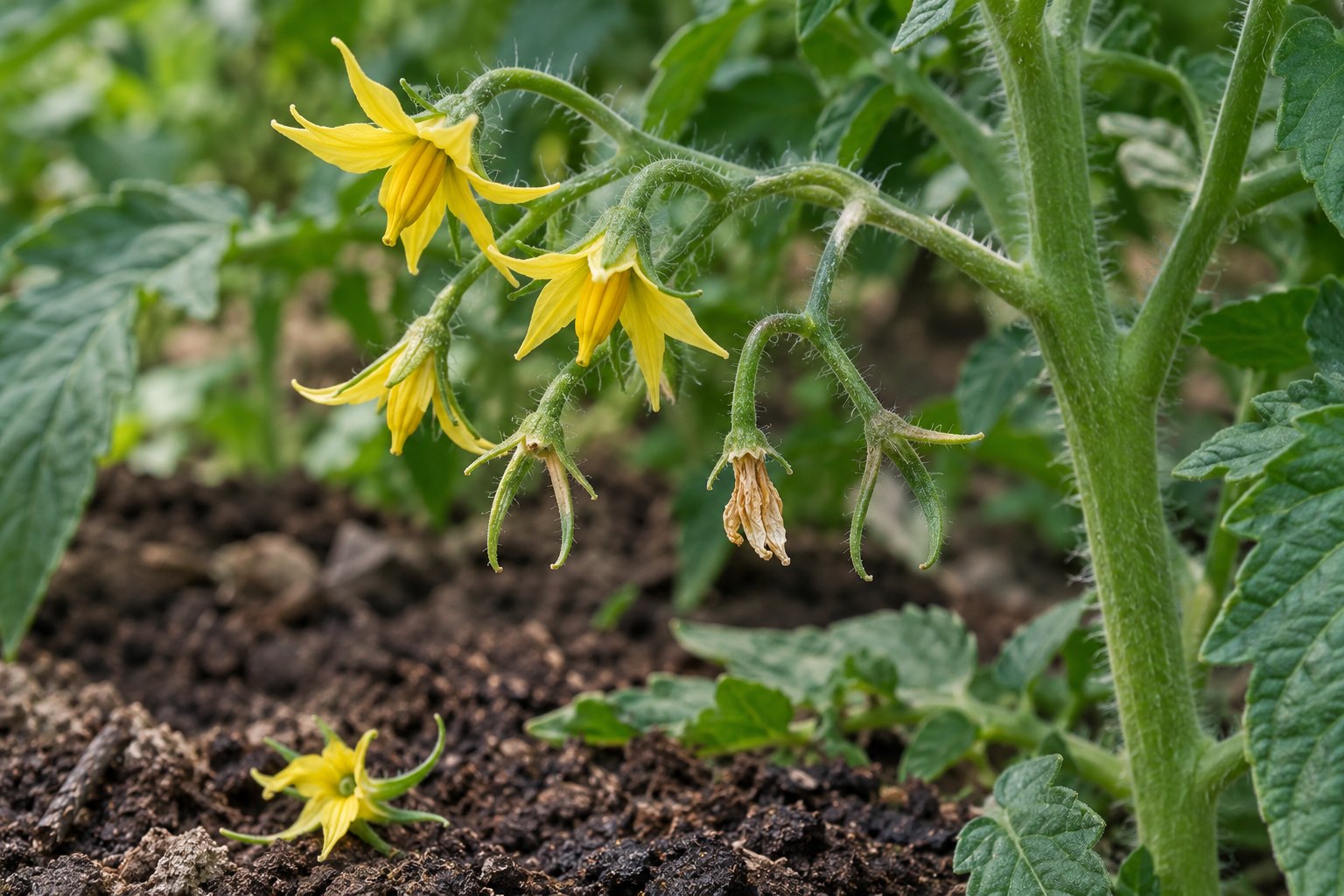
Follow the flower from opening to fruit set
Flower opens
Pollen must be released and reach the stigma while the flower is receptive.
Pollination and fertilization window
Temperature, humidity, flower movement, and plant stress can affect whether fertilization succeeds.
Petals fade
Petal loss alone is not the problem; check whether the ovary behind the flower begins to enlarge.
Pedicel yellows and flower detaches
Repeated detachment without fruit set points to blossom abortion and should be matched with weather, moisture, and pollination clues.
Compare the main blossom-drop branches
Heat-related reproductive stress
- Several flowers drop during sustained hot weather, especially when nights remain warm.
- Other flowers may open but set little fruit.
More likely if
- Fruit set improves when temperatures moderate.
Less likely if
- Drop continues through a long period of moderate temperatures with no other heat symptoms.
Keep root-zone moisture steady, avoid forcing growth with fertilizer, and judge the next flower clusters after the heat eases.
Cool-weather pollination stress
- Flowering occurs during unusually cool nights or early-season cold.
- Plants are otherwise healthy but fruit set is delayed.
More likely if
- Later flowers set normally when nights warm.
Less likely if
- The same failure persists well into suitable weather.
Protect young plants from avoidable cold where practical and reassess later flower clusters.
Limited pollen release or transfer
- Flowers open but set poorly in a still or enclosed environment, or pollinator activity is very low.
- No major root-zone or fertility problem is evident.
More likely if
- Gentle natural or managed flower movement and suitable conditions improve set on later trusses.
Less likely if
- Flowers are visibly aborting during strong heat or the whole plant is stressed.
Improve normal pollen movement and pollinator access where relevant; do not apply an insecticide to open flowers without a confirmed target.
Root-zone or growth-balance stress
- Dry or saturated soil, transplant/root injury, or repeated high-nitrogen feeding coincides with flower loss.
- The plant may be very leafy or may show broader stress.
More likely if
- The care history and root-zone check support the stress.
Less likely if
- Moisture, drainage, and fertility are stable and suitable.
Correct only the confirmed stress, then evaluate newly formed flowers rather than trying to rescue dropped blossoms.
Checks that narrow the cause
- Mark a few fresh flowers and check whether the ovary enlarges after petals fade.
- Record daytime and nighttime conditions during flowering; sustained heat and unusually cool nights matter more than one brief reading.
- Check moisture several inches below the surface and confirm that excess water can drain.
- Review recent fertilizer, manure, and compost inputs for unnecessary nitrogen.
- Observe whether flowers are gently moved by wind or activity around the truss and whether pollinating insects can access the planting.
- Inspect new growth and leaf undersides for distortion, sticky residue, pests, mottling, or other symptoms that suggest a broader problem.
Use the symptom that actually owns the next step
- The plant is not forming flower clusters at all: Use the no-flowering diagnosis to assess plant stage, light, nitrogen, and temperature.Why are my tomato plants not flowering?
- Soil moisture or irrigation is the main uncertainty: Build the next watering decision from the root zone and weather.How often should I water tomato plants?
- The plant wilts even though soil is wet, or decline is progressing: Use the wilting diagnosis rather than adding more water.Why are my tomato plants wilting?
What to do for the next flower clusters
- Keep the root zone reasonably even in moisture and verify drainage; avoid cycling between drought and saturation.
- During a heat spell, protect the plant from additional avoidable stress and wait for new flowers after conditions moderate.
- Pause unnecessary high-nitrogen feeding and use soil or crop guidance before changing fertilizer.
- In enclosed or very still growing systems, provide normal flower movement or ventilation appropriate to the setup rather than aggressively shaking damaged flowers.
- Protect open flowers and pollinating insects from unnecessary pesticide exposure; identify a pest and follow the product label before any treatment.
GardenSolved checkpoint
Do not do this yet
Avoid blossom-drop shortcuts
- Do not assume every dropped flower proves a pollinator shortage.
- Do not add phosphorus, calcium, Epsom salt, or a bloom booster from blossom drop alone.
- Do not overwater a stressed plant when the root zone is already moist.
- Do not spray open flowers without a confirmed pest or disease target and label-compliant use.
- Do not expect a flower that has already aborted to recover; judge improvement on new trusses.
Confirm the likely cause first, then choose the treatment.
What recovery looks like
- New blossoms remain attached long enough for the ovary to begin enlarging.
- Fruit set improves after a temperature extreme passes or after root-zone stress is corrected.
- The plant continues balanced vegetative and reproductive growth rather than producing only foliage.
- If flowers stop forming entirely, move back to the no-flowering diagnosis.
Reduce repeat blossom drop
- Plant at a time that gives flowering a reasonable chance of avoiding persistent local cold or extreme heat.
- Maintain steadier root-zone moisture and drainage through flowering.
- Avoid unnecessary nitrogen-rich feeding once the plant is established.
- Maintain airflow and normal flower access in protected growing systems, and protect pollinators from avoidable pesticide exposure.
When repeated blossom drop needs local help
Ask a local extension office or plant-diagnostic service when blossom abortion continues through suitable weather and stable moisture, when several plants fail in the same unusual pattern, or when distorted growth, pest evidence, mottling, stem injury, or progressive decline accompanies poor fruit set.