English
Tomato growing
Tomato growing and problems
Start with the leaf, flower, fruit, or care question you can actually observe, then follow the page that owns that first decision.
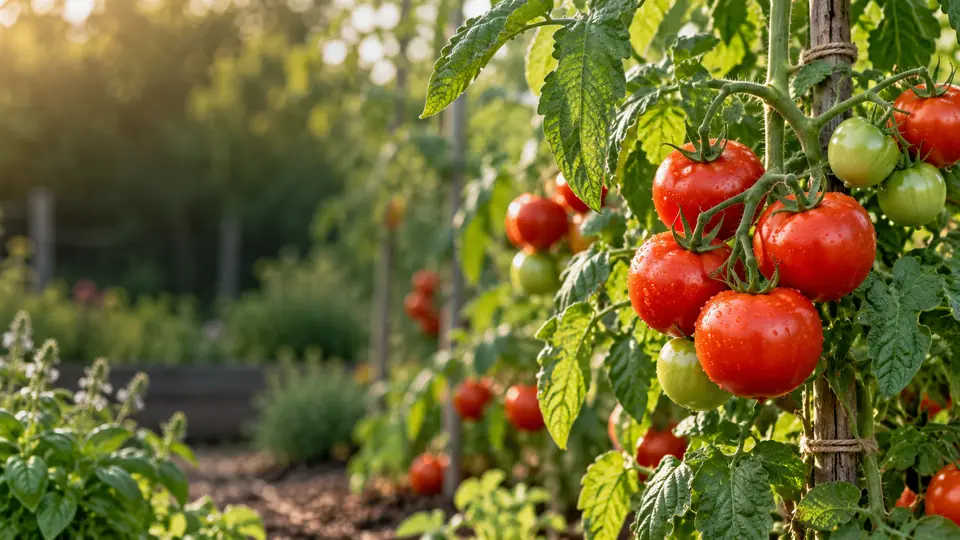
Find my problemAI-generated educational image · GardenSolved.com. Overview for navigation, not diagnostic evidence.
Before you treat
Three checks that make the next step clearer
1. Check the root zone
Feel below the surface and check drainage before changing the watering pattern. Dry and saturated roots can produce overlapping stress symptoms.
Check watering2. Record which leaves changed first
Note whether older or newer leaves are affected and whether yellowing is even, patchy, or tied to spots, curl, or edge damage.
Compare leaf clues3. Identify the growth stage
Separate a leaf problem from a flowering or fruit-set problem before treating. The stage where progress stopped usually narrows the useful next check.
Check floweringBrowse problems by symptom
Start with what you can see.
Questions & answers
Browse tomatoes
14 published answers
Leaf symptoms
Start with the clearest leaf symptom you can see. Color changes, curling, and holes can overlap in cause, but they need different first checks.
Why are my tomato leaves turning yellow?
Read the yellowing pattern and root-zone clues before watering or fertilizing.
Open answerWhy are my tomato leaves curling?
Compare the curl pattern and check the root zone before treating the plant.
Open answerWhy are my tomato leaves turning brown?
Read the brown-leaf pattern before choosing a disease or stress response.
Open answerWhy are my tomato leaves turning purple?
Separate temporary cold-root phosphorus stress from a persistent nutrient problem.
Open answerWhy do my tomato leaves have holes?
Match tomato leaf damage to the feeding or lesion pattern before treating.
Open answerWilting & plant growth
Separate temporary water or heat stress from a plant that stays wilted, and distinguish normal vigorous growth from weak, stretched stems.
Flowering & fruit set
Use these answers when flowers are missing or dropping before fruit develops, then check temperature, moisture, nutrition, and pollination conditions.
Why are my tomato plants not flowering?
Find where flowering has stalled before changing fertilizer, water, or pollination care.
Open answerWhy are my tomato flowers falling off?
Track conditions during flowering to separate heat-related blossom drop, pollination limits, moisture stress, and growth imbalance.
Open answerFruit problems
Match the fruit problem before acting. Blossom-end rot, splitting, slow ripening, and disappointing flavor have different first checks and different useful responses.
Why do my tomatoes have blossom-end rot?
Confirm the lesion location, then correct calcium-delivery and root-zone conditions without guessing at amendments.
Open answerWhy are my tomatoes splitting?
Use crack pattern, recent moisture change, ripening stage, and fruit condition to choose the next step.
Open answerWhy are my tomatoes not ripening?
Separate normal green-fruit timing and heat-delayed color change from uneven ripening and other fruit disorders.
Open answerWhy aren't my tomatoes sweet?
Separate cultivar flavor and harvest stage from growing-condition or storage effects when tomatoes taste bland or not sweet.
Open answerWater & growing care
Build tomato watering around root-zone moisture, weather, plant size, drainage, and whether the plant grows in the ground or a container.