Tomatoes
Why are my tomato leaves curling?
The short answer
Upward rolling on older, otherwise green leaves is often physiological leaf roll triggered by heat or another root-zone stress. First compare old and new growth, then check moisture below the soil surface and inspect leaf undersides. Do not water, fertilize, or spray from the curl alone.
A curled tomato leaf is a clue, not a diagnosis. The direction of the curl, which leaves changed first, and whether the newest growth is twisted or discoloured help separate common stress from a problem that needs closer investigation.
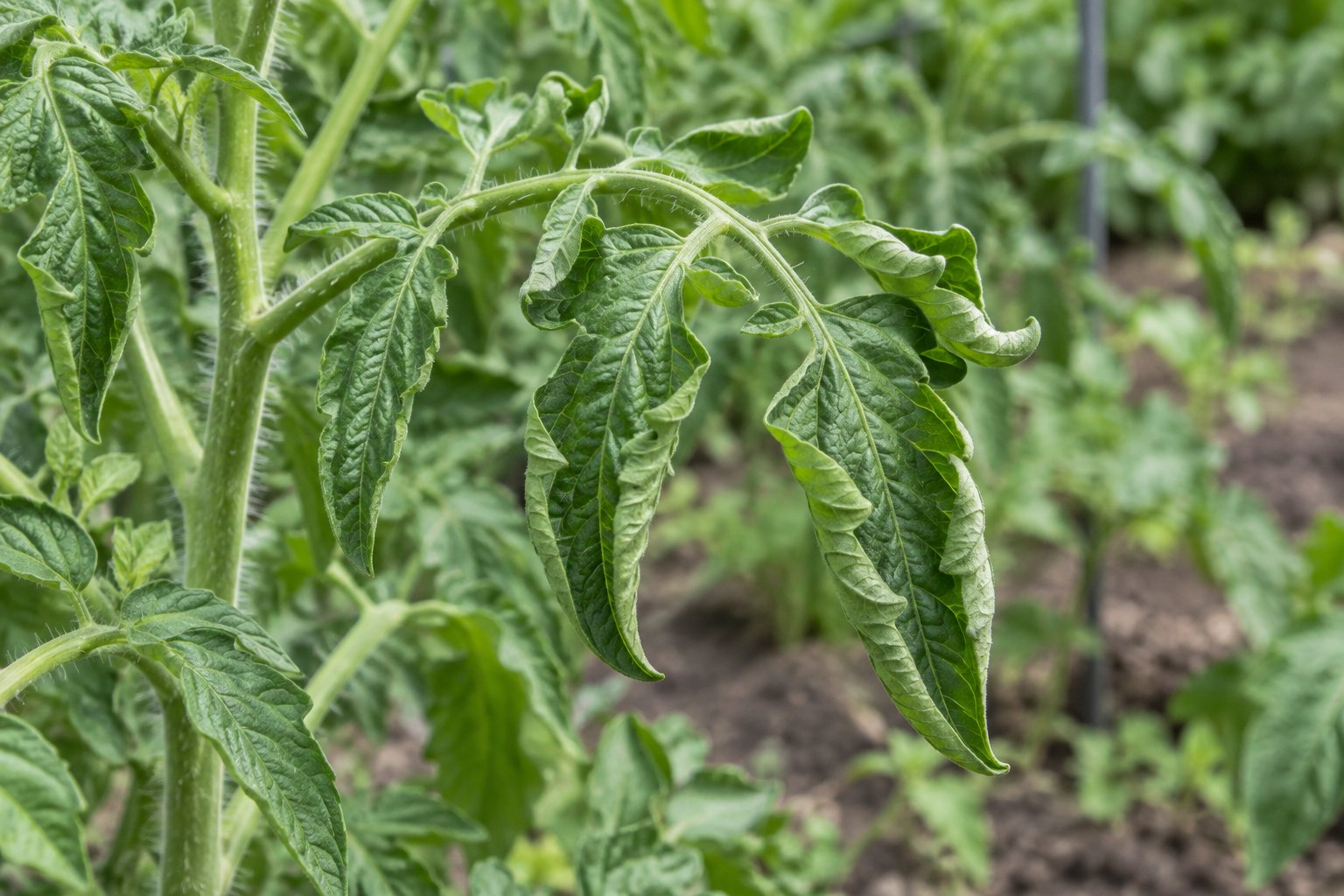
Observe the curl before changing anything
Start with direction and plant position. Note whether lower leaves roll upward but stay green, or whether the newest leaves are narrow, twisted, cupped, mottled, sticky, or unusually small. Check whether one branch, one plant, a row edge, or every tomato is affected.
Add the timing: recent heat or wind, a dry spell followed by watering, saturated soil, transplanting, root disturbance, heavy pruning, fertilizer, nearby weedkiller use, or a new compost or manure source. These clues are more useful than the word ‘curl’ by itself.
Compare the pattern
Physiological leaf roll
- Older or lower leaves usually roll upward and inward.
- Rolled leaves often remain green and may feel firm or leathery.
- The growing tip is not severely twisted or stunted.
More likely if
- The change followed hot, dry, windy, very wet, or otherwise stressful conditions.
- The plant is still growing and flowering or fruiting normally.
Less likely if
- New leaves are narrow, mottled, sharply twisted, or much smaller than normal.
- Sticky residue, insects, stem twisting, or progressive decline is present.
Check the root-zone moisture and reduce the stress rather than treating for disease.
Root-zone or transplant stress
- Curling appears with droop, slow growth, or yellowing.
- The soil is very dry, remains saturated, or drains poorly.
- Symptoms began soon after transplanting or root disturbance.
More likely if
- The whole plant looks stressed rather than only a few rolled lower leaves.
- The stem base, container drainage, or root zone has an obvious problem.
Less likely if
- Soil moisture and drainage are suitable and the plant has been established for some time.
- Only tender new growth is severely twisted while older leaves look normal.
Correct an observed moisture or drainage problem gradually and monitor the next leaves that form.
Sap-feeding pests
- Young leaves are curled or distorted and insects are present on the undersides or growing tips.
- There may be sticky honeydew, fine pale stippling, webbing, cast skins, or clusters of small insects.
More likely if
- A hand lens reveals mites or small insects where the newest damage is forming.
- The damage is concentrated on tender growth or leaf undersides.
Less likely if
- Repeated inspection finds no pest, residue, stippling, webbing, or feeding evidence.
- Lower leaves simply roll upward and stay green.
Identify the pest before choosing any control; curled leaves alone do not justify a pesticide.
Spray injury or an infectious lookalike
- Newest leaves or stems are narrow, twisted, bent, cupped, mottled, or stunted.
- Several plants may follow a field-edge, drift, compost, manure, or shared-equipment pattern.
- Mottling, unusual vein colour, persistent stunting, or insect vectors may accompany some infectious problems.
More likely if
- Symptoms began after nearby weed control, use of a shared sprayer, or addition of an uncertain compost or manure source.
- Distortion continues into successive new leaves instead of easing when weather and moisture improve.
Less likely if
- Only older leaves roll upward while new growth, stems, colour, and plant vigour remain normal.
- The plant improves as a clear environmental stress is corrected.
Stop the suspected exposure and ask a local extension or plant-diagnostic service to assess persistent severe distortion.
Checks you can make safely
- Photograph one lower leaf and the growing tip, then compare direction, colour, texture, and new growth over time.
- Push a finger or trowel several inches into the soil away from the stem. Do not judge the root zone from a dry or wet surface alone.
- Inspect leaf undersides and tender shoots in good light, using a hand lens if available. Look for insects, honeydew, stippling, webbing, or cast skins.
- Review the previous several days for heat, wind, heavy rain, missed watering, transplanting, root work, severe pruning, fertilizer, weedkiller, or new compost or manure.
- Compare nearby plants. A pattern limited to a drift-facing edge or plants sharing one soil amendment is different from random rolled lower leaves.
- Home checks can narrow the possibilities, but they cannot reliably confirm a virus or a particular herbicide exposure.
Common lookalikes
Temporary heat droop
Leaves hang limp during the hottest part of the day rather than staying firmly rolled. Use the wilting pathway if the whole plant droops or fails to recover.
Chewing damage
Missing tissue, ragged edges, holes, frass, or a visible caterpillar points to feeding damage rather than leaf roll alone.
Yellowing or leaf-spot damage
When colour change, halos, or dead lesions are more prominent than the curl, start with the yellow- or brown-leaf pattern instead.
Choose the next check
- The root zone is dry, watering has been irregular, or the curl followed heat: Build the next step from actual soil moisture rather than a calendar.How often should I water tomato plants?
- The whole plant is drooping, the soil stays wet, or decline continues: Separate dry-soil stress from drainage, root, stem, or wilt problems.Why are my tomato plants wilting?
- Leaves have missing tissue, ragged holes, frass, or a visible chewer: Match the feeding pattern before choosing a pest response.Why do my tomato leaves have holes?
- Yellowing is the stronger symptom: Use leaf position and yellowing pattern to narrow the cause.Why are my tomato leaves turning yellow?
What to do now
- If the root zone is dry, water slowly at soil level. If it is already wet, pause and improve drainage rather than adding more water.
- Reduce an identified stress: protect a recent transplant from exceptional heat, avoid further root disturbance or severe pruning, and keep care steady while you watch the next growth.
- If a pest is present, identify it with a reliable extension guide before selecting a control. Preserve beneficial insects and follow any product label exactly.
- If spray, contaminated equipment, compost, or manure exposure is plausible, stop using the suspected source and seek local extension or product guidance before deciding what to do with the plant or its fruit.
GardenSolved checkpoint
Do not do this yet
- Do not water a saturated root zone because the leaves are curled.
- Do not add fertilizer to ‘push recovery’ before checking moisture, drainage, and recent feeding.
- Do not spray for insects, mites, fungus, or disease without evidence that identifies the target and a label that permits the use.
- Do not remove large amounts of otherwise healthy rolled foliage; severe pruning can add stress.
- Do not diagnose a virus or herbicide injury from one curled leaf or one photograph.
Confirm the likely cause first, then choose the treatment.
Judge recovery by the next growth
- Correct only the stress you can identify, then keep moisture and care steady.
- Older rolled leaves may not flatten completely. Watch whether new leaves form with normal shape, colour, and size.
- If each new leaf is more distorted, or growth stops, move from observation to diagnostic help.
Reduce the chance of repeat curling
- Check soil moisture below the surface and avoid repeated swings between very dry and saturated soil.
- Harden off transplants, protect their roots, and avoid severe pruning during stressful weather.
- Keep weed-control sprays and shared spray equipment away from tomatoes, and verify the history of compost, manure, hay, or mulch before use.
- Inspect tender growth and leaf undersides regularly so pest evidence is found before distortion becomes widespread.
When to ask for diagnostic help
Contact a local extension office or plant-diagnostic service when severe distortion continues into new growth, the plant becomes stunted or declines, several plants show the same unusual pattern, or spray exposure or an infectious problem is plausible. If pesticide or herbicide exposure is involved, use local label and professional guidance rather than guessing.