Tomatoes
Why are my tomato leaves turning brown?
The short answer
Start with the shape and location of the damage. Target-like brown lesions on older lower leaves fit early blight; many small gray-tan spots with dark margins fit Septoria; rapidly expanding water-soaked brown blotches in cool wet weather need urgent blight assessment. Dry margins without discrete lesions point more toward environmental stress. Do not choose a fungicide from brown color alone.
Brown tomato foliage is a pattern, not a diagnosis. Leaf position, lesion shape, speed of spread, weather, and whether the plant is also wilting help separate common leaf diseases from environmental or root stress.
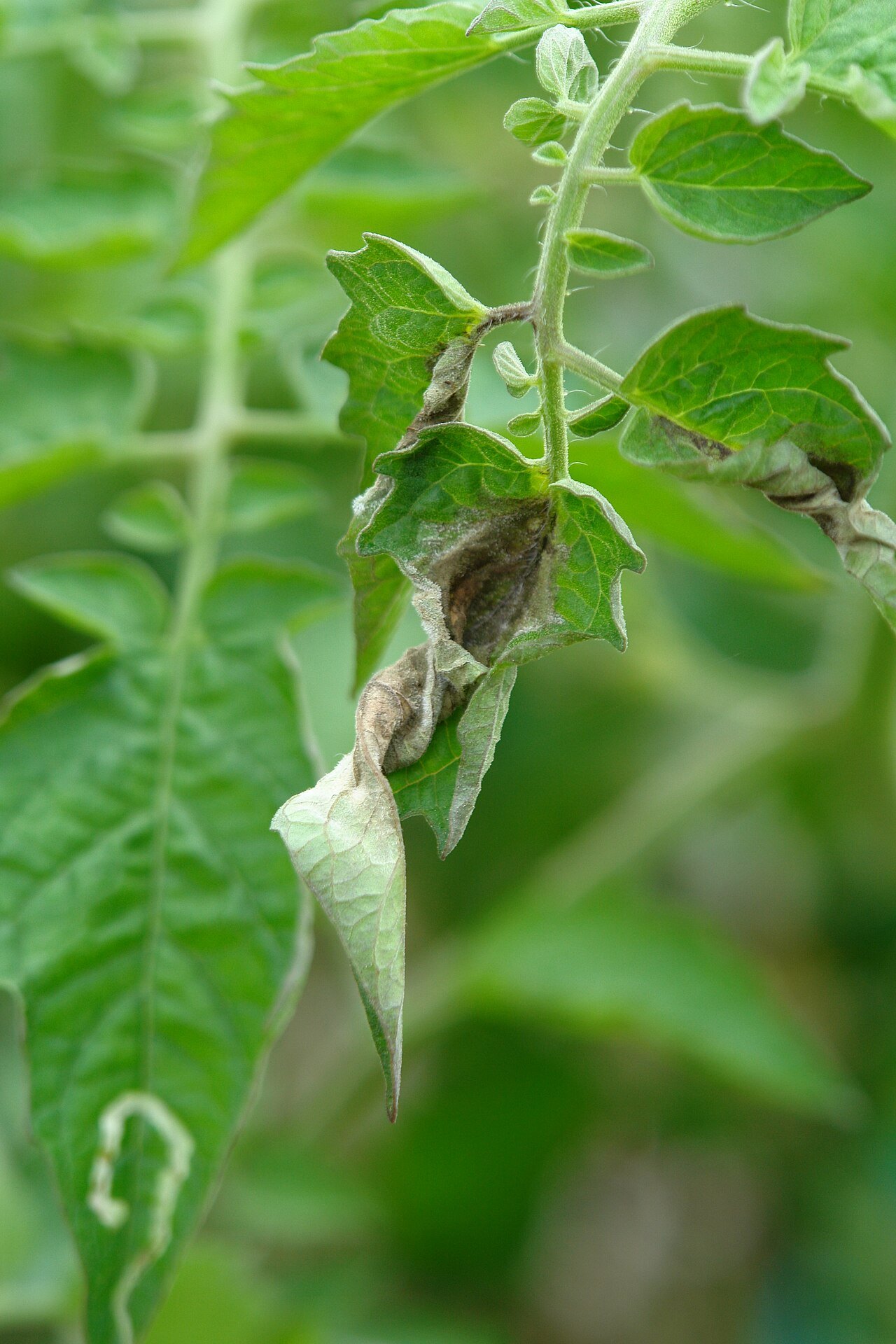
.jpg)
Read the brown pattern first
| What you see | What it changes |
|---|---|
| Older lower leaves with brown target-like rings and yellow halos | Early blight becomes more plausible. |
| Many small gray-tan spots with dark borders on lower leaves | Septoria becomes more plausible. |
| Irregular dark water-soaked blotches that enlarge quickly | An aggressive blight needs prompt local identification. |
| Dry tips or margins without discrete spots | Check heat, drought, roots, and drainage first. |
| Browning after persistent wilt | Use the wilting pathway because water transport may own the diagnosis. |
Compare the main branches
Early blight pattern
- Older leaves are affected first.
- Lesions may develop concentric rings and yellow halos.
More likely if
- Similar lesions progress upward or appear on stems or fruit.
Less likely if
- Only exposed margins are dry.
Reduce splash and leaf wetness, remove badly affected lower foliage when practical, and follow local disease guidance.
Septoria pattern
- Numerous small circular gray-tan lesions have dark margins.
- Symptoms begin on lower foliage.
More likely if
- Wet weather accompanies gradual upward spread.
Less likely if
- Lesions are large and water-soaked.
Improve airflow, reduce splash, and use disease-specific management.
Rapid blight pattern
- Dark irregular water-soaked tissue expands quickly.
- Cool wet conditions or stem/fruit lesions are present.
More likely if
- Damage advances over days.
Less likely if
- Old dry edges remain stable.
Avoid handling wet plants and seek local confirmation promptly.
Environmental or root stress
- Browning is at tips, margins, or exposed tissue without a repeating lesion pattern.
- Heat, drought, saturation, or root injury preceded the damage.
More likely if
- New growth improves when the stress is corrected.
Less likely if
- Distinct lesions keep multiplying.
Correct the confirmed stress and monitor new foliage.
Checks before treating
- Photograph a fresh lesion and record which leaves changed first.
- Look for concentric rings, dark borders, yellow halos, or water-soaked tissue.
- Inspect both leaf surfaces, stems, and fruit.
- Check root-zone moisture below the surface and drainage.
- Compare progression over several days rather than relying on one old leaf.
Lookalikes that change the next step
Yellowing with secondary browning
If yellowing is the first dominant symptom, use the yellow-leaf pathway.
Wilting with dead foliage
If loss of firmness precedes browning, diagnose roots and water transport first.
Chewing damage
Missing tissue and frass point toward a pest pathway.
Herbicide-like distortion
Narrow, twisted new growth needs exposure history rather than a leaf-spot diagnosis.
Route the dominant symptom
- Yellowing spreads before browning: Map leaf position, veins, spots, and root-zone clues.Why are my tomato leaves turning yellow?
- The plant wilts or collapses: Use the wilt diagnosis before adding more water.Why are my tomato plants wilting?
- Missing tissue dominates: Use the leaf-hole pathway and identify the damage pattern.Why do my tomato leaves have holes?
What to do now
- Remove badly diseased or dead leaves when this will not excessively defoliate the plant.
- Water at soil level and reduce avoidable splash and leaf wetness.
- Keep adequate spacing and airflow and sanitize reusable supports after disease.
- Correct confirmed drought or drainage stress rather than watering by appearance alone.
- Use a fungicide only when the disease and product are appropriate for tomato and follow the label.
GardenSolved checkpoint
Do not do this yet
Avoid brown-leaf shortcuts
- Do not diagnose early blight from brown color alone.
- Do not spray before checking lesion pattern and weather.
- Do not overwater saturated roots.
- Do not remove so much foliage that fruit is suddenly exposed to intense sun.
- Do not assume every dead spot is infectious.
Confirm the likely cause first, then choose the treatment.
What improvement looks like
- Existing brown tissue remains damaged; judge recovery on new growth.
- New lesions appear more slowly after effective disease management.
- Environmental scorch stops progressing after the stress is corrected.
- Continued rapid spread, wilt, or stem and fruit lesions means escalation is needed.
Reduce future brown-leaf problems
- Rotate tomato-family crops where practical.
- Use mulch to reduce soil splash and water at the base.
- Space and support plants for airflow.
- Inspect lower leaves regularly and remove infected crop residue at season end.
When to seek a local diagnosis
Prompt local help is appropriate when lesions spread rapidly in cool wet weather, stems or fruit develop suspicious lesions, the plant collapses, or several nearby tomatoes develop the same aggressive pattern.