Tomatoes
Why are my tomato leaves turning purple?
The short answer
On young tomatoes, check cold or wet soil and transplant stress first. Cool roots can limit phosphorus uptake and produce purple foliage. Improve root-zone conditions and judge new growth. If an established plant remains purple and stunted in suitable conditions, use a soil test before adding phosphorus.
Purple tomato foliage often points to phosphorus being unavailable to a young plant, but cold or wet roots can cause that temporary limitation even when phosphorus is present. Plant stage, temperature, root-zone condition, growth rate, and soil evidence decide whether fertilizer is appropriate.
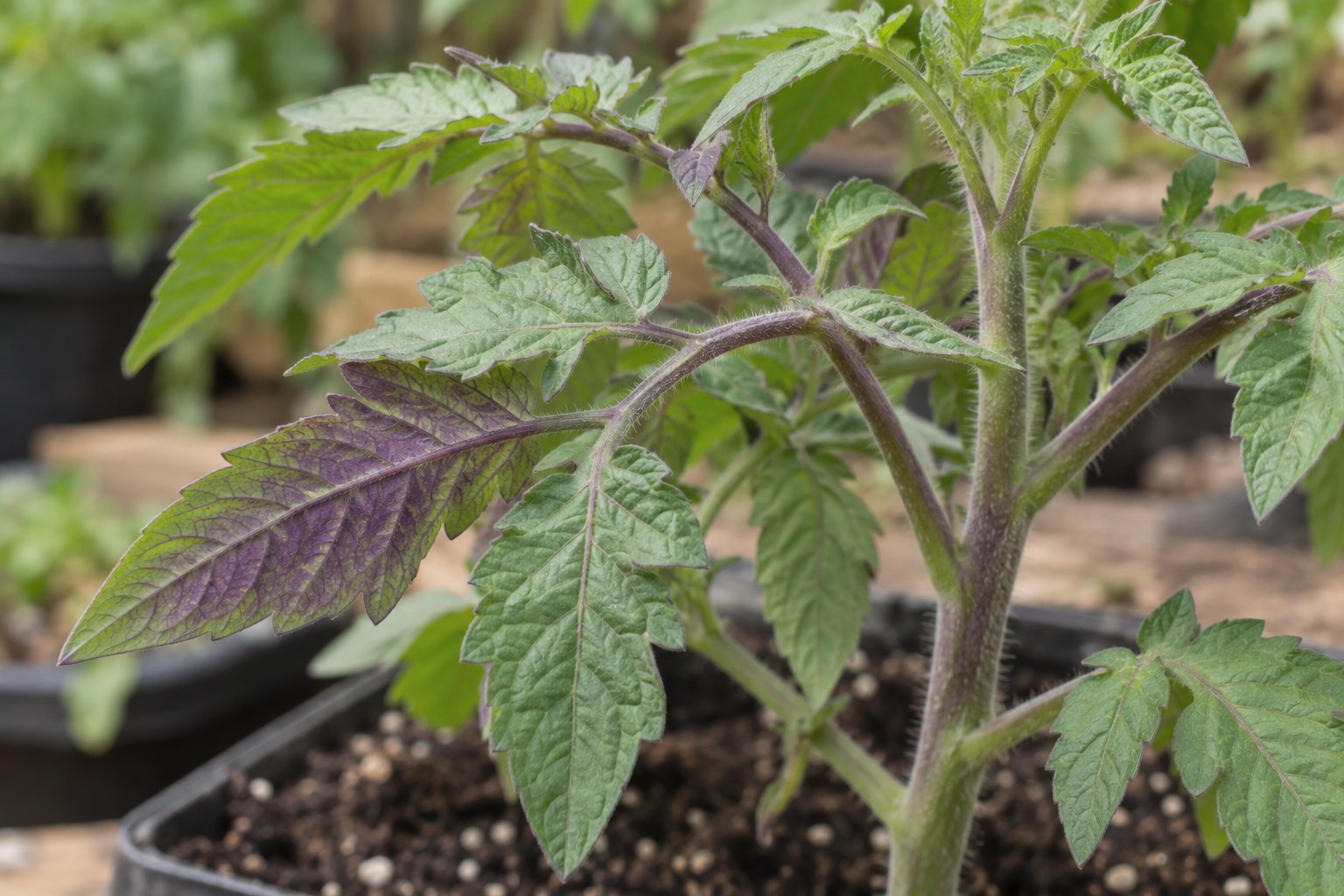
What the purple pattern means
| Pattern | First check |
|---|---|
| Young seedling, cool media, purple underside or stem | Check root-zone temperature and moisture. |
| Recent transplant purples after cold weather | Protect from further cold and judge new growth after establishment. |
| Established plant stays purple and stunted in warm conditions | Check soil pH and nutrient status before adding phosphorus. |
| Purple plus distortion, wilt, or severe root symptoms | Use the dominant additional symptom. |
Compare the main purple-leaf branches
Cold-root nutrient uptake stress
- Purpling begins during cool weather.
- Growth is slow but the plant is not collapsing.
More likely if
- Color and growth improve after roots warm.
Less likely if
- A mature plant stays stunted in warmth.
Improve warmth and drainage and monitor new growth before changing nutrients.
Phosphorus shortage or poor availability
- Purpling persists with stunting after temperatures are suitable.
- Soil or media information suggests low phosphorus or unsuitable pH.
More likely if
- A soil test supports it.
Less likely if
- Symptoms resolve with warming.
Follow soil-test and crop recommendations.
Cold, wet, or damaged roots
- Media remains saturated or roots are stressed.
- Several nutrient-like symptoms occur together.
More likely if
- Growth improves after drainage and root-zone recovery.
Less likely if
- Roots and moisture are healthy.
Correct root-zone conditions first.
Checks before adding fertilizer
- Check whether purpling is mainly on young plants, undersides, veins, or stems.
- Record recent night and soil conditions and transplant timing.
- Check root-zone moisture and drainage.
- Review fertilizer already present in the growing medium.
- Use a soil test for garden phosphorus and pH before adding phosphorus.
- Judge response on new growth after conditions improve.
Route overlapping symptoms
- Yellowing is more prominent: Use the yellow-leaf diagnosis.Why are my tomato leaves turning yellow?
- The seedling is very tall and thin: Use the leggy-growth pathway.Why are my tomato plants growing tall and thin?
- Watering is unclear: Use the tomato watering guide.How often should I water tomato plants?
What to do now
- For young plants in cold conditions, improve appropriate root-zone warmth.
- Correct saturated or poorly drained media and allow roots to resume active growth.
- Keep seedlings under strong light and avoid abrupt environmental changes.
- If deficiency is supported by soil or media evidence, use an appropriate fertilizer according to the recommendation and label.
- Monitor new leaves rather than repeatedly feeding until old purple tissue changes.
GardenSolved checkpoint
Do not do this yet
Avoid purple-leaf shortcuts
- Do not assume every purple leaf proves the soil lacks phosphorus.
- Do not add repeated high-phosphorus fertilizer without evidence.
- Do not fertilize heavily into cold saturated roots.
- Do not ignore severe stunting or root decline.
- Do not use leaf color alone to infer an exact nutrient concentration.
Confirm the likely cause first, then choose the treatment.
What recovery looks like
- New growth expands normally as root-zone conditions improve.
- New leaves show less purple after cold stress passes.
- A confirmed nutrient problem improves after an evidence-based correction.
- Persistent purple color plus stunting in warm conditions needs reassessment.
Reduce purple stress in future plants
- Grow seedlings at temperatures suitable for tomatoes.
- Harden transplants gradually and plant after damaging cold has passed and soil has warmed.
- Maintain drainage and avoid chronic saturation.
- Test garden soil periodically and base phosphorus applications on results.
When purple leaves need another diagnosis
Use local diagnostic help when purpling persists with severe stunting in warm conditions, roots are damaged, or distortion, mottling, wilt, or rapid decline suggests that temperature and phosphorus availability do not explain the whole pattern.