Tomatoes
Why do my tomato leaves have holes?
The short answer
Inspect the newest damage before spraying. Numerous tiny round shot holes fit flea-beetle feeding, especially on young plants. Large missing sections or stripped leaves suggest larger caterpillars such as hornworms. Pale winding trails are leaf mines, not ordinary holes. If tissue drops out from brown lesions, diagnose the leaf spot first.
Missing tissue on a tomato leaf is useful evidence only when you read the pattern. Tiny round shot holes, large missing sections, serpentine mines, folded leaves, and dead spots that later fall out point to different problems.
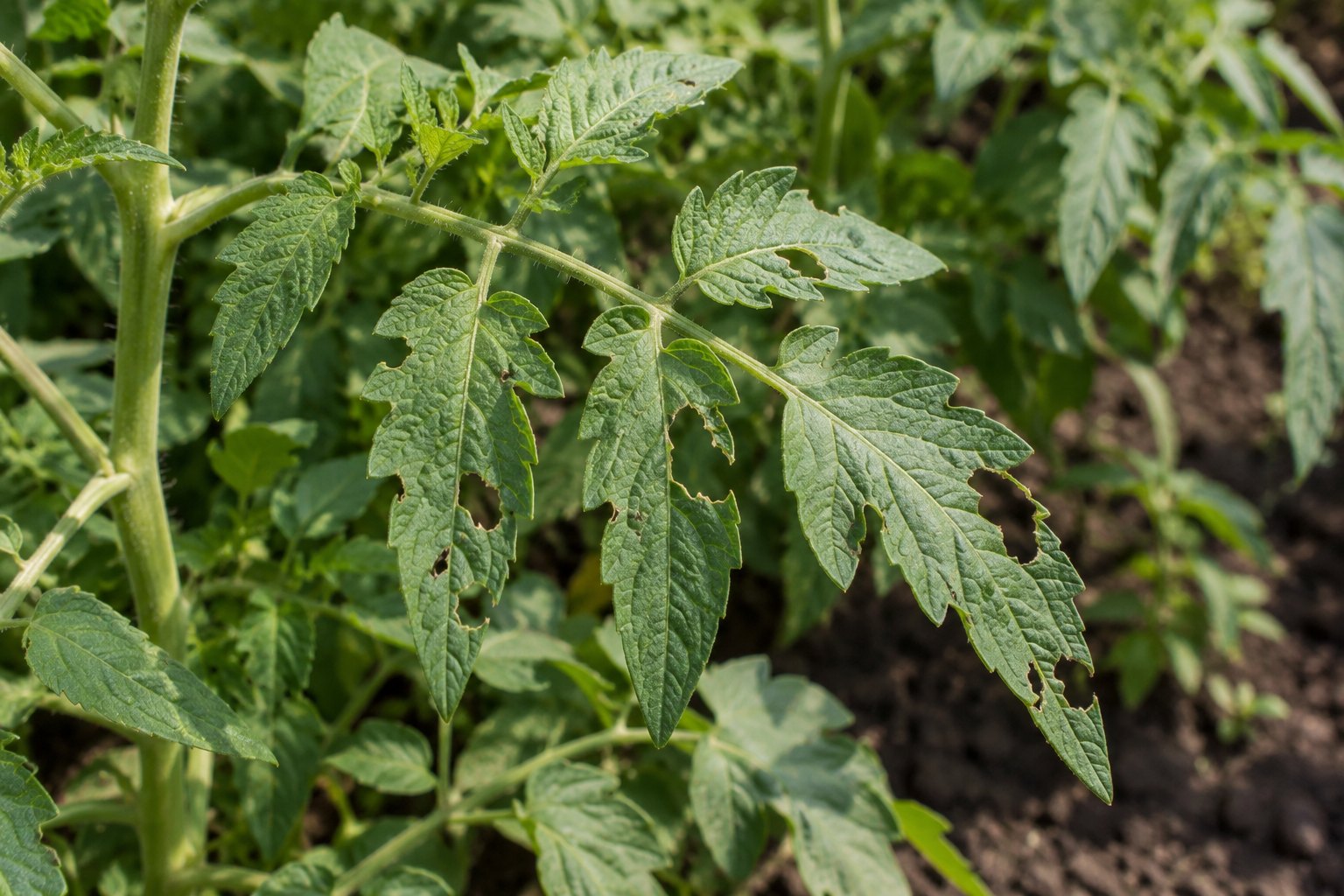
Match the damage pattern
| Damage | Best next check |
|---|---|
| Many tiny round shot holes | Disturb the plant and look for small jumping flea beetles. |
| Large ragged bites or whole leaflets missing | Search for caterpillars and dark frass. |
| Pale serpentine tunnels or blotch mines | Look inside the leaf for leafminer larvae or frass. |
| Folded leaves with mines or webbing | Consider tomato pinworm and inspect fruit near the stem. |
| Brown or gray lesion centers later become holes | Use the brown-leaf pathway because disease may have preceded tissue loss. |
Compare the main damage branches
Flea beetles
- Tiny round holes riddle leaves.
- Small beetles jump when disturbed.
More likely if
- Damage is heavy on seedlings.
Less likely if
- Whole leaflets disappear.
Protect young plants and use targeted IPM.
Large caterpillars
- Large sections or leaves are consumed.
- Dark blocky frass is present.
More likely if
- A camouflaged caterpillar is found near fresh damage.
Less likely if
- Only tiny circular holes occur.
Handpick where practical and use labeled control only if monitoring supports it.
Leafminers or pinworm
- Tunnels remain between leaf surfaces or leaves are folded with webbing/frass.
- Larvae may be visible inside mines.
More likely if
- Damage follows serpentine tracks.
Less likely if
- A jumping beetle sits beside round holes.
Remove heavily mined leaves when practical and identify the miner.
Dead tissue dropping out
- A brown or gray lesion existed before a hole formed.
- No fresh chewing edge is visible.
More likely if
- Similar intact lesions remain elsewhere.
Less likely if
- Fresh green edges show active chewing.
Use the brown-leaf disease diagnosis.
Checks before choosing control
- Inspect the freshest damage.
- Look under leaves, along petioles, and inside dense foliage.
- Disturb the plant and watch for jumping flea beetles.
- Look for caterpillar frass below stripped foliage.
- Hold mined leaves to the light to distinguish tunnels from missing tissue.
- Inspect folded leaves and fruit when pinworm-like signs are present.
Route the damage
- Brown lesions existed before tissue fell out: Use the brown-leaf pathway.Why are my tomato leaves turning brown?
- Leaves curl or distort without clear missing tissue: Use the curl diagnosis.Why are my tomato leaves curling?
- The plant wilts or stems appear damaged: Use the wilt pathway.Why are my tomato plants wilting?
What to do now
- Handpick visible caterpillars or large pests when practical.
- Protect small transplants from severe chewing with an appropriate physical barrier when suitable.
- Remove heavily mined leaves selectively rather than stripping healthy canopy.
- Manage crop residues and weed hosts where they support recurring pests.
- If pesticide is justified, identify the pest first and use only a product labeled for that pest and tomato.
GardenSolved checkpoint
Do not do this yet
Avoid leaf-hole shortcuts
- Do not spray broad-spectrum insecticide just because a leaf has holes.
- Do not treat serpentine mines as external chewing.
- Do not assume every shot-hole appearance is flea beetles if old lesions are dropping out.
- Do not remove most of the canopy for cosmetic damage.
- Do not ignore fruit tunneling, folded leaves, webbing, or severe seedling defoliation.
Confirm the likely cause first, then choose the treatment.
What recovery looks like
- Existing holes remain; improvement means healthy new leaves and slower new damage.
- A young plant resumes growth after feeding pressure falls.
- After a caterpillar is removed, fresh frass and missing tissue stop appearing.
- Continued new damage without a pest found means another inspection is needed.
Reduce future chewing damage
- Scout young tomatoes frequently.
- Inspect purchased transplants for mines, folded leaves, eggs, and insects.
- Manage crop residues and weed hosts where they support recurring pests.
- Use physical barriers early when appropriate and adjust for flowering and pollination needs.
- Prefer monitoring and targeted control over routine preventive spraying.
When holes need a broader diagnosis
Seek local help when a seedling is rapidly losing foliage, damage extends into stems or fruit, mined or folded leaves are widespread, or the plant declines even though no active chewer can be found.