Tomatoes
Why are my tomato leaves turning yellow?
The short answer
Start by comparing the oldest lower leaves with the newest growth, then check moisture below the soil surface. A few shaded lower leaves on an otherwise vigorous plant can be normal, while spreading yellowing, green veins, spots, or wilt needs a closer check. Do not add fertilizer or more water until the pattern and root-zone condition support that choice.
Yellow leaves do not point to one automatic cure. Where the yellowing starts, whether the veins stay green, and whether the plant also has spots, wilt, or stalled growth are the clues that make the next step safer.
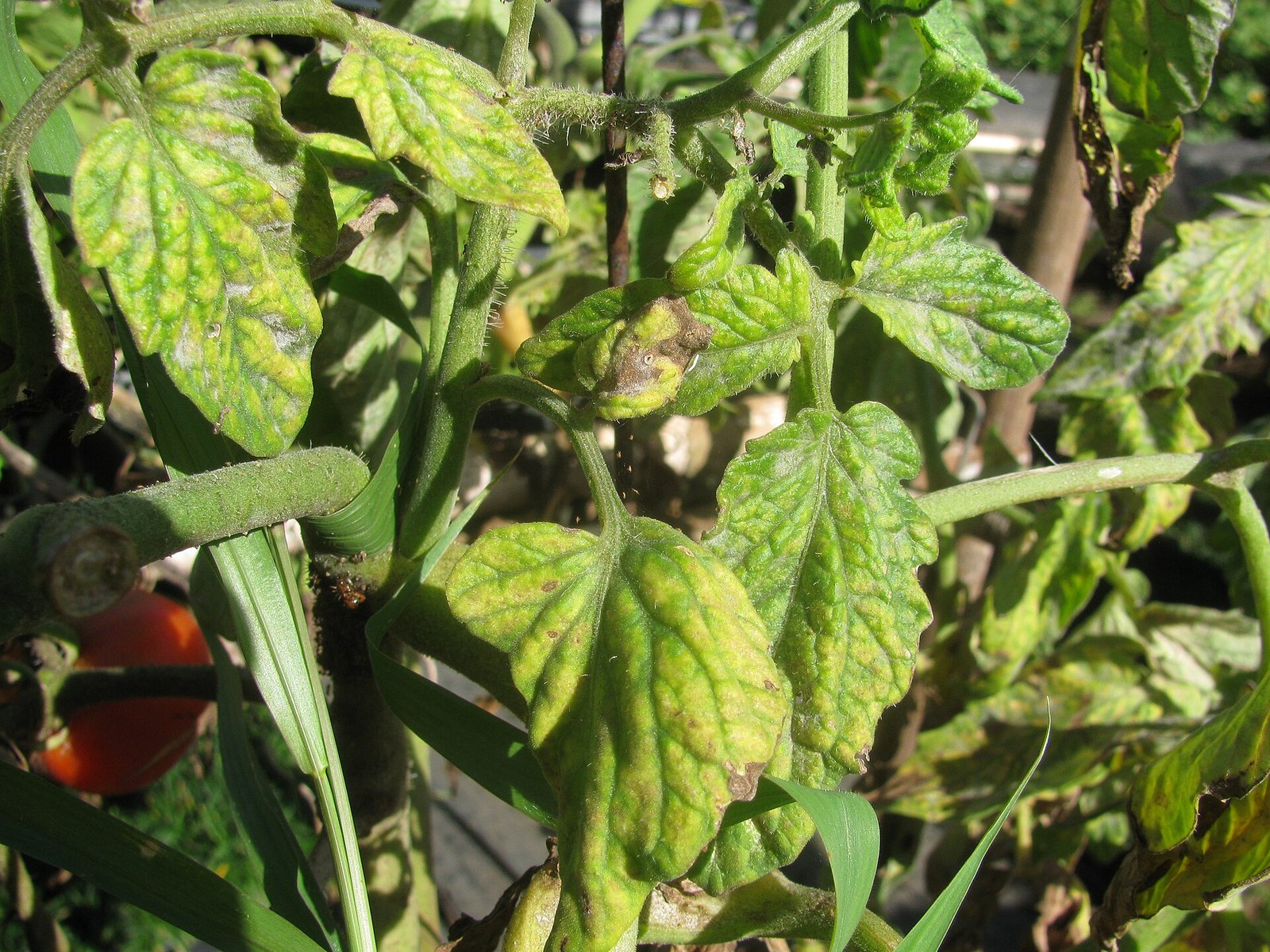
.jpg)
Map the yellowing before changing care
Look at the whole plant. Record whether yellowing starts on old or new leaves, low or high on the plant, and whether it is isolated or spreading. Then describe the pattern: uniform yellow, yellow between green veins, yellow margins, or yellow tissue around spots.
Add the companion clues and context: vigour, wilt, lesions, stippling, webbing, mottling, distortion, recent transplanting, rainfall, watering, drainage, fertilizer, lime or ash, spray use, and whether nearby plants are affected. Yellow colour alone cannot identify a deficiency or disease.
Compare the pattern
A few older lower leaves
- Only shaded or oldest leaves near the base are yellow.
- New growth is normal and the plant remains vigorous.
- The change is slow rather than moving rapidly upward.
More likely if
- The plant is mature and otherwise growing, flowering, or fruiting normally.
- There are no spreading spots, persistent wilt, distortion, or widespread pallor.
Less likely if
- Many leaves yellow quickly or the growing tip is affected.
- The whole plant is pale, stunted, spotted, or wilted.
Monitor the next growth and remove a lower leaf only after it is mostly spent or clearly diseased.
Root-zone or establishment stress
- Yellowing appears with droop, slow growth, or leaf drop.
- Soil several inches down is very dry, saturated, compacted, or slow to drain.
- Symptoms followed transplanting, root damage, heavy rain, or irregular watering.
More likely if
- The whole plant responds to a clear moisture or drainage problem.
- Roots, the stem base, or container drainage show visible stress.
Less likely if
- Root-zone moisture and drainage are suitable and growth remains strong.
- Distinct leaf lesions, pest evidence, or a one-sided wilt pattern better explains the change.
Correct the observed root-zone problem gradually, then judge the response from new growth.
Possible nutrient-availability pattern
- Yellowing is uniform or develops between veins that remain greener.
- Whether old or new leaves change first is consistent across the plant.
- Growth may be pale or slow without a strong spot, wilt, or pest pattern.
More likely if
- A soil or growing-media test supports a nutrient or pH problem.
- The plant has a relevant feeding, soil, or pH history.
Less likely if
- Only one damaged leaf is involved.
- Moisture stress, lesions, pests, or stem and root symptoms offer a clearer explanation.
Test soil or growing media before adding a nutrient, changing pH, or repeating fertilizer.
Leaf damage, pests, or wilt pattern
- Yellow tissue surrounds brown lesions, rings, gray centres, or defined margins.
- Fine pale stippling, webbing, insects, sticky residue, mottling, or distortion is present.
- Yellowing accompanies persistent, one-sided, or rapidly progressing wilt.
More likely if
- The pattern spreads from leaf to leaf or repeats on several plants.
- Close inspection finds pest evidence or characteristic companion symptoms.
Less likely if
- Only a few old shaded leaves fade while the plant remains vigorous.
- No lesions, pests, wilt, mottling, or distorted growth can be found.
Follow the strongest companion symptom and seek diagnosis before applying a pesticide or fungicide.
Checks you can make safely
- Compare a lower leaf with the growing tip and photograph the pattern so you can tell whether it is spreading.
- Inspect both sides of affected leaves for spots, halos, stippling, webbing, insects, sticky residue, mottling, or distortion.
- Check soil moisture several inches down and confirm whether excess water can drain away.
- Review transplanting, weather, rainfall, irrigation, fertilizer, lime, ash, compost, manure, and spray history.
- Use a soil or growing-media test before treating a suspected nutrient or pH problem.
- Home inspection can narrow the possibilities, but it cannot reliably name every disease or nutrient problem from one leaf.
Common lookalikes
Normal ageing of one lower leaf
A small number of shaded old leaves may fade without a plant-wide problem; continued spread, poor vigour, spots, or wilt changes the diagnosis.
Spider-mite stippling
Many tiny pale dots can merge into a yellow or bronze look. Check undersides with a hand lens for mites, eggs, or fine webbing.
Leaf spot or wilt disease
Defined lesions, halos, dead centres, rapid upward spread, persistent wilt, or one-sided decline matter more than yellow colour alone.
Mosaic or spray injury
Mottled colour with distorted or stunted new growth needs exposure history and diagnostic help; do not label it from a photograph alone.
Choose the next check
- Yellowing comes with persistent droop or one-sided wilt: Separate dry-soil stress from drainage, root, stem, and wilt problems.Why are my tomato plants wilting?
- Brown lesions, rings, gray centres, or halos are the stronger symptom: Compare the spot pattern before choosing a treatment.Why are my tomato leaves turning brown?
- The root zone is dry, saturated, or watered irregularly: Base the next watering step on actual soil moisture and drainage.How often should I water tomato plants?
- Curling or new-growth distortion is more prominent than yellowing: Use the curl direction, growth position, and exposure history.Why are my tomato leaves curling?
What to do now
- If soil is dry at root depth, water slowly at soil level. If it is already wet, pause and improve drainage rather than adding more water.
- Keep care steady while you document whether the next leaves are healthy, and remove only leaves that are mostly spent or clearly diseased.
- If a pest is present, identify it before choosing a control. If lesions or wilt are spreading, reduce leaf wetness, avoid moving contaminated soil or tools, and seek a local diagnosis.
- Use a soil or growing-media test to guide any nutrient or pH correction.
GardenSolved checkpoint
Do not do this yet
- Do not add fertilizer, Epsom salt, lime, or ash from yellow colour alone.
- Do not keep watering soil that is already saturated.
- Do not spray an insecticide, miticide, or fungicide without an identified target and a label that permits the use.
- Do not strip many leaves before recording the pattern; healthy foliage supports recovery.
- Do not name a specific deficiency, disease, virus, or spray injury from one leaf or one photograph.
Confirm the likely cause first, then choose the treatment.
Judge recovery by new growth
- Correct only the problem supported by your checks and keep watering and feeding consistent.
- Existing yellow tissue usually does not turn green again. Watch whether new leaves emerge with normal colour and vigour.
- Escalate if yellowing continues upward, new growth becomes distorted, lesions spread, or wilt persists.
Reduce the chance of repeat yellowing
- Check moisture below the surface and avoid repeated swings between very dry and saturated soil.
- Use well-drained soil, protect roots during transplanting, and mulch without piling material against the stem.
- Base fertilizer and pH changes on crop needs, label directions, and soil or growing-media tests.
- Inspect leaves regularly and keep foliage dry when practical so pest or lesion patterns are found early.
When to ask for diagnostic help
Contact a local extension office or plant-diagnostic service when yellowing progresses quickly, combines with persistent wilt or spreading lesions, severely affects new growth, follows possible spray exposure, or remains ambiguous after the checks above. Send photographs of the whole plant, both sides of affected leaves, the stem base, and the growing conditions.