Tomatoes
Why are my tomato plants growing tall and thin?
The short answer
If the plant is a seedling, check light first: tomato seedlings elongate and lean when bright light is not close enough overhead. Improve the light and judge new growth. If an established indeterminate tomato has normal leaves, flowers, and sturdy growth, height may be normal rather than legginess. Support it instead of trying to shorten it with fertilizer.
Tall tomato growth means different things in a seed tray and in a mature garden plant. Young seedlings with long weak internodes commonly stretch for light, while an established indeterminate tomato can be naturally tall and simply need support.
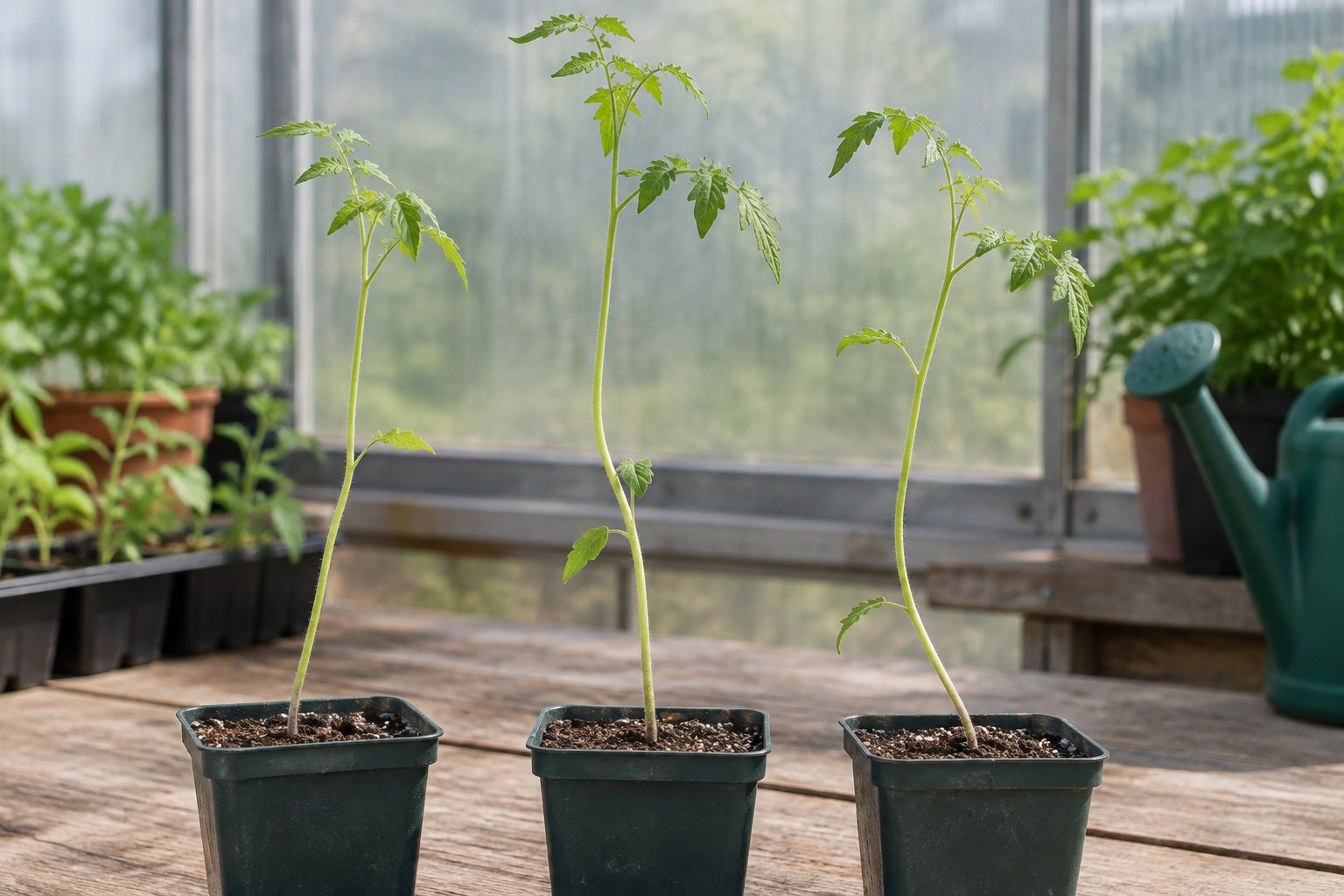
Seedling problem or normal mature growth?
| Plant stage | What tall growth means |
|---|---|
| Indoor seedling with long internodes and leaning stems | Insufficient or poorly positioned light is the first check. |
| Recently transplanted tall seedling | Protect from wind and transplant stress; tomatoes can root along buried stem. |
| Established indeterminate tomato with healthy leaves and flowers | Tall vining growth may be normal; provide support. |
| Tall plant with distorted, pale, or collapsing growth | Use the accompanying symptom to investigate another problem. |
Compare the main tall-and-thin branches
Low-light seedling stretch
- Internodes are long and thin.
- The seedling leans toward a window or light.
More likely if
- New growth becomes shorter and stockier after light improves.
Less likely if
- A mature plant flowers normally outdoors.
Provide strong overhead light appropriate for seedlings.
Overgrown transplant
- The seedling was started too early or stayed indoors too long.
- It is tall but structurally viable.
More likely if
- Age and transplant timing explain the size.
Less likely if
- The stem is pinched or rotting at soil level.
Harden gradually and use tomato-specific deeper or trench planting when outdoor conditions are suitable.
Normal indeterminate growth
- The mature plant forms long vines, normal leaves, flowers, and fruit.
- The cultivar is indeterminate.
More likely if
- Growth is vigorous rather than pale and floppy.
Less likely if
- The plant is broadly stunted or distorted.
Use a stable stake, cage, or trellis.
Broader stress
- Tall growth occurs with pallor, weak roots, or distorted leaves.
- The plant does not respond to improved light.
More likely if
- Another symptom progresses.
Less likely if
- Only old stretched internodes remain.
Follow the dominant symptom rather than fertilizing for height.
Checks before trying to fix height
- Confirm seedling, transplant, determinate, or indeterminate stage.
- Inspect light direction and distance for seedlings.
- Judge the newest internodes; old stretched growth will not shorten.
- Check roots and media moisture if seedlings are pale or stalled.
- Review sowing date and outdoor transplant timing.
- For mature plants, check support and normal flowering.
Route the accompanying symptom
- The mature plant is leafy but not flowering: Use the no-flowering pathway.Why are my tomato plants not flowering?
- New leaves curl or distort: Use the leaf-curl diagnosis.Why are my tomato leaves curling?
- Leaves turn purple or growth stalls in cool conditions: Use the purple-leaf pathway.Why are my tomato leaves turning purple?
What to do now
- For seedlings, improve usable overhead light gradually.
- Harden transplants gradually before outdoor planting.
- When a healthy tomato transplant is excessively tall, use tomato-appropriate deeper or trench planting while keeping healthy leaves above soil.
- Support mature indeterminate plants with a cage, stake, or trellis.
- Correct root-zone saturation if weak growth accompanies legginess.
GardenSolved checkpoint
Do not do this yet
Avoid tall-plant shortcuts
- Do not add extra fertilizer before checking light.
- Do not expect old stretched internodes to shrink.
- Do not move tender seedlings abruptly into intense outdoor sun and wind.
- Do not bury foliage or the growing point.
- Do not label a healthy indeterminate tomato abnormal simply because it grows tall.
Confirm the likely cause first, then choose the treatment.
What recovery looks like
- New seedling growth has shorter internodes and a sturdier stem.
- New tissue stays upright more easily even though old stem remains long.
- A deeper-planted transplant resumes active top growth.
- A mature indeterminate plant flowers and fruits normally while height is managed by support.
Keep future seedlings stockier
- Start seed at a timing that matches the transplant date.
- Provide bright overhead light from emergence.
- Avoid chronic saturation and use clean well-drained seed-starting media.
- Harden plants gradually and install supports early.
When thin growth needs another diagnosis
Investigate further when stems collapse at the soil line, new leaves stay distorted or chlorotic after light improves, roots are damaged, or the plant remains severely weak after transplant establishment.