Pests & Diseases
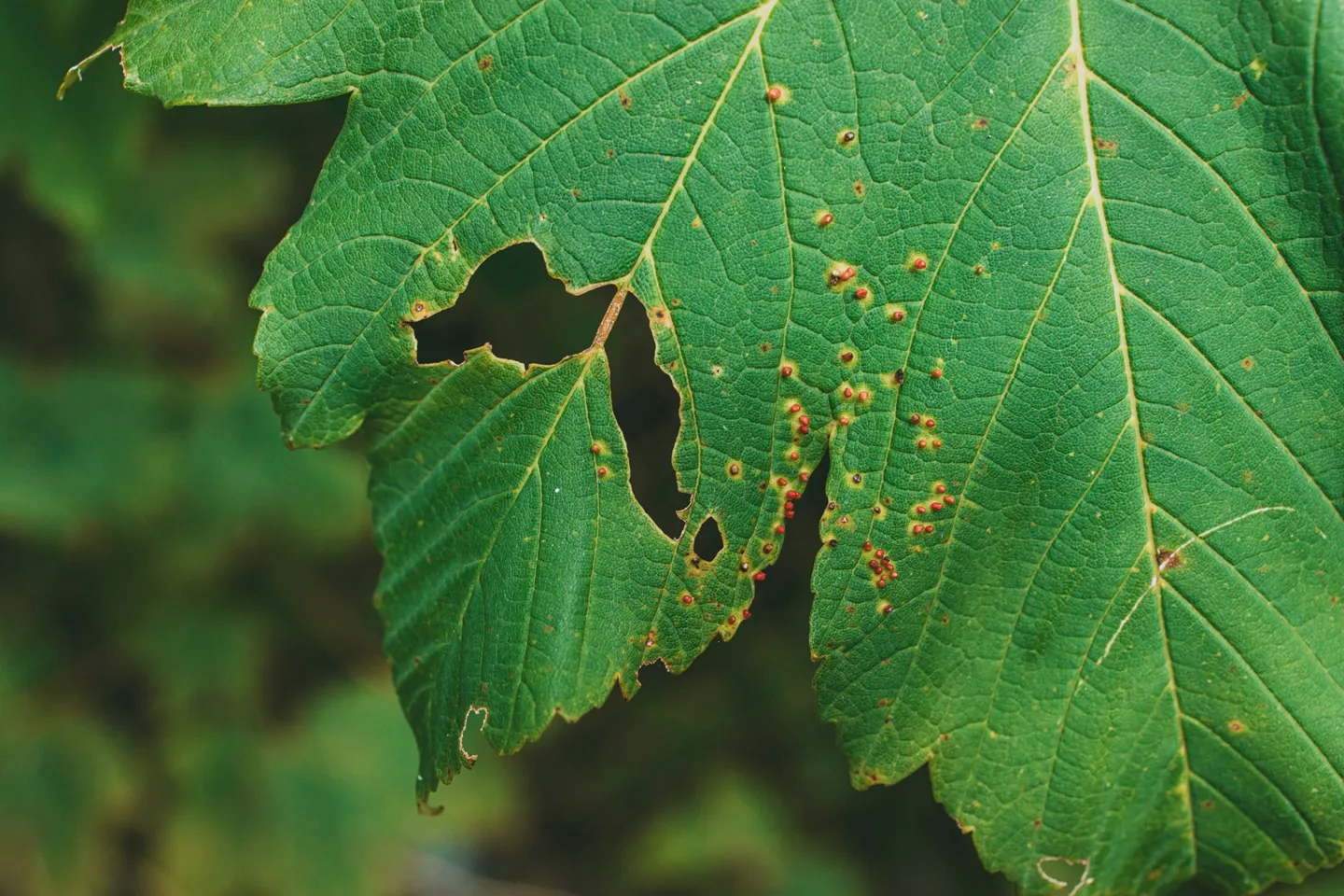
What causes brown spots on plant leaves?
The short answer
Identify the plant and compare internal spots with dry leaf margins. Disease, heat, root-zone stress and physical injury can look similar. Spot shape or color alone cannot distinguish a fungus from bacteria or select a treatment; use host-specific guidance.
Brown spots are a symptom rather than a diagnosis. Their size, edge, location, and spread can help separate water stress, leaf scorch, pests, and disease.
Diagnostic snapshot
What to check before you act
What you are seeing
- Dry browned margins
- Expanding internal lesions
Check first
Identify the plant and inspect several leaves on both surfaces, including healthy neighbors. Record which parts of the plant are affected.
Compare first
- Dry margins or exposed patches
- New or expanding internal lesions
- Stable exposure injury
Hold off for now
Do not identify a pathogen from round or angular spot shape alone.
Investigate further if
Rapid spread, extensive premature leaf loss, stem injury or whole-plant wilt needs host-specific assessment; isolate movable plants when practical.
Photograph this before you act
- Photograph the whole plant and its growing area so the overall pattern is visible.
- Take a sharp close-up of the affected leaf and a second photo of the underside.
Recommended diagnostic check
Environmental Stress Checker
Does the timing or exposure fit environmental stress?
Compare the symptom pattern with recent growing conditions before treating a lookalike as disease, pests, nutrient deficiency, or a watering problem.
First check
Identify the plant and inspect several leaves on both surfaces, including healthy neighbors. Record which parts of the plant are affected.
Timing / exposure boundary
Check root-zone moisture, drainage and recent heat, wind, frost or spray exposure; compare timing with the first damage.
Timing and exposure can support an environmental branch, but they do not rule out other causes. Use the factor labels and boundary above as clues, not as a diagnosis.
Match the pattern before acting
Dry margins or exposed patches
- Damage follows moisture or weather stress
Check water delivery and shelter; not every brown area is infectious.
New or expanding internal lesions
- Repeated spots on several leaves, sometimes with early drop
Use plant-specific leaf-spot guidance; fungal and bacterial patterns overlap.
Stable exposure injury
- Damage followed a recorded event; new growth remains unaffected
Stop the suspected exposure and monitor rather than spraying from appearance alone.
Checks before choosing a response
- Identify the plant and inspect several leaves on both surfaces, including healthy neighbors. Record which parts of the plant are affected.
- Check root-zone moisture, drainage and recent heat, wind, frost or spray exposure; compare timing with the first damage.
- Photograph the same leaves over subsequent checks. New or expanding lesions differ from old stable injury.
What to do now
- Correct a documented moisture or exposure problem gradually and preserve healthy foliage.
- If leaf-spot disease is plausible, reduce leaf wetness and splash and collect fallen affected leaves where practical.
- Use the plant-specific continuations below; keep photographs and care history for diagnosis if uncertain.
GardenSolved checkpoint
Do not do this yet
- Do not identify a pathogen from round or angular spot shape alone.
- Do not spray fungicide, copper or homemade remedies before identifying the host and likely problem.
- Do not assume water droplets explain every sun-exposed mark or remove all foliage because some leaves are spotted.
Confirm the likely cause first, then choose the treatment.
When to investigate further
Rapid spread, extensive premature leaf loss, stem injury or whole-plant wilt needs host-specific assessment; isolate movable plants when practical.
Sources
Save & recheck
Compare what changes before changing course.
Save this diagnosis only in this browser, then come back and compare the same clues. No account, reminder subscription, or server-stored diagnostic record is created.
Your baseline
- Dry browned margins
- Expanding internal lesions
Check again when you return
- Identify the plant and inspect several leaves on both surfaces, including healthy neighbors. Record which parts of the plant are affected.
- Check root-zone moisture, drainage and recent heat, wind, frost or spray exposure; compare timing with the first damage.
Tip: photograph the same area from a similar angle so the visible pattern is easier to compare.
Related questions
Diagnostic Finder
Still not sure this answer fits?
Open the Diagnostic Finder with the relevant growing subject or care context preselected and compare other published GardenSolved diagnoses.
Compare other possibilities