Strawberries
Why Are My Strawberry Leaves Turning Red?
The short answer
Look for whether the red color surrounds distinct spots, appears with upward curl and white powder underneath, follows cold or wind exposure, or is limited to older foliage. Red leaves are not enough to identify one disease or nutrient problem.
Red or purple strawberry leaves can appear with leaf scorch, powdery mildew, other leaf diseases, cold stress, or normal seasonal aging. The pattern matters more than the color by itself.
Diagnostic snapshot
What to check before you act
What you are seeing
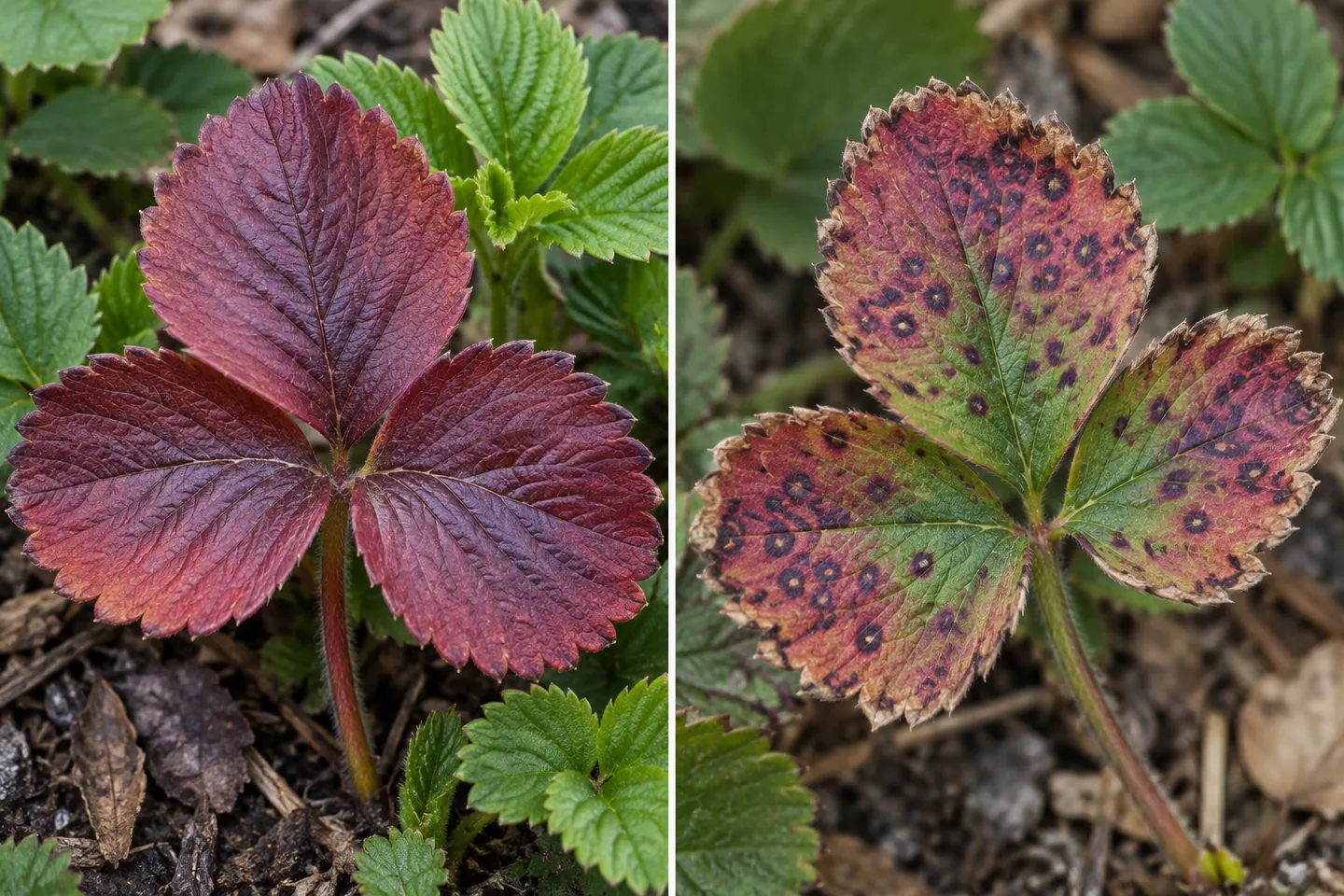
- Small purple spots merge with red or purple tissue between them
- Leaflets curl upward and the undersides show gray-white powder
Check first
Inspect several leaves in bright light, including the lower surface.
Compare first
- Leaf scorch pattern
- Powdery mildew pattern
- Weather injury
Hold off for now
Do not assume red leaves automatically mean phosphorus deficiency.
Investigate further if
Escalate when red foliage is accompanied by rapid plant decline, crown symptoms, widespread lesions, or a disease pattern that would change management.
Photograph this before you act
- Photograph the whole plant and its growing area so the overall pattern is visible.
- Take a sharp close-up of the affected leaf and a second photo of the underside.
Recommended diagnostic check
Environmental Stress Checker
Does the timing or exposure fit environmental stress?
Compare the symptom pattern with recent growing conditions before treating a lookalike as disease, pests, nutrient deficiency, or a watering problem.
First check
Inspect several leaves in bright light, including the lower surface.
Timing / exposure boundary
Color change follows cold, wind, frost, or abrupt temperature swings.
Timing and exposure can support an environmental branch, but they do not rule out other causes. Use the factor labels and boundary above as clues, not as a diagnosis.
Read the red or purple pattern
Leaf scorch pattern
- Small solid purple spots lack a pale center.
- Tissue between lesions becomes red or purple and leaf edges may dry brown.
Reduce leaf wetness and confirm the disease pattern before treatment.
Powdery mildew pattern
- Leaflets curl upward.
- The underside may show gray-white powder and red or purple discoloration.
Inspect lower leaf surfaces and use mildew-specific guidance if the signs fit.
Weather injury
- Color change follows cold, wind, frost, or abrupt temperature swings.
- Damage is strongest on exposed foliage.
Protect crowns and monitor new growth rather than treating weather injury as infection.
Seasonal aging
- Older foliage colors while newer center leaves remain healthy.
- The plant is otherwise vigorous.
Remove declining old foliage only when appropriate for the season and system.
How to confirm the problem
- Inspect several leaves in bright light, including the lower surface.
- Distinguish solid purple spots from pale-centered leaf spot lesions and from powdery growth.
- Review recent cold, frost, wind, or seasonal transition before assuming disease.
What to do
- Photograph representative leaves before removing them so the pattern can still be identified.
- Improve airflow and keep weeds from crowding the canopy when disease pressure is plausible.
- Avoid overhead wetting late in the day when leaf disease is a concern.
- Protect plants from damaging cold according to local strawberry overwintering guidance.
GardenSolved checkpoint
Do not do this yet
Do not diagnose by color alone
- Do not assume red leaves automatically mean phosphorus deficiency.
- Do not call every purple spot leaf scorch without checking spot shape and centers.
- Do not spray for powdery mildew unless powdery growth or the broader disease pattern supports it.
Confirm the likely cause first, then choose the treatment.
What improvement to look for
- Compare fresh foliage with marked spotted or discolored leaves.
- Expanding lesions or worsening curl need a more specific diagnosis.
How to reduce repeat problems
- Scout both leaf surfaces, including after weather changes.
- Reduce crowding and prolonged leaf wetness.
Which check comes next?
- Red leaves curl upward: Inspect the lower surface for mildew clues.Why Are My Strawberry Leaves Curling?
- Leaves develop dry brown tissue: Compare margins and individual lesions.Why Are My Strawberry Leaves Turning Brown?
When to investigate further
Escalate when red foliage is accompanied by rapid plant decline, crown symptoms, widespread lesions, or a disease pattern that would change management.
Sources
Save & recheck
Compare what changes before changing course.
Save this diagnosis only in this browser, then come back and compare the same clues. No account, reminder subscription, or server-stored diagnostic record is created.
Your baseline
- Small purple spots merge with red or purple tissue between them
- Leaflets curl upward and the undersides show gray-white powder
Check again when you return
- Inspect several leaves in bright light, including the lower surface.
- Distinguish solid purple spots from pale-centered leaf spot lesions and from powdery growth.
Tip: photograph the same area from a similar angle so the visible pattern is easier to compare.
Related questions
Diagnostic Finder
Still not sure this answer fits?
Open the Diagnostic Finder with the relevant growing subject or care context preselected and compare other published GardenSolved diagnoses.
Compare other possibilities