Pests & Diseases
What Is the Gray Fuzzy Mold on My Plant?
The short answer
Botrytis gray mold typically produces soft or blighted brown-to-black tissue followed by dusty gray fuzzy spores, especially on old flowers, wounded tissue, leaves, stems, or fruit. The gray growth can spread rapidly when plant surfaces stay wet or humidity remains high. Confirm actual gray sporulation on declining tissue rather than diagnosing from browning alone; powdery mildew is usually a white-to-gray powder on living surfaces, while mealybugs are wax-covered insects rather than fungal growth.
Gray fuzzy growth on damaged flowers, leaves, stems, or fruit can be Botrytis gray mold, but the tissue pattern matters. Botrytis commonly takes advantage of aging, wounded, or dying plant tissue and becomes much more obvious when humidity and leaf wetness stay high.
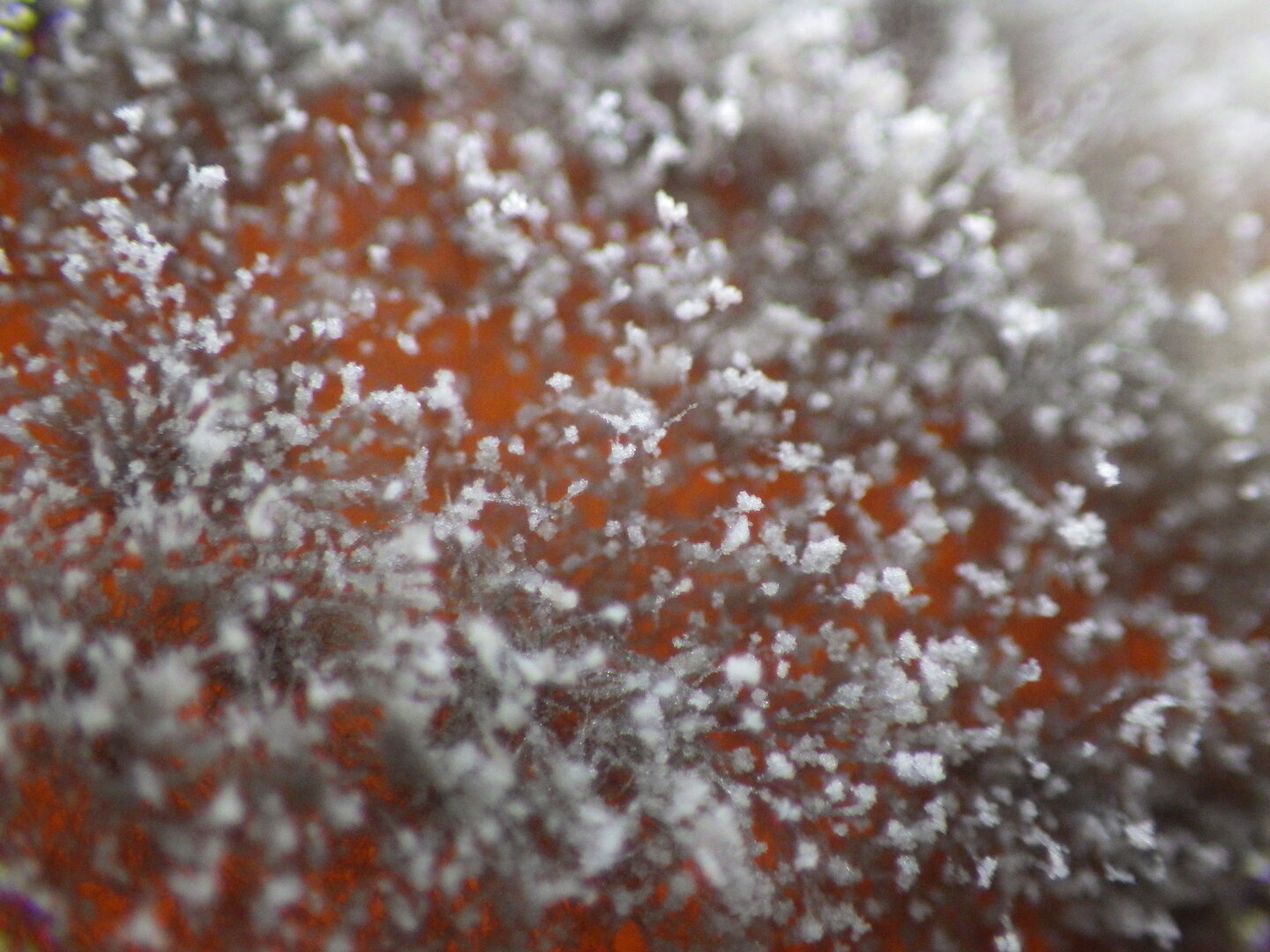

Gray mold or a similar-looking problem?
Botrytis gray mold
- Brown, tan, or black blighted tissue carries dusty gray fuzzy sporulation.
- Old flowers, wounded tissue, leaves, stems, or fruit are common starting points.
More likely if
- Humidity or leaf wetness has stayed high and the gray growth expands with tissue collapse.
- The mold is concentrated on visibly damaged or senescing tissue.
Less likely if
- The main sign is a dry white powder coating otherwise intact leaves.
Remove affected expendable tissue, reduce moisture around foliage, and keep monitoring clean new growth.
Powdery mildew
- White-to-gray powdery colonies sit broadly on leaf or stem surfaces and may begin as separate spots.
- Young tissue can distort even before major decay occurs.
More likely if
- The plant surface looks dusted or powdered rather than covered by dense gray fuzzy growth on collapsing tissue.
Use the Powdery Mildew guide.
Mealybugs or residue
- Mealybugs form distinct white wax-covered insect bodies; residues lack a spreading fungal growth pattern.
More likely if
- Magnification shows individual insects, filaments, or fixed material without progressive blight.
Use the Mealybugs guide or observe clean new growth before applying a disease treatment.
Checks before calling it Botrytis
- Inspect fresh lesions and aging flowers for dusty gray fungal growth, especially where tissue is soft or collapsing.
- Check whether damaged petals, leaves, or stems have stayed wet or crowded with poor air movement.
- Compare the same plant for powdery surface growth, wax-covered insects, or other lookalikes.
- Confirm that the gray material is actually associated with progressive plant-tissue damage rather than sitting harmlessly on the surface.
What to do after you confirm gray mold
- Remove infected flowers, leaves, stems, or fruit that can be removed without severely damaging the plant, and avoid handling healthy tissue with contaminated wet debris.
- Lower humidity around the plant, improve spacing and air movement, and reduce unnecessary leaf wetness.
- Water early enough for foliage to dry promptly and avoid repeatedly wetting flowers or leaves where practical.
- Clean up infected debris so heavily sporulating material does not remain pressed against healthy tissue.
- If a fungicide is considered, use only a product labeled for the actual host and Botrytis or gray mold, and follow the label exactly.
GardenSolved checkpoint
Do not do this yet
- Do not diagnose Botrytis from brown tissue alone; many injuries and diseases cause browning.
- Do not mist or repeatedly wet an infected plant simply because the foliage looks dry.
- Do not leave heavily infected spent flowers or dead tissue packed into dense plant growth.
- Do not assume every gray or white fuzzy material is the same disease.
- Do not use a fungicide that is not labeled for the plant, disease, and use site.
Confirm the likely cause first, then choose the treatment.
When to investigate further
Escalate when gray mold reaches stems, crowns, or large fruiting areas, repeatedly returns despite drier conditions, or affects a crop or valuable plant where treatment decisions matter. A host-specific diagnosis is especially useful when another blight or rot could be producing similar dead tissue.
Sources
Related questions
Diagnostic Finder
Still not sure this answer matches?
Continue with this plant already selected. The Finder will let you compare the visible problem and, when needed, the pattern against other relevant GardenSolved answers.
Compare other possibilities