Pests & Diseases
How Can I Tell Pest Damage From Plant Disease?
The short answer
Look for a cause you can verify. Actual insects, eggs, shed skins, frass, honeydew, characteristic feeding scars, or webbing make a pest explanation stronger. Fungal or bacterial growth, spores, fruiting structures, expanding lesions, water-soaked tissue, cankers, or rotting tissue can support disease. But many plant problems are abiotic, so also check watering, drainage, weather, roots, chemicals, light, and whether several unrelated plant species are affected. Do not spray from one symptom or from the mere presence of an insect.
A leaf symptom is not the same thing as a diagnosis. Holes, spots, yellowing, curling, wilt, and dieback can come from pests, diseases, or nonliving stresses, so the useful question is which physical evidence travels with the symptom.
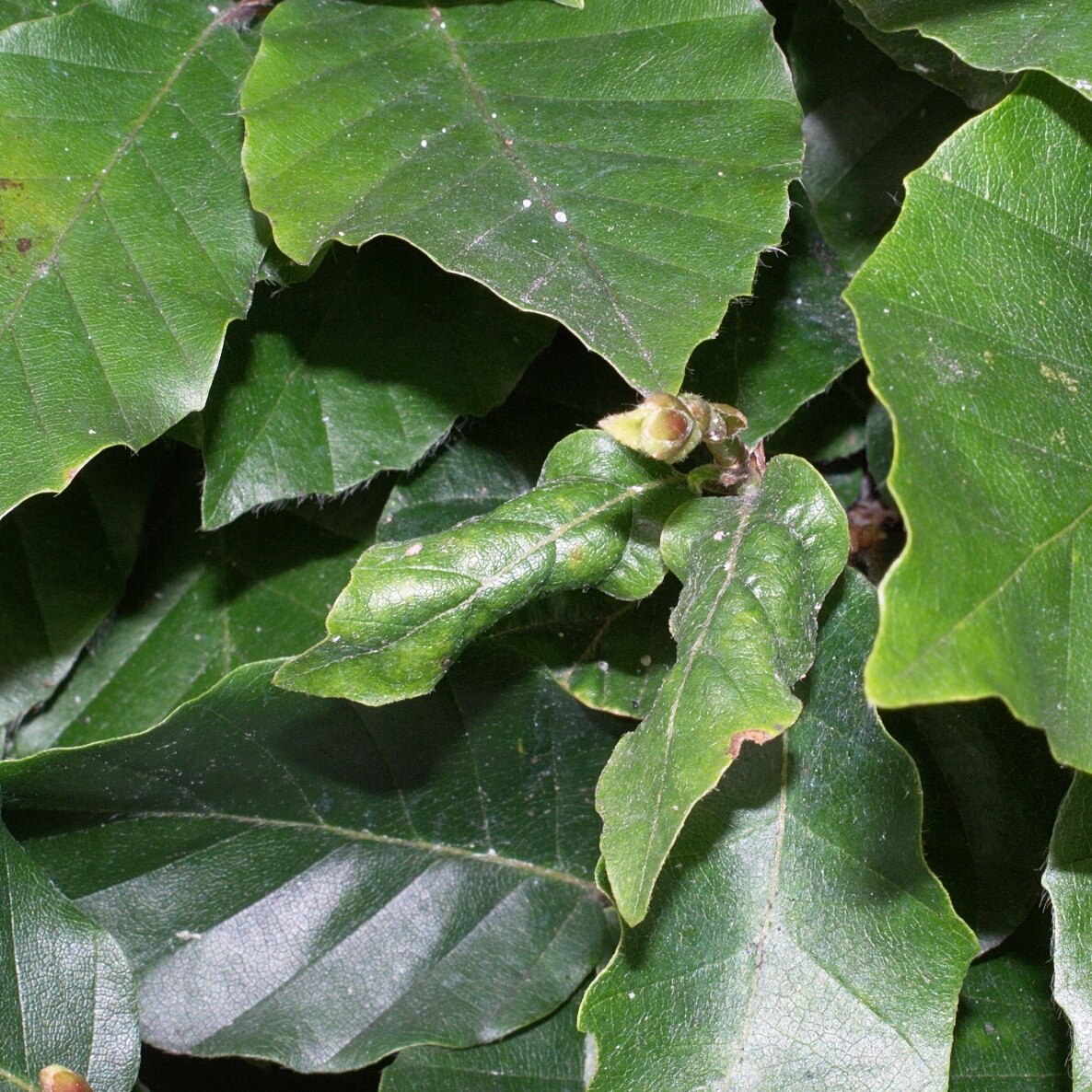

Which evidence is strongest?
Pest damage is the stronger fit
- You can find the pest itself or direct feeding evidence such as frass, honeydew, shed skins, webbing, mines, chewing, or rasping scars.
- Damage repeats where the pest feeds: leaf undersides, tender growth, buds, stems, roots, or fruit depending on the organism.
More likely if
- Magnification reveals insects, mites, eggs, or characteristic feeding evidence on fresh damage.
- New damage follows pest activity even when old scars remain unchanged.
Less likely if
- Repeated inspections find no pest or feeding evidence and lesions keep expanding in a disease-like pattern.
Use the pest-specific guide that matches the physical evidence.
Plant disease is the stronger fit
- Lesions expand or coalesce and are accompanied by fungal growth, spores, fuzzy mold, fruiting structures, cankers, rots, or other pathogen signs.
- The pattern fits a known host-specific disease and progression continues under favorable disease conditions.
More likely if
- The same lesion shows a consistent margin, sporulation, rot, or other disease sign across multiple affected tissues.
- A host-specific Extension reference matches both the plant and the physical sign.
Less likely if
- An insect or mite is clearly present with matching fresh feeding injury.
Use the disease-specific guide and confirm the host before treatment.
Abiotic stress is still plausible
- No convincing pest or pathogen sign is present, but the plant has experienced water, drainage, heat, cold, light, salt, fertilizer, chemical, or transplant stress.
- Several unrelated plant species show similar injury at roughly the same time.
More likely if
- The damage aligns with an exposure event, site pattern, or root-zone problem rather than spreading from infected tissue.
Correct the verified site or care problem and monitor new growth before applying a pesticide.
Five checks before choosing pest or disease
- Name the plant and note whether the affected tissue is leaf, stem, flower, fruit, root, crown, or whole plant.
- Inspect the underside and protected plant parts for insects, mites, eggs, wax, frass, honeydew, webbing, or feeding scars.
- Inspect lesion edges and decaying tissue for fungal growth, spores, fuzzy mold, cankers, rot, or other disease signs.
- Compare damaged and healthy tissue on the same plant and record whether new symptoms are spreading, fixed, or linked to a recent event.
- Check the wider pattern across nearby plants and review environmental or care changes before assigning a biological cause.
What to do after the evidence points one way
- If a pest is confirmed, identify the pest or pest group and use the least disruptive appropriate management first where practical.
- If a disease is confirmed, remove or isolate infected tissue only when host-specific guidance supports it and address moisture, sanitation, or airflow conditions that favor the disease.
- If the evidence points to abiotic stress, correct the verified site or care problem and judge recovery from clean new growth rather than old damaged tissue.
- Take clear photographs of the whole plant, damage pattern, leaf undersides, and any insects or fungal signs before discarding key evidence.
- Use a pesticide only after the target, host, and use site are identified and the product label explicitly covers them.
GardenSolved checkpoint
Do not do this yet
Do not diagnose from one symptom
- Do not call every hole insect damage; some diseases create tissue that later drops out and leaves holes.
- Do not call every spot a fungal disease; insects, sun, water, chemicals, and physical injury can also create spots.
- Do not assume an insect found on a sick plant caused the damage; beneficial or incidental insects may be present.
- Do not assume several unrelated plants declining together have the same host-specific disease.
- Do not combine insecticide, fungicide, and fertilizer treatments simply because the diagnosis is uncertain.
Confirm the likely cause first, then choose the treatment.
When the diagnosis needs another level
Escalate when a valuable plant is rapidly declining, several plants are affected without a clear shared cause, roots or vascular tissue are involved, the suspected pest or pathogen has regulatory significance, or treatment would involve a pesticide with meaningful crop, timing, or environmental restrictions. Local Extension services and plant-disease clinics can use host, symptom, and sample information that a single photo cannot provide.
Sources
Related questions
Diagnostic Finder
Still not sure this answer matches?
Continue with this plant already selected. The Finder will let you compare the visible problem and, when needed, the pattern against other relevant GardenSolved answers.
Compare other possibilities