Pests & Diseases
How Do I Know If My Plant Has Scale Insects?
The short answer
Look for repeated attached bumps or waxy coverings along stems, veins, or leaf surfaces, then identify whether the scale is soft or armored. Soft scales commonly produce honeydew; armored scales generally do not. Because the two groups differ in biology and management timing, confirm the scale type rather than treating every bump the same way.
Scale insects are sap feeders protected by waxy or shell-like coverings. Established insects can look more like attached bumps on stems, twigs, or leaves than like an obvious moving insect.
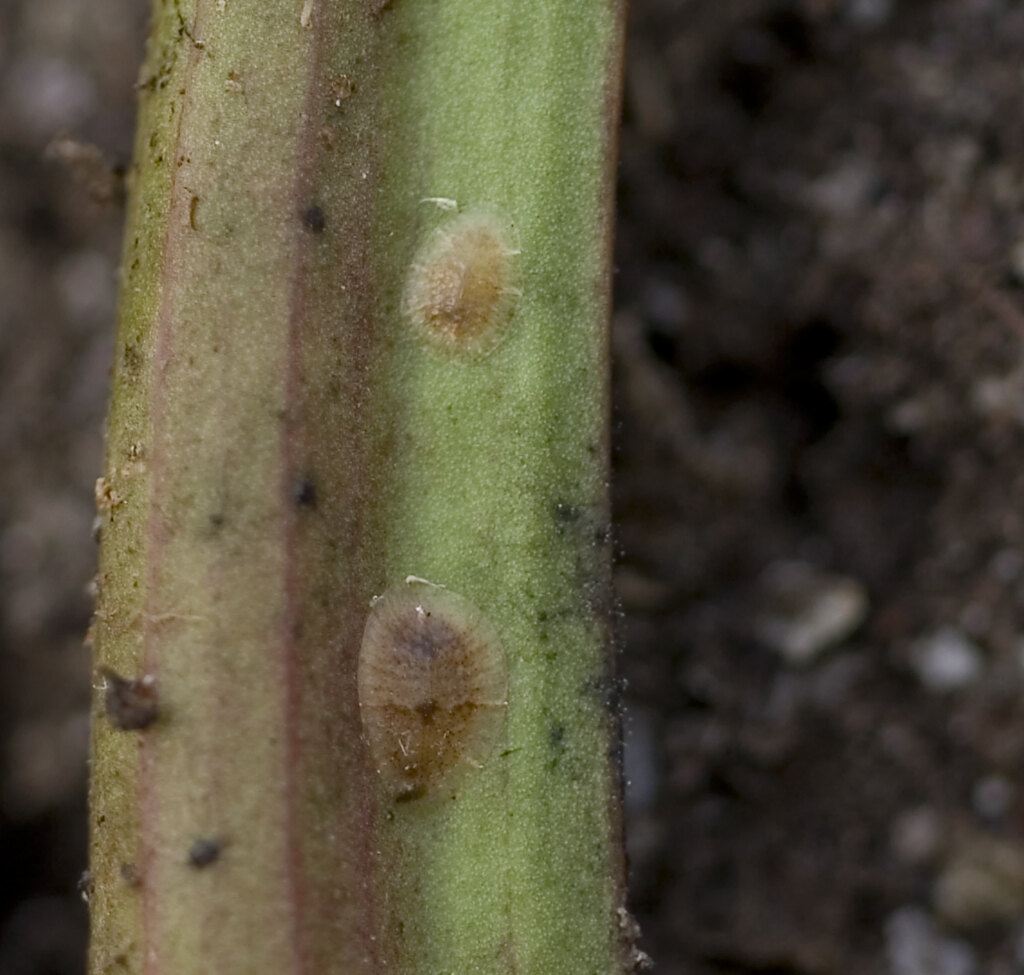

Soft scale, armored scale, or another bump?
Soft scale
- Scale coverings are often convex or waxy and feed directly beneath their body.
- Honeydew and sooty mold are common companion clues.
More likely if
- Sticky residue occurs below a visible scale population.
Less likely if
- There is no insect structure and bumps are part of normal bark or plant tissue.
Confirm the insect and host before selecting a response.
Armored scale
- The insect is protected beneath a separate shield-like covering.
- Honeydew is generally absent even when scale is present.
More likely if
- Numerous fixed shields occur on stems or leaves without sticky residue.
Identify the scale and monitor crawler timing before treatment.
Mealybugs or plant tissue
- Mealybugs have more obvious white cottony wax and visible soft bodies; normal bark lenticels or corking are plant tissue rather than insects.
More likely if
- The apparent bumps are uniform plant structures or fluffy mobile insects rather than attached scale coverings.
Use the Mealybugs guide or plant-specific structural guidance.
Checks before calling it scale
- Use a hand lens along stems, veins, and leaf surfaces to confirm repeated attached insect coverings rather than normal plant texture.
- Check for honeydew or sooty mold and use that clue to help separate soft scale from armored scale.
- Inspect younger tissue near an active colony for tiny crawler stages.
- Compare the pest with host-specific Extension images because scale species vary greatly in shape and color.
What to do after you confirm scale
- For a small accessible infestation, remove individual scale insects physically where that will not damage tender plant tissue.
- Prune only heavily infested expendable material when selective removal is practical; avoid unnecessary loss of healthy structure.
- Monitor new growth and crawler activity because established waxy coverings can remain visible after insects die.
- If pesticide treatment is considered, identify the host and scale group and use only a legally labeled product at the life stage and timing specified on the label.
GardenSolved checkpoint
Do not do this yet
- Do not diagnose scale from one unexplained brown bump; inspect for a repeated insect pattern.
- Do not assume lack of honeydew rules out scale because armored scales generally do not produce it.
- Do not use the same management timing for every scale species; crawler timing and host matter.
- Do not scrape large areas of tender bark or stems before confirming that the bumps are insects.
Confirm the likely cause first, then choose the treatment.
When to investigate further
Escalate when scale covers woody stems or large portions of the plant, dieback is developing, or soft-versus-armored identification and crawler timing are unclear. Those details materially affect host-specific management.
Sources
Related questions
Diagnostic Finder
Still not sure this answer matches?
Continue with this plant already selected. The Finder will let you compare the visible problem and, when needed, the pattern against other relevant GardenSolved answers.
Compare other possibilities