Houseplants
Why are my houseplant leaves sticky?
The short answer
Check where the stickiness is strongest, then inspect leaf undersides, veins, leaf axils, new growth, stems, and the surface below the plant. Look for aphid clusters, cottony mealybugs, scale-like bumps, or whiteflies before choosing any treatment.
Sticky houseplant leaves usually mean a residue is sitting on the surface. Indoors, a common cause is honeydew from sap-feeding insects such as aphids, mealybugs, whiteflies, or soft scale, but the sticky film alone does not identify which pest is present.
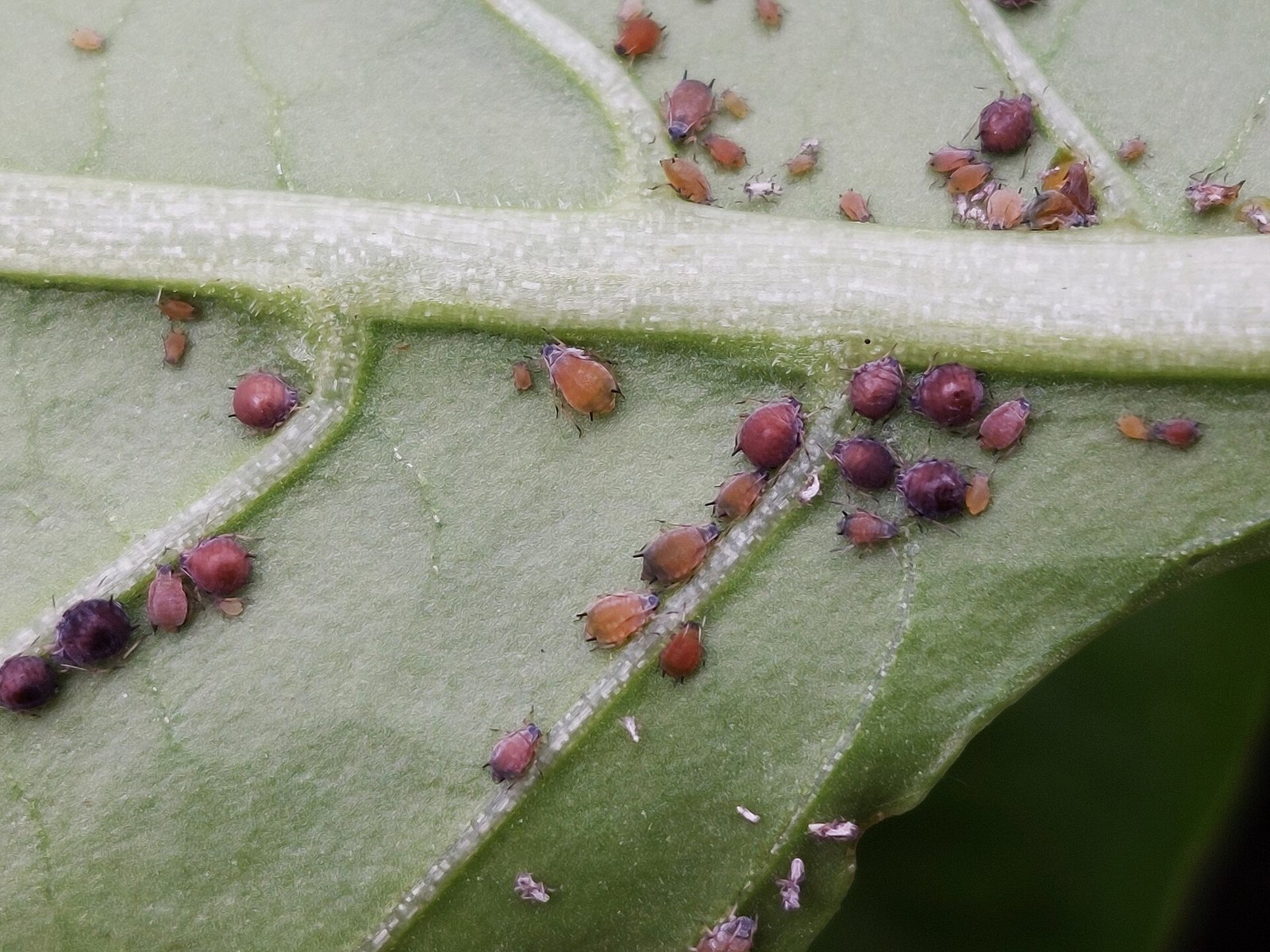

Read the sticky pattern before treating
| Pattern | What it can suggest |
|---|---|
| Clear or shiny sticky film on leaves or surfaces below | Honeydew is a sugar-rich waste produced by several sap-feeding insects. The deposit tells you to inspect for a pest, but it does not identify which pest. |
| Cottony white material, insect clusters, or fixed shell-like bumps | Mealybugs, aphids, or soft scale become more likely when their characteristic bodies or coverings are visible on veins, stems, axils, or tender growth. |
| Black coating over an older sticky layer | Sooty mold can grow on honeydew. The dark coating is a consequence of the sticky deposit, so the useful next step is still to identify and control the honeydew-producing insect. |
Compare the most common honeydew producers
Aphids or whiteflies
- Aphids are small soft-bodied insects that often cluster on young growth and leaf undersides. Whiteflies are tiny white insects whose adults may flutter up when foliage is disturbed.
More likely if
- New growth is curled, yellowed, or distorted near visible insects
- The insects are concentrated on tender shoots or leaf undersides
Less likely if
- No mobile insects are found after repeated close inspection and the residue is concentrated around fixed bumps or cottony masses.
Rinse or wipe the plant when appropriate, isolate it from nearby plants, and use a control labeled for the confirmed pest and the plant if physical removal is not enough.
Mealybugs
- Mealybugs are covered with white wax and often look like small cottony tufts tucked into leaf axils, along veins, or at stem joints.
More likely if
- White cottony material is attached to the plant rather than lying loosely on the soil
- Sticky honeydew occurs close to hidden leaf axils or stem joints
Less likely if
- The suspected pest is a hard or shell-like bump without cottony wax.
Inspect hidden crevices and physically remove visible insects where practical. If treatment is needed, choose one labeled for mealybugs and the plant and follow the label.
Soft scale
- Soft scale often appears as attached brown, tan, gray, or waxy bumps on stems, leaf veins, or undersides and can produce large amounts of honeydew.
More likely if
- The bumps remain attached when the plant is moved and line up along veins or stems
- Sticky deposits recur below apparently stationary insects
Less likely if
- The only scale-like material is loose mineral residue or another removable surface deposit.
Confirm that the bumps are insects before treating. Small infestations can sometimes be removed physically; use only products labeled for indoor plants, the host, and scale when additional control is necessary.
Checks before you act
- Wipe a small sticky area with a damp cloth to confirm that the material is a surface deposit rather than damaged leaf tissue.
- Inspect both leaf surfaces, veins, petioles, leaf axils, stems, and new growth in bright light; use magnification for very small insects.
- Look for the pest itself before naming the cause: aphid clusters, cottony mealybugs, attached scale-like bumps, or whiteflies on leaf undersides.
- Check nearby houseplants because sap-feeding pests can spread through a collection, while fungus gnats around wet soil do not explain honeydew on leaves.
Route the strongest companion clue
- Yellowing is the strongest additional symptom: Continue with the Houseplant yellow-leaves guide.Why are my houseplant leaves turning yellow?
- Leaves are falling after the sticky problem develops: Continue with the Houseplant leaf-drop guide.Why is my houseplant losing leaves?
- New leaves are curling or distorted: Continue with the Houseplant curling-leaves guide.Why are my houseplant leaves curling?
- Small flies are coming from the potting mix rather than insects being found on foliage: Check the separate fungus-gnat guide.How do I get rid of fungus gnats in houseplants?
What to do now
- Move an affected plant away from the rest of the collection while you identify the pest, especially if several leaves or stems carry insects.
- Wipe or rinse sticky residue and accessible insects from the foliage when the plant tolerates it. Reinspect leaf undersides, veins, axils, and new growth after cleaning.
- Physically remove small scale or mealybug infestations when practical. If a pesticide is needed, choose a product labeled for indoor use, the plant, and the identified pest, and follow the label exactly.
- Keep checking new growth and hidden plant parts. Recovery is shown by declining pest numbers and no new honeydew, not by old damaged leaves becoming perfect again.
GardenSolved checkpoint
Do not do this yet
- Do not spray a broad pesticide just because leaves feel sticky.
- Do not assume fungus gnats caused sticky foliage; adults around wet soil are a separate problem and do not produce leaf honeydew.
- Do not treat every bump as scale or every white mark as mealybug without confirming that an insect is present.
- Do not apply household remedies, oils, soaps, or alcohol across the whole plant without checking plant sensitivity and product directions.
Confirm the likely cause first, then choose the treatment.
What recovery looks like
- Fresh leaves and surfaces stop becoming sticky between cleanings.
- Visible aphid, mealybug, whitefly, or scale numbers decline rather than rebounding on new growth.
- New foliage expands with less yellowing, distortion, or premature drop.
- Existing damaged or yellowed leaves may not recover; judge success by healthy new growth and the absence of new honeydew.
Reduce repeat problems
- Inspect new plants carefully before bringing them into the collection and keep them separate long enough for hidden pests to become easier to detect.
- Check leaf undersides, veins, axils, stems, pots, and saucers while watering or cleaning plants.
- Clean sticky residue so fresh honeydew is easier to notice and nearby surfaces do not stay coated.
- Act while an infestation is small instead of waiting for honeydew, yellowing, and leaf drop to spread through several plants.
When to investigate further
If sticky deposits return quickly after cleaning, several plants are affected, leaves are yellowing or dropping, or the infestation is difficult to identify, isolate affected plants and confirm the pest before repeated pesticide use.