Pests & Diseases
How Do I Know If My Plant Has Thrips?
The short answer
Look for slender rice-shaped insects, usually around young leaves, veins, margins, buds, or flowers. Fresh feeding can leave pale or silvery scars and tiny dark tar-like droppings. Use a hand lens, tap suspect foliage over white paper, and inspect flowers or folded growth; do not diagnose thrips from silvering alone because mites and physical injury can look similar.
Thrips are tiny slender insects that rasp plant tissue and feed on the released cell contents. Their damage often looks silvery, pale, streaked, scarred, or distorted, and tiny dark frass specks can be an especially useful companion clue.
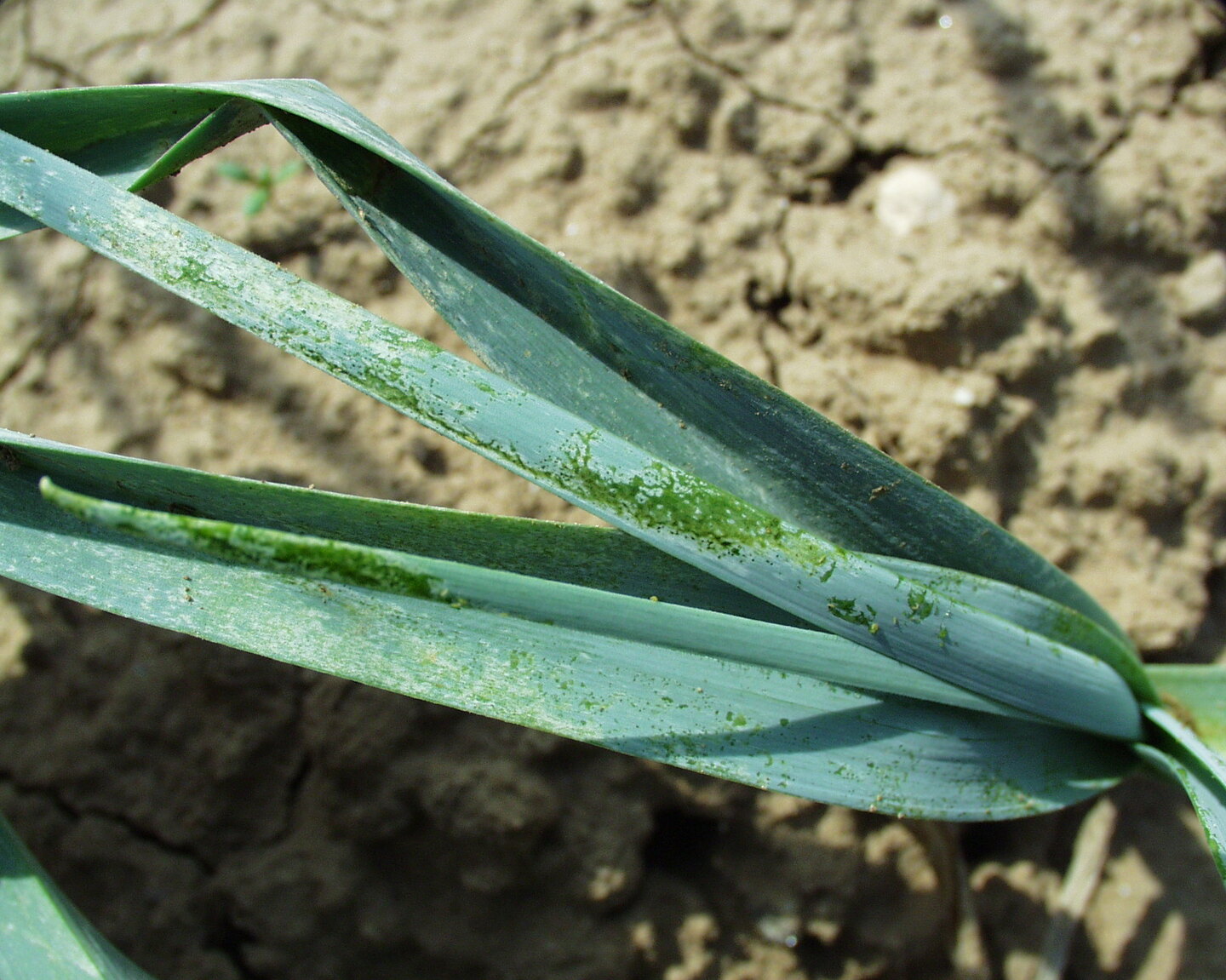

Thrips or another cause of pale leaf damage?
Thrips
- Pale or silvery scarring occurs with slender insects or dark frass.
- Damage often concentrates on young leaves, veins, margins, buds, or flowers.
More likely if
- A hand lens reveals narrow insects and nearby tar-like droppings.
- New tissue is distorted where feeding occurred while it was expanding.
Less likely if
- Fine webbing and many tiny round moving specks dominate the underside.
Confirm insects or frass before choosing management.
Spider mites
- Many fine stippled feeding points develop across the leaf.
- Fine webbing can appear as populations grow.
More likely if
- A white-paper tap test reveals tiny mite-like moving dots rather than slender insects.
Use the Spider Mites guide.
Leaf spot or physical injury
- Discrete lesions or abrasions can discolor tissue without insects or frass.
More likely if
- Repeated pest checks are negative and lesions expand or follow a known exposure event.
Use the Brown Spots diagnostic guide or plant-specific disease guidance.
Checks before calling it thrips
- Use a hand lens on young leaves, leaf folds, flower buds, and open flowers.
- Tap foliage or flowers over white paper and identify any slender insects that fall out.
- Look for dark frass specks close to fresh silvery or pale scars.
- Compare the same tissue for fine mite webbing; that would shift the diagnosis toward spider mites.
What to do after you confirm thrips
- Separate a movable infested indoor plant from nearby plants and inspect neighboring plants carefully.
- Remove badly infested spent flowers or severely damaged tissue when that can be done without excessive pruning.
- Rinse sturdy foliage where practical and continue monitoring new growth; sticky traps can help monitor flying adults but do not identify every life stage.
- If a pesticide becomes necessary, use only a product labeled for the plant and thrips problem and follow the label exactly.
GardenSolved checkpoint
Do not do this yet
- Do not diagnose thrips from silvered tissue alone.
- Do not rely on a sticky trap as proof that all damage on the plant comes from thrips.
- Do not remove large amounts of healthy foliage just because old scars remain visible.
- Do not use an insecticide until you have confirmed the pest and checked the product label for the actual plant and use site.
Confirm the likely cause first, then choose the treatment.
When to investigate further
Escalate when the damage is spreading through flowers, fruit, or new growth, when you cannot separate thrips from mites or disease, or when a crop-specific pest can transmit important plant pathogens in your region.
Sources
Related questions
Diagnostic Finder
Still not sure this answer matches?
Continue with this plant already selected. The Finder will let you compare the visible problem and, when needed, the pattern against other relevant GardenSolved answers.
Compare other possibilities