Houseplants
Why are my houseplant leaves turning brown?
The short answer
Inspect the soil and the shape of the damage. Crispy edges often follow drought, low humidity, or salts; soft brown areas and persistent wet soil suggest root stress; distinct spots can point to pests or disease.
Brown houseplant leaves can be dry and crispy, soft from wet-root stress, or marked by spots from pests or disease. The texture, position, and spread are useful clues.
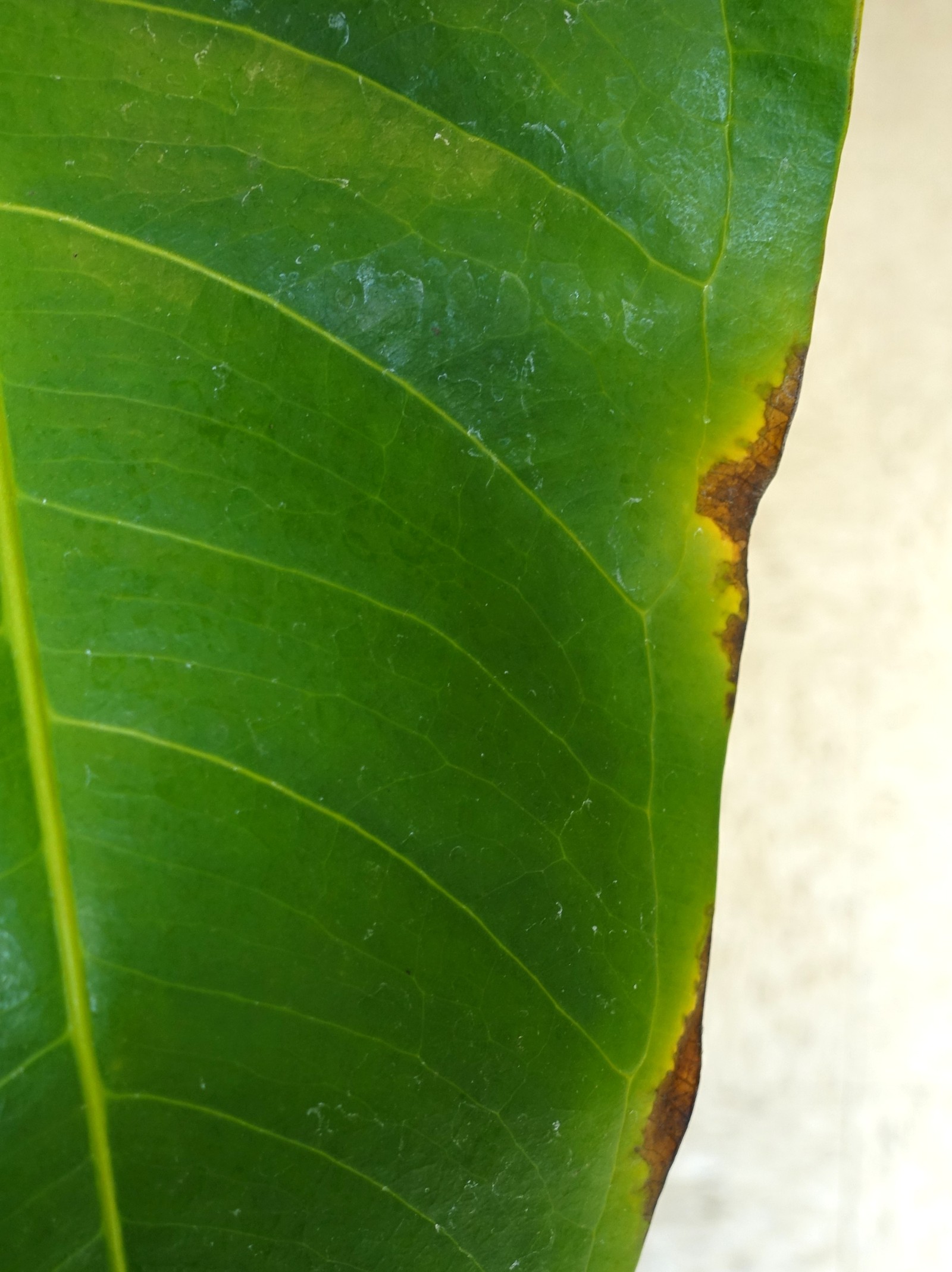
Read the pattern before treating
| Pattern | What it can suggest |
|---|---|
| Dry soil or dry indoor air | A plant that dries too far between waterings may develop brown edges and patches. Low humidity can add stress, particularly for tropical plants with thin leaves. |
| Wet roots or poor drainage | Overwatering can damage roots and leave leaves dull, soft, yellow, or brown. A pot without drainage makes this more likely. |
| Salt buildup, pests, or leaf spots | Excess fertilizer or mineral-heavy water can burn tips and margins. Mites, scale, and leaf-spot problems create different patterns that need close inspection. |
Compare the main branches
Dry soil or dry indoor air
- A plant that dries too far between waterings may develop brown edges and patches. Low humidity can add stress, particularly for tropical plants with thin leaves.
More likely if
- Brown tissue is dry or crisp and the root zone has repeatedly dried too far
- Damage concentrates on margins or exposed leaves
Less likely if
- Another branch matches the root-zone condition and companion symptoms better.
Feel the soil and inspect the pot’s drainage before watering or fertilizing. Notice whether the brown tissue is crisp, soft, circular, or concentrated at the tips.
Wet roots or poor drainage
- Overwatering can damage roots and leave leaves dull, soft, yellow, or brown. A pot without drainage makes this more likely.
More likely if
- Brown tissue is soft or dull while the mix remains wet
- Yellowing or wilt accompanies the browning
Less likely if
- Another branch matches the root-zone condition and companion symptoms better.
Check leaf undersides, stems, and new growth for insects, webbing, sticky residue, or spreading spots. Isolate a plant if a pest problem is suspected.
Salt buildup, pests, or leaf spots
- Excess fertilizer or mineral-heavy water can burn tips and margins. Mites, scale, and leaf-spot problems create different patterns that need close inspection.
More likely if
- Damage forms distinct spots, fine stippling, sticky residue, or pest signs
- The pattern spreads independently of a simple dry/wet cycle
Less likely if
- Another branch matches the root-zone condition and companion symptoms better.
Correct the underlying condition gradually, remove fully damaged leaves, and avoid cutting healthy green tissue just to make the plant look perfect.
Checks before you act
- Feel the root zone and identify whether brown tissue is crisp, soft, marginal, or spot-like.
- Inspect both leaf surfaces and stems for insects, webbing, scale, sticky residue, or spreading lesions.
- Review fertilizer strength, water quality, recent sun exposure, drafts, and heat vents.
- Compare new growth after correcting conditions; old brown tissue will not turn green again.
Route the strongest clue
- Watering or root-zone stress is the strongest clue: Continue with the more specific Houseplant guide.Why does my houseplant have brown leaf tips?
- A companion leaf symptom is clearer: Continue with the more specific Houseplant guide.How do I fix an overwatered houseplant?
- Light or environmental conditions are the next question: Continue with the more specific Houseplant guide.Why are my houseplant leaves turning yellow?
What to do now
- Feel the soil and inspect the pot’s drainage before watering or fertilizing. Notice whether the brown tissue is crisp, soft, circular, or concentrated at the tips.
- Check leaf undersides, stems, and new growth for insects, webbing, sticky residue, or spreading spots. Isolate a plant if a pest problem is suspected.
- Correct the underlying condition gradually, remove fully damaged leaves, and avoid cutting healthy green tissue just to make the plant look perfect.
GardenSolved checkpoint
Do not do this yet
Avoid common shortcuts
- Do not assume every brown leaf is fungal disease.
- Do not add water until root-zone moisture has been checked.
- Do not fertilize a stressed plant simply because leaves are brown.
- Do not spray pesticides or fungicides without identifying a matching pattern.
Confirm the likely cause first, then choose the treatment.
What recovery looks like
- Recovery means new leaves develop without expanding brown damage; existing dead tissue remains brown.
- Crispy drought or salt injury should stop progressing once moisture and salt conditions are corrected.
- Wet-root browning improves only after drainage and root function recover.
- Spreading spots or pest signs despite corrected care need a specific diagnosis.
Reduce repeat problems
- Keep watering consistent for the plant’s needs and use a well-draining mix in a container with a hole.
- Keep sensitive plants away from radiators, heating vents, cold drafts, and sudden temperature changes.
- Fertilize conservatively and check water quality if the same plant repeatedly develops brown tips or edges.
When to investigate further
If browning spreads rapidly, affects stems, smells musty, or appears with fine webbing or many spots, isolate the plant and identify the cause before using a pesticide or fungicide.