Houseplants
Why are my houseplant leaves curling?
The short answer
Check the soil, light, and leaf undersides before adding water or fertilizer. Dry, crispy edges often suggest water loss, while distorted new leaves or fine webbing call for a pest check.
Curling leaves can be a response to water loss, root stress, intense light, temperature changes, or pests. The direction of the curl and the newest growth provide useful clues.
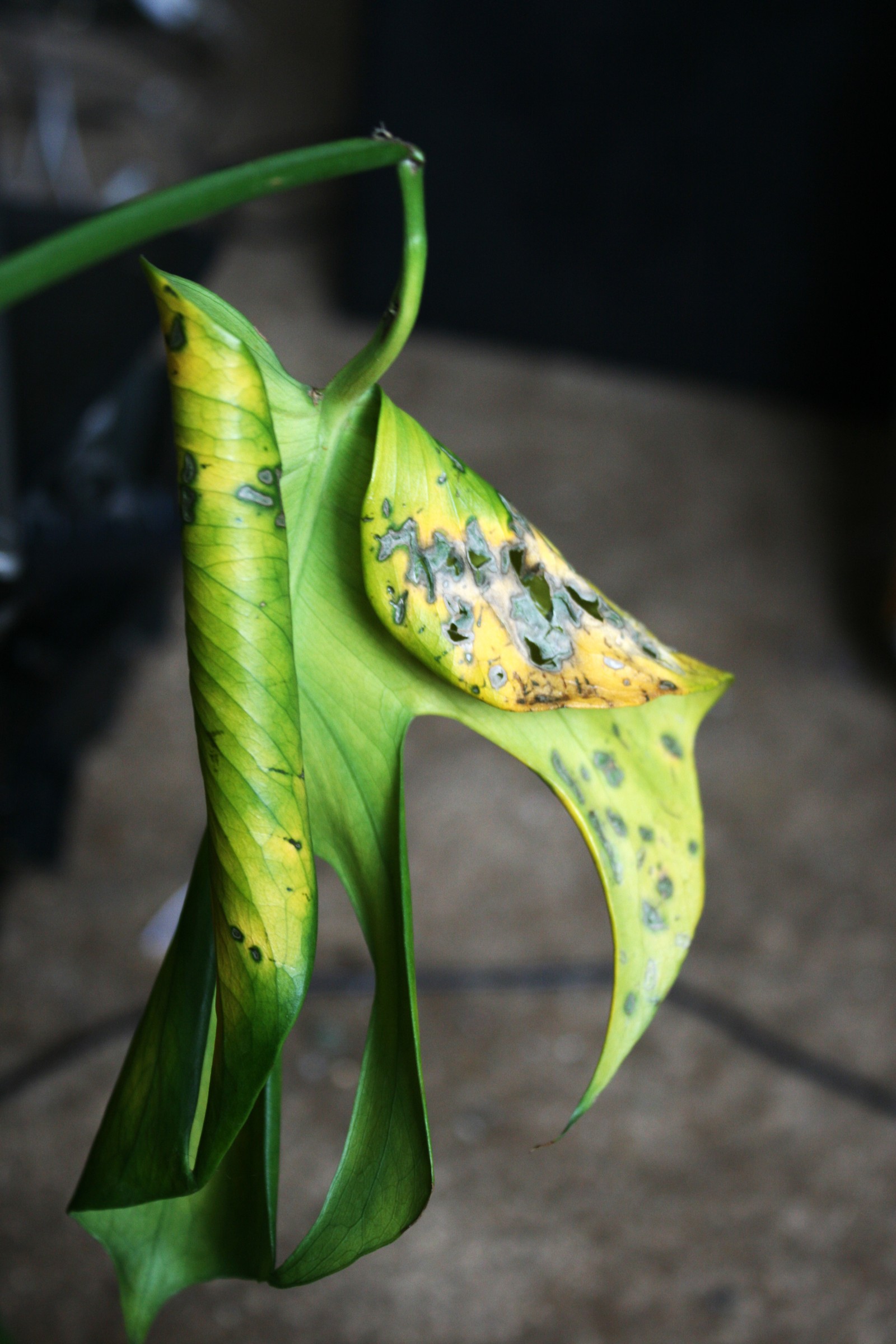
Read the pattern before treating
| Pattern | What it can suggest |
|---|---|
| Dry soil or uneven watering | When roots cannot replace water lost through leaves, foliage may curl inward or downward. Repeated dry-to-wet swings can keep the plant stressed. |
| Too much light, heat, or a draft | Strong direct sun through glass, a radiator, an air conditioner, or a cold window can change leaf moisture balance and cause curling. |
| Pests on new growth | Aphids, mites, and other sap-feeding pests can distort young leaves. Fine webbing, sticky residue, or clusters of small insects are important clues. |
Compare the main branches
Dry soil or uneven watering
- When roots cannot replace water lost through leaves, foliage may curl inward or downward. Repeated dry-to-wet swings can keep the plant stressed.
More likely if
- Curling is paired with dry media, crisp edges, heat, or intense light
- The plant has recently been exposed to a vent, hot window, or missed watering
Less likely if
- Another branch better matches the moisture, environment, pest signs, or growth pattern.
Check the soil below the surface and water only if it is dry enough for that plant. Do not leave the pot standing in water after watering.
Too much light, heat, or a draft
- Strong direct sun through glass, a radiator, an air conditioner, or a cold window can change leaf moisture balance and cause curling.
More likely if
- Newest leaves are distorted, sticky, stippled, or have webbing or visible insects
- Aphids, mites, or thrips are present on growing points or leaf undersides
Less likely if
- Another branch better matches the moisture, environment, pest signs, or growth pattern.
Inspect the newest leaves and undersides with good light. Isolate the plant if you find pests and remove them with a method suitable for the species.
Pests on new growth
- Aphids, mites, and other sap-feeding pests can distort young leaves. Fine webbing, sticky residue, or clusters of small insects are important clues.
More likely if
- Curling began after an abrupt environmental change without clear pest evidence
- New growth response after conditions stabilize becomes the useful check
Less likely if
- Another branch better matches the moisture, environment, pest signs, or growth pattern.
Move the plant away from harsh direct sun, drafts, or heat vents when those conditions match the timing of the curl. Watch new growth rather than expecting old leaves to straighten.
Checks before you act
- Check root-zone moisture before watering and compare the curl with crisp or soft tissue.
- Inspect the newest growth and leaf undersides closely for aphids, mites, thrips, webbing, honeydew, or silvery damage.
- Review direct sun through glass, hot or cold drafts, and recent relocation.
- Watch the next leaves: old curled tissue may not flatten even after the cause is corrected.
Route the strongest clue
- Watering or root-zone evidence is strongest: Continue with the more specific Houseplant guide.Why are my houseplant leaves drooping?
- A light or environmental clue is strongest: Continue with the more specific Houseplant guide.How often should I water houseplants?
- A companion leaf symptom is clearer: Continue with the more specific Houseplant guide.Why are my houseplant leaves turning yellow?
- A related Houseplant problem is more specific: Continue with the more specific Houseplant guide.How do I get rid of fungus gnats in houseplants?
What to do now
- Check the soil below the surface and water only if it is dry enough for that plant. Do not leave the pot standing in water after watering.
- Inspect the newest leaves and undersides with good light. Isolate the plant if you find pests and remove them with a method suitable for the species.
- Move the plant away from harsh direct sun, drafts, or heat vents when those conditions match the timing of the curl. Watch new growth rather than expecting old leaves to straighten.
GardenSolved checkpoint
Do not do this yet
Avoid common shortcuts
- Do not diagnose leaf curl from shape alone.
- Do not spray pesticides without finding a pest or a matching feeding pattern.
- Do not keep adding water to wet soil because the leaves are curled.
- Do not expect damaged mature leaves to become perfectly flat again.
Confirm the likely cause first, then choose the treatment.
What recovery looks like
- Water- or heat-stress curl should stop appearing on new foliage once conditions stabilize.
- Pest-related distortion improves when the pest population is controlled and new leaves expand normally.
- Old curled leaves may remain deformed even after the cause is gone.
- Continued distortion of new growth needs a closer pest, root, or plant-specific diagnosis.
Reduce repeat problems
- Keep watering consistent and use a potting mix that drains appropriately.
- Place plants according to their light needs and avoid abrupt changes in exposure.
- Inspect new growth weekly, especially after bringing home new plants.
When to investigate further
If curling is severe on new growth, spreads quickly, or is accompanied by discoloration, pests, or stem damage, seek a plant-specific diagnosis before pruning heavily.