Houseplants
Why are my houseplant leaves drooping?
The short answer
Check the soil before watering. Dry soil can cause temporary wilt, while drooping in constantly wet soil may indicate root damage; heat, cold drafts, too much light, pests, and transplant stress can also contribute.
Drooping leaves show that water balance or tissue strength has changed, but they do not automatically mean the plant needs more water.
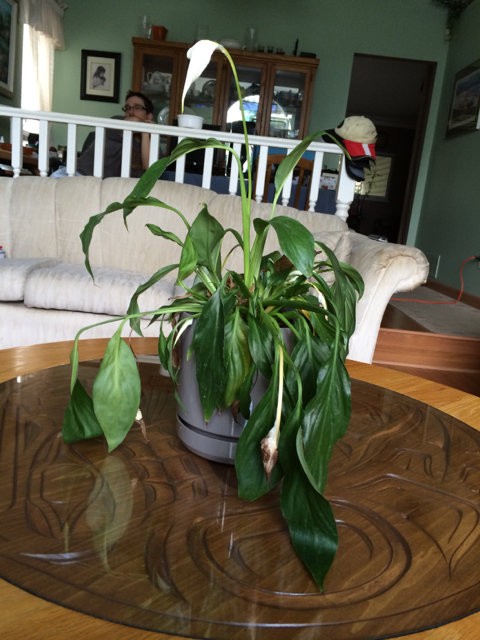
Read the pattern before treating
| Pattern | What it can suggest |
|---|---|
| Underwatering or heat stress | Dry roots cannot replace water lost through leaves. Bright light, a warm room, or a plant that has outgrown its pot can make the change happen faster. |
| Overwatering and root damage | Wet soil can deprive roots of oxygen and lead to decay. The plant may droop even though the mix feels moist. |
| Light, temperature, or pest stress | Too much direct sun, cold drafts, sudden moves, and sap-feeding pests can all affect leaf firmness and cause drooping. |
Compare the main branches
Underwatering or heat stress
- Dry roots cannot replace water lost through leaves. Bright light, a warm room, or a plant that has outgrown its pot can make the change happen faster.
More likely if
- The root zone is dry and the plant improves after appropriate watering
- Warm bright conditions or a root-filled pot have increased water demand
Less likely if
- Another branch matches the root-zone condition and companion symptoms better.
Check moisture below the surface and look at the pot’s drainage. Water only if the root zone is dry enough for that plant’s needs.
Overwatering and root damage
- Wet soil can deprive roots of oxygen and lead to decay. The plant may droop even though the mix feels moist.
More likely if
- The mix is still wet while the plant remains limp
- Yellowing, sour-smelling media, or root decline accompanies the wilt
Less likely if
- Another branch matches the root-zone condition and companion symptoms better.
Inspect leaves and stems for insects, webbing, spots, and damage. Move the plant away from a heat vent, draft, or harsh midday sun if its position is clearly stressful.
Light, temperature, or pest stress
- Too much direct sun, cold drafts, sudden moves, and sap-feeding pests can all affect leaf firmness and cause drooping.
More likely if
- Moisture is suitable but the plant recently faced harsh sun, drafts, heat, cold, transplanting, or pests
- The timing matches a sudden environmental change
Less likely if
- Another branch matches the root-zone condition and companion symptoms better.
Give the plant stable conditions and observe new growth. Do not repeatedly soak a plant that is already sitting in wet soil.
Checks before you act
- Check root-zone moisture before adding water.
- Confirm that the pot drains and that roots are not sitting in collected water.
- Inspect leaves and stems for pests, scorch, cold injury, or recent transplant damage.
- Observe whether the plant recovers after correcting the matched stress rather than repeatedly changing several conditions.
Route the strongest clue
- Watering or root-zone stress is the strongest clue: Continue with the more specific Houseplant guide.How often should I water houseplants?
- A companion leaf symptom is clearer: Continue with the more specific Houseplant guide.How do I fix an overwatered houseplant?
- Light or environmental conditions are the next question: Continue with the more specific Houseplant guide.Why are my houseplant leaves turning yellow?
What to do now
- Check moisture below the surface and look at the pot’s drainage. Water only if the root zone is dry enough for that plant’s needs.
- Inspect leaves and stems for insects, webbing, spots, and damage. Move the plant away from a heat vent, draft, or harsh midday sun if its position is clearly stressful.
- Give the plant stable conditions and observe new growth. Do not repeatedly soak a plant that is already sitting in wet soil.
GardenSolved checkpoint
Do not do this yet
Avoid common shortcuts
- Do not treat drooping as proof that the plant is thirsty.
- Do not repeatedly soak a plant that is already in wet mix.
- Do not combine repotting, fertilizing, relocation, and pruning unless each is actually needed.
- Do not ignore wilt that persists with soft stems or declining roots.
Confirm the likely cause first, then choose the treatment.
What recovery looks like
- Drought wilt should improve after the root zone is watered appropriately.
- Temporary environmental droop should ease once the stress is removed and conditions stabilize.
- Wet-root wilt can take longer because damaged roots must recover before foliage becomes firm.
- Persistent wilt in suitable moisture needs a root, crown, pest, or disease diagnosis.
Reduce repeat problems
- Learn the plant’s preferred dry-down level and check soil before every watering.
- Use a suitable potting mix and never allow the container to stand in collected water.
- Acclimate plants gradually when moving them between light levels or indoor and outdoor conditions.
When to investigate further
If the plant remains wilted in wet soil, has soft roots or stems, or declines quickly, treat it as a possible root or disease problem rather than a simple watering mistake.