English
Houseplant care
Houseplant problems, solved clearly.
Use the symptom you can see to find the next useful step for your indoor plants.
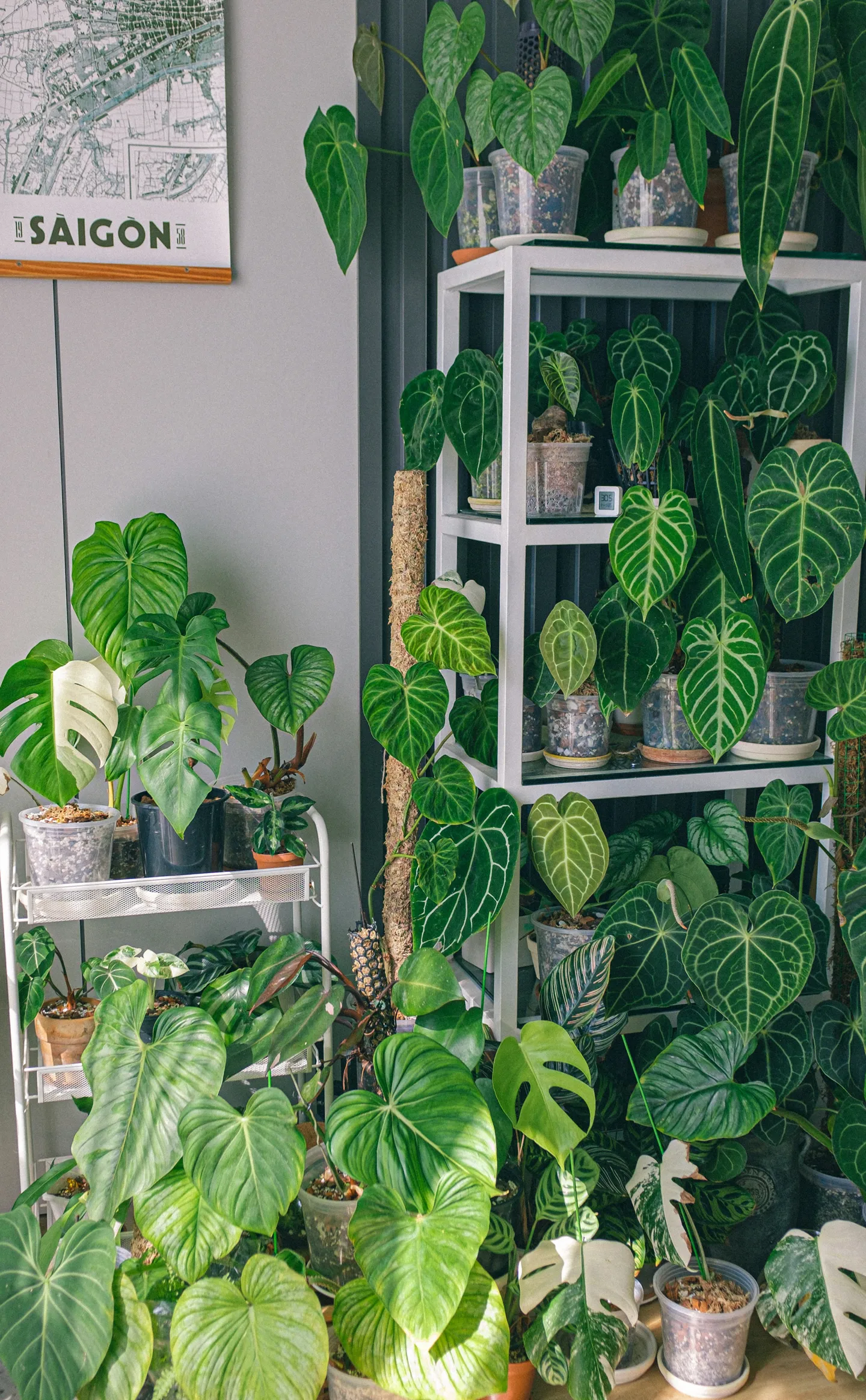
Find my problemPhoto by Huy Phan on Unsplash Context illustration/photo, not confirmation of a plant problem.
Before you treat
Three checks that make the next step clearer
1. Check the root zone
Feel below the surface and check drainage before watering again. Dry roots, saturated mix, and root damage can produce similar above-ground symptoms.
Check watering2. Check light and recent placement
Record the usable light and any recent move, heating change, draft, or seasonal shift before treating slow growth or leaf loss as a nutrient problem.
Check light3. Inspect leaves and stems for pests
Look under leaves and around new growth for insects, sticky residue, webbing, speckling, or clusters before reaching for a general treatment.
Check pest cluesBrowse problems by symptom
Start with what you can see.
Questions & answers
Browse houseplants
14 published answers
Soil stays wet, mold appears, or watering feels different
In a darker or cooler room, the summer watering interval may keep roots wet too long. Heating can also make some pots dry faster: check the actual root zone. Start with watering, then choose the rescue or surface-mold answer only when its clues match.
How often should I water houseplants?
Build a watering routine from the plant, pot, soil, and light conditions.
Open answerHow do I fix an overwatered houseplant?
Stop the cycle of wet soil and inspect drainage, roots, and the potting mix.
Open answerWhy is there mold on my houseplant soil?
Understand what surface mold usually signals about moisture, airflow, and organic matter.
Open answerHeating started, the window is cold, or leaves are changing
Note when heating, a draft, cold glass, or a recent move changed the conditions. Then choose the visible symptom below. Leaf loss, brown tips, yellowing and drooping need different checks; none alone proves dry air or a need for more water.
Why is my houseplant losing leaves?
Use timing and the position of dropped leaves to find the likely stress.
Open answerWhy does my houseplant have brown leaf tips?
Find out whether dry air, inconsistent watering, salts, or water quality is involved.
Open answerWhy are my houseplant leaves turning brown?
Separate dry, crispy damage from wet-root stress, pests, or leaf spots.
Open answerWhy are my houseplant leaves turning yellow?
Read the pattern of yellowing before changing water, light, or fertilizer.
Open answerWhy are my houseplant leaves drooping?
Check moisture, roots, light, and temperature before watering again.
Open answerWhy are my houseplant leaves curling?
Check water stress, heat, light, pests, and the newest growth pattern.
Open answerShorter days, slow growth, or stems reaching for light
Check usable daylight and the newest growth before feeding a slow or stretched plant. A brighter suitable position can help, but keep foliage clear of cold glass and direct radiator heat. Follow the light guide before moving a plant into a very different exposure.
How much light does my houseplant need?
Match a plant's light needs to the direction, distance, and quality of your window.
Open answerWhy is my houseplant not growing?
Diagnose slow growth by checking light, roots, season, water, and nutrition.
Open answerWhy is my houseplant growing leggy?
Use internode length, light direction, and new growth to diagnose a leggy houseplant.
Open answerTiny flies, sticky leaves, or visible pests indoors
Flies around moist potting mix and sticky deposits on leaves are different starting points. Identify where insects are coming from and inspect leaf undersides before selecting a treatment; moving plants indoors does not justify preventive spraying.