Houseplants
Why is my houseplant losing leaves?
The short answer
Look at when the leaf drop started and which leaves are falling. Recent moves, low light, cold drafts, drought, wet roots, pests, and seasonal changes are common causes.
A few older leaves may drop naturally, but sudden or widespread leaf loss usually means the plant is responding to a change in water, light, temperature, roots, or pests.
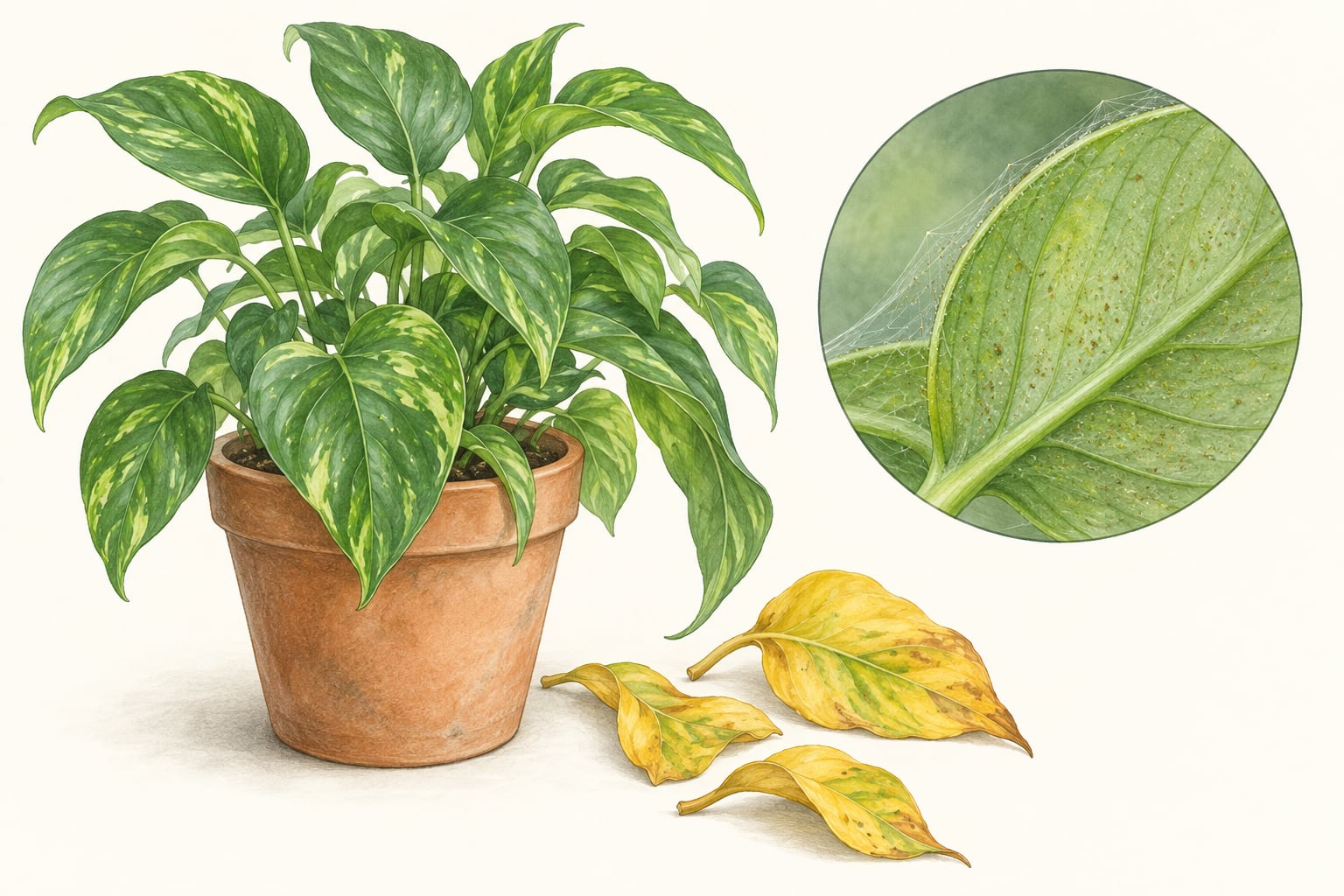
Read the pattern before treating
| Pattern | What it can suggest |
|---|---|
| A sudden change in light or temperature | Moving a plant, bringing it indoors, winter’s lower light, cold windows, drafts, and heat vents can all trigger leaf drop. |
| Too much or too little water | Both drought and constantly wet roots can lead to yellowing, wilting, and leaves falling. The soil condition is more useful than the number of days since watering. |
| Pests, root stress, or natural aging | Sap-feeding insects weaken leaves, while root damage prevents normal water uptake. A single oldest leaf dropping slowly may simply be part of the plant’s cycle. |
Compare the main branches
A sudden change in light or temperature
- Moving a plant, bringing it indoors, winter’s lower light, cold windows, drafts, and heat vents can all trigger leaf drop.
More likely if
- Leaf drop began soon after a move or a large light/temperature change
- Leaves may fall even while some remaining foliage still looks healthy
Less likely if
- Another branch better matches the moisture, environment, pest signs, or growth pattern.
Inspect the whole plant and note whether the dropped leaves were old or new, yellow or green, crisp or soft. Check both the soil and the drainage hole.
Too much or too little water
- Both drought and constantly wet roots can lead to yellowing, wilting, and leaves falling. The soil condition is more useful than the number of days since watering.
More likely if
- The root zone is either staying wet too long or becoming very dry
- Yellowing, wilt, or browning accompanies the drop
Less likely if
- Another branch better matches the moisture, environment, pest signs, or growth pattern.
Look closely for scale, mealybugs, mites, sticky residue, or webbing. Keep a recently purchased or affected plant separate while you inspect it.
Pests, root stress, or natural aging
- Sap-feeding insects weaken leaves, while root damage prevents normal water uptake. A single oldest leaf dropping slowly may simply be part of the plant’s cycle.
More likely if
- Only a few older inner leaves drop on an otherwise healthy plant
- No rapid spread, pests, or stem/root decline is present
Less likely if
- Another branch better matches the moisture, environment, pest signs, or growth pattern.
Stabilize light, temperature, and watering. Avoid repotting and heavy fertilizing at the same time unless the roots or potting mix clearly require it.
Checks before you act
- Note when the leaf drop began and whether fallen leaves are old or new, green or yellow, crisp or soft.
- Check soil moisture and drainage before changing the watering routine.
- Review recent moves, seasonal light change, cold transport, drafts, heat vents, or window exposure.
- Inspect stems, leaf undersides, and new growth for scale, mealybugs, mites, or sticky residue.
Route the strongest clue
- Watering or root-zone evidence is strongest: Continue with the more specific Houseplant guide.Why are my houseplant leaves turning yellow?
- A light or environmental clue is strongest: Continue with the more specific Houseplant guide.How often should I water houseplants?
- A companion leaf symptom is clearer: Continue with the more specific Houseplant guide.How much light does my houseplant need?
- A related Houseplant problem is more specific: Continue with the more specific Houseplant guide.How do I fix an overwatered houseplant?
What to do now
- Inspect the whole plant and note whether the dropped leaves were old or new, yellow or green, crisp or soft. Check both the soil and the drainage hole.
- Look closely for scale, mealybugs, mites, sticky residue, or webbing. Keep a recently purchased or affected plant separate while you inspect it.
- Stabilize light, temperature, and watering. Avoid repotting and heavy fertilizing at the same time unless the roots or potting mix clearly require it.
GardenSolved checkpoint
Do not do this yet
Avoid common shortcuts
- Do not respond to leaf drop by changing every care factor at once.
- Do not assume all leaf loss means underwatering.
- Do not fertilize heavily during a stress response or slow-growth period.
- Do not ignore rapidly accelerating leaf loss with soft stems or wet roots.
Confirm the likely cause first, then choose the treatment.
What recovery looks like
- After environmental stress, healthy new growth and slowing leaf loss are better signs than old leaves reattaching.
- If watering was the issue, the mix should return to a suitable wet-dry pattern without continued wilt.
- Normal aging remains limited to occasional older leaves rather than whole-plant decline.
- Continued rapid loss despite stable conditions needs root, pest, or disease diagnosis.
Reduce repeat problems
- Acclimate plants gradually to new light and protect them from cold drafts and heating vents.
- Use containers with drainage and allow the mix to dry to the level preferred by the plant.
- Quarantine new plants briefly and inspect them regularly for pests.
When to investigate further
If many leaves drop within days, the stems soften, the soil smells sour, or the plant declines despite stable care, inspect roots and seek a species-specific diagnosis.