Houseplants
Why does my houseplant have brown leaf tips?
The short answer
Check watering first, then consider low humidity, fertilizer or mineral buildup, and the plant’s water sensitivity. Trim only the dead edge and correct the cause rather than repeatedly cutting leaves.
Brown tips are common on houseplants, especially plants sensitive to dry air or inconsistent moisture. The damaged tip will not turn green again, so the goal is to prevent new damage.
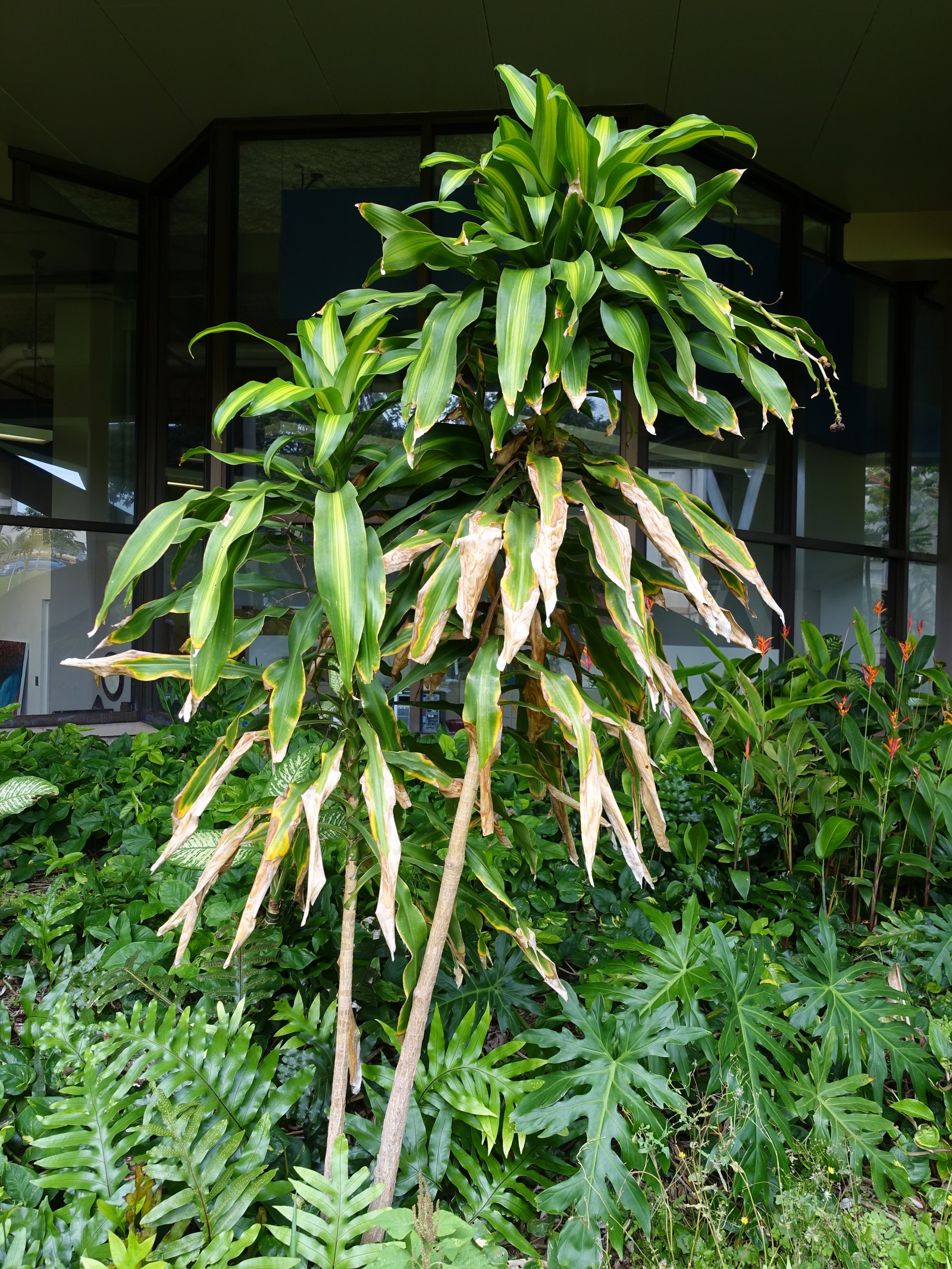
Read the pattern before treating
| Pattern | What it can suggest |
|---|---|
| Inconsistent watering | Letting the mix become very dry and then flooding it can stress leaf margins. Some plants show the damage after the soil has already been watered again. |
| Dry air or a difficult position | Heating systems, vents, and very dry indoor air can increase moisture loss from leaves. Sudden temperature changes can add to the stress. |
| Fertilizer salts or water quality | Excess fertilizer and minerals in some water sources can accumulate in potting mix and injure sensitive leaf tips over time. |
Compare the main branches
Inconsistent watering
- Letting the mix become very dry and then flooding it can stress leaf margins. Some plants show the damage after the soil has already been watered again.
More likely if
- Tips and margins are dry while the mix has repeatedly dried too far
- Damage follows irregular dry-to-wet cycles
Less likely if
- Another branch better matches the moisture, environment, pest signs, or growth pattern.
Check moisture about two inches below the surface and review whether the plant repeatedly swings from bone-dry to saturated.
Dry air or a difficult position
- Heating systems, vents, and very dry indoor air can increase moisture loss from leaves. Sudden temperature changes can add to the stress.
More likely if
- Indoor air is very dry, especially near heating or cooling
- Thin-leaved tropical plants show repeated marginal injury
Less likely if
- Another branch better matches the moisture, environment, pest signs, or growth pattern.
Move the plant away from direct heat or cold drafts. If buildup is suspected and the plant has good drainage, flush the mix with suitable water or repot when appropriate.
Fertilizer salts or water quality
- Excess fertilizer and minerals in some water sources can accumulate in potting mix and injure sensitive leaf tips over time.
More likely if
- Browning returns despite reasonable moisture
- Fertilizer salts or a sensitive species' water-quality issue fit the history
Less likely if
- Another branch better matches the moisture, environment, pest signs, or growth pattern.
Trim only the brown tissue with clean scissors, following the leaf’s natural shape and leaving a narrow brown edge instead of cutting into healthy green tissue.
Checks before you act
- Check whether browning is limited to tips and margins or is spreading as separate spots.
- Review the root-zone moisture pattern over the last several waterings, not just today.
- Check proximity to heat vents, radiators, cold drafts, or very dry air.
- Review fertilizer concentration and frequency, and consider water quality for species known to be sensitive.
Route the strongest clue
- Watering or root-zone evidence is strongest: Continue with the more specific Houseplant guide.Why are my houseplant leaves turning brown?
- A light or environmental clue is strongest: Continue with the more specific Houseplant guide.How often should I water houseplants?
- A companion leaf symptom is clearer: Continue with the more specific Houseplant guide.How much light does my houseplant need?
What to do now
- Check moisture about two inches below the surface and review whether the plant repeatedly swings from bone-dry to saturated.
- Move the plant away from direct heat or cold drafts. If buildup is suspected and the plant has good drainage, flush the mix with suitable water or repot when appropriate.
- Trim only the brown tissue with clean scissors, following the leaf’s natural shape and leaving a narrow brown edge instead of cutting into healthy green tissue.
GardenSolved checkpoint
Do not do this yet
Avoid common shortcuts
- Do not assume brown tips always mean low humidity.
- Do not compensate with repeated extra watering when the root zone is already moist.
- Do not increase fertilizer to make damaged tips green again.
- Do not cut into healthy green tissue merely to make the leaf edge look perfect.
Confirm the likely cause first, then choose the treatment.
What recovery looks like
- Existing brown tissue will stay brown; judge improvement by new leaves and stable margins.
- Consistent moisture should stop new drought-related tip injury.
- If excess salts were involved, new injury should slow after the root-zone salt load is corrected.
- Persistent expanding spots or whole-leaf browning needs the broader brown-leaf pathway.
Reduce repeat problems
- Use a consistent watering pattern that matches the species and potting mix.
- Keep sensitive plants away from heating vents and consider a humidifier for a dry room rather than relying on frequent misting.
- Fertilize lightly and follow the label; do not use softened or heavily mineralized water for sensitive plants without checking its suitability.
When to investigate further
If browning moves beyond the tips, appears as spreading spots, or comes with pests, yellowing, or soft roots, diagnose the wider problem instead of treating it as humidity alone.