Broad Beans
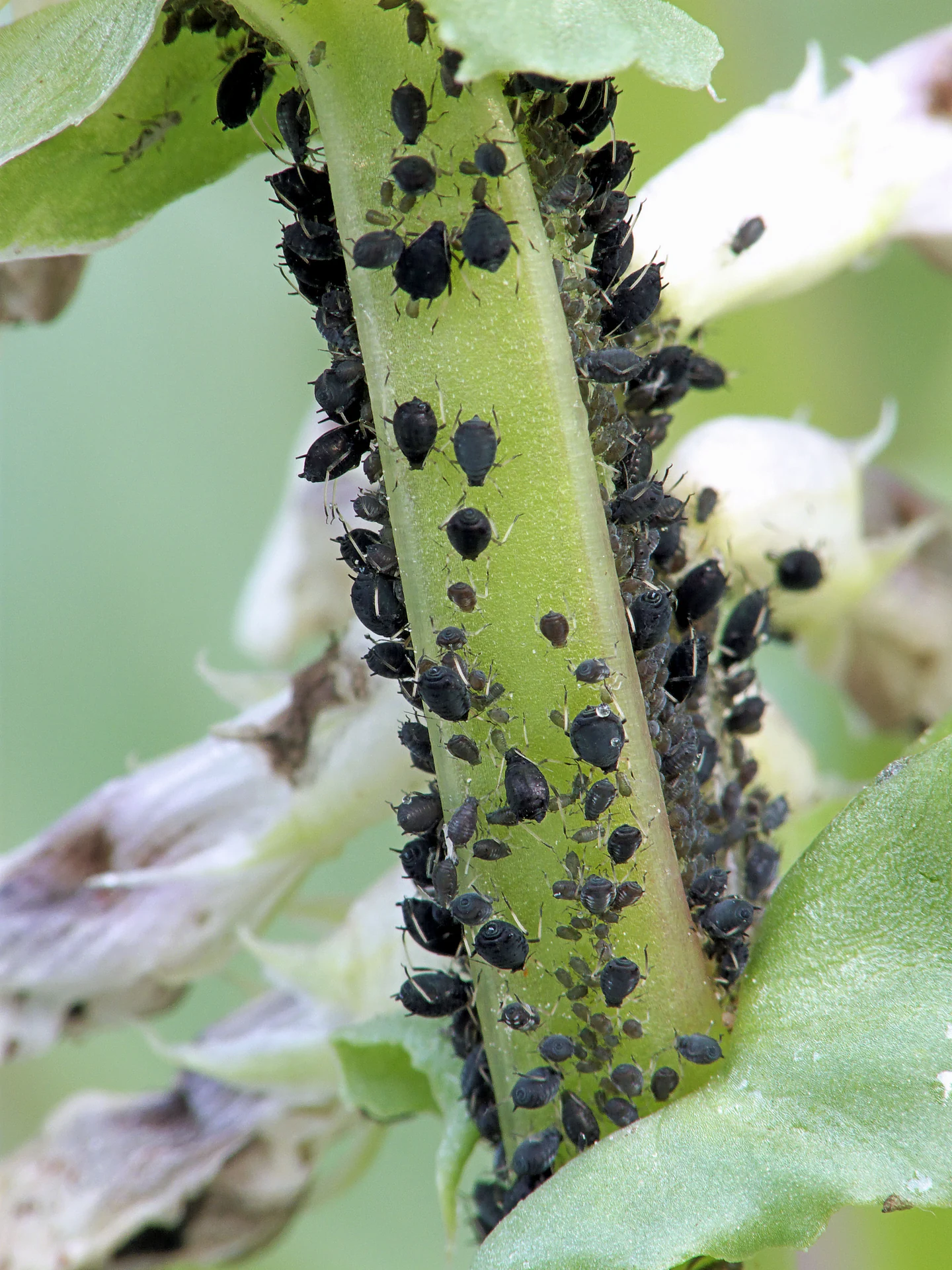
What are the black bugs on my broad beans?
The short answer
Clusters of small, dark, soft-bodied insects on young tips and leaf undersides are consistent with aphids. Sticky honeydew, shed skins and ants are supporting clues. Light colonies on otherwise vigorous plants can often be monitored.
Check whether the black marks are individual insects concentrated on tender growth or spots in the tissue itself.
Diagnostic snapshot
What to check before you act
What you are seeing
- Distinct insects in colonies on soft tips
- Flat dark spots in the leaf tissue
Check first
Look for individual insects with legs on several growing tips, flower stems and leaf undersides.
Hold off for now
Hold off on spraying flowering plants or pinching all the tips when you see a few aphids.
Investigate further if
If colonies are extensive and plants are stunted or distorted, seek advice on local options. If symptoms continue without visible aphids, check other causes.
Photograph this before you act
- Photograph the whole plant and its growing area so the overall pattern is visible.
- Take a sharp close-up of the affected leaf and a second photo of the underside.
Next best check
Check two visible clues before you act.
This mini-check narrows the match using the same canonical diagnostic clues as this answer. It does not confirm a diagnosis from one or two clicks, and it does not make a photo-only diagnosis.
Two quick observations can tell you whether to keep reading this diagnosis closely or compare other possibilities first.
What are the black marks?
| Pattern | What to do |
|---|---|
| Distinct insects in colonies on soft tips | Monitor light populations and check for natural predators. |
| Flat dark spots in the leaf tissue | Follow the leaf-spot comparison. |
| Dark coating without visible insects | Inspect nearby shoots for a source of sticky deposits before deciding on treatment. |
What to check first
- Look for individual insects with legs on several growing tips, flower stems and leaf undersides.
- Compare with flat marks in the leaf tissue. Look for honeydew, shed skins and ladybird or hoverfly larvae among the aphids.
What to do now
- Monitor small colonies and note whether new growth stays healthy.
- If a localised colony is expanding, gently remove it by hand where practical.
- If you choose to pinch an infested tip, first check that the lowest flowers have already formed small pods.
- Preserve productive growth and natural predators.
GardenSolved checkpoint
Do not do this yet
- Hold off on spraying flowering plants or pinching all the tips when you see a few aphids.
- Check the extent of the colony, whether predators are active and whether pods have started to form.
Confirm the likely cause first, then choose the treatment.
When to get help
If colonies are extensive and plants are stunted or distorted, seek advice on local options. If symptoms continue without visible aphids, check other causes.
Follow the next useful clue
- Dark marks sit in the leaf tissue: Compare chocolate spot, rust and other lesions.What are the brown spots on my broad bean leaves?
- The plant also has poor pod set: Check for weather, moisture and other sources of stress.Why are my broad beans flowering but not producing pods?
Consulted sources
Save & recheck
Compare what changes before changing course.
Save this diagnosis only in this browser, then come back and compare the same clues. No account, reminder subscription, or server-stored diagnostic record is created.
Your baseline
- Distinct insects in colonies on soft tips
- Flat dark spots in the leaf tissue
Check again when you return
- Look for individual insects with legs on several growing tips, flower stems and leaf undersides.
- Compare with flat marks in the leaf tissue. Look for honeydew, shed skins and ladybird or hoverfly larvae among the aphids.
Tip: photograph the same area from a similar angle so the visible pattern is easier to compare.
Related questions
Diagnostic Finder
Still not sure this answer fits?
Open the Diagnostic Finder with the relevant growing subject or care context preselected and compare other published GardenSolved diagnoses.
Compare other possibilities