Broad Beans
What’s eating my broad bean leaves?
The short answer
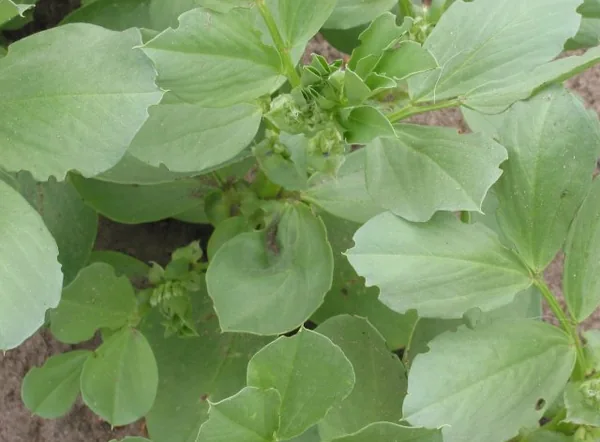
Repeated rounded notches along the margins of young leaves suggest pea leaf weevil. Irregular holes or ragged edges on tender growth can point to slugs or snails. Look for the animal, fresh feeding or slime before choosing a response.
The shape and position of missing leaf tissue help separate common causes. Fresh damage matters more than a few old notches.
Diagnostic snapshot
What to check before you act
What you are seeing
- Repeated rounded edge notches
- Ragged holes or missing tender growth
Check first
Compare fresh injury on new leaves with older notches and check whether new leaves are expanding normally.
Hold off for now
Hold off on treating the bed for weevils based on old notches alone.
Investigate further if
Ask for regional identification if a large share of seedlings are losing new growth, or if plants decline despite only minor visible feeding.
Photograph this before you act
- Photograph the whole plant and its growing area so the overall pattern is visible.
- Take a sharp close-up of the affected leaf and a second photo of the underside.
Next best check
Check two visible clues before you act.
This mini-check narrows the match using the same canonical diagnostic clues as this answer. It does not confirm a diagnosis from one or two clicks, and it does not make a photo-only diagnosis.
Two quick observations can tell you whether to keep reading this diagnosis closely or compare other possibilities first.
Compare the missing tissue
| Pattern | Next check |
|---|---|
| Repeated rounded edge notches | Check fresh leaves and compare the pattern with pea leaf weevil. |
| Ragged holes or missing tender growth | Look for slugs, snails or slime when conditions are damp. |
| Only old damage, with vigorous new leaves | Monitor new growth before deciding whether action is needed. |
What to check first
- Compare fresh injury on new leaves with older notches and check whether new leaves are expanding normally.
- Look around affected seedlings at dusk or after rain for slugs, snails or fresh slime. Note whether damage sits at the edge or within the leaf.
What to do now
- Monitor light scalloping on vigorous plants.
- If slugs or snails are confirmed and seedlings are being lost, check likely hiding places and protect the young plants.
- Keep nearby healthy foliage intact and reassess new growth.
GardenSolved checkpoint
Do not do this yet
- Hold off on treating the bed for weevils based on old notches alone.
- Check whether fresh damage is increasing or plants are failing to grow.
Confirm the likely cause first, then choose the treatment.
When to get help
Ask for regional identification if a large share of seedlings are losing new growth, or if plants decline despite only minor visible feeding.
Follow the next useful clue
- The row is also missing seedlings: Check whether seeds emerged or were lost.Why aren’t my broad beans coming up?
- The marks are still in the tissue: Compare leaf diseases and cold injury.What are the brown spots on my broad bean leaves?
Consulted sources
Save & recheck
Compare what changes before changing course.
Save this diagnosis only in this browser, then come back and compare the same clues. No account, reminder subscription, or server-stored diagnostic record is created.
Your baseline
- Repeated rounded edge notches
- Ragged holes or missing tender growth
Check again when you return
- Compare fresh injury on new leaves with older notches and check whether new leaves are expanding normally.
- Look around affected seedlings at dusk or after rain for slugs, snails or fresh slime. Note whether damage sits at the edge or within the leaf.
Tip: photograph the same area from a similar angle so the visible pattern is easier to compare.
Related questions
Diagnostic Finder
Still not sure this answer fits?
Open the Diagnostic Finder with the relevant growing subject or care context preselected and compare other published GardenSolved diagnoses.
Compare other possibilities